

Blog
Connected Packaging Solutions: Benefits, Business Value, and the Technology Behind Trusted Product Experiences
Connected packaging solutions are changing what brands expect from the package. A package no longer serves only as protection, presentation, or compliance space. It can carry a digital identity that connects a product to instructions, authentication, loyalty, traceability, warranty registration, recycling guidance, product education, or a controlled brand experience after purchase.
The operational question is whether the package can be trusted before anyone scans it.
A QR code, GS1 Digital Link-enabled 2D barcode, NFC tag, RFID label, or serialized mark can connect a physical product to digital information. But the code is not the system. The business value comes from the production environment behind it: identity creation, variable data printing, encoding, in-line inspection, reject handling, data reconciliation, and a governed production record.
Connected packaging solutions work when the physical package, digital identity, production data, and downstream experience stay aligned.
What Are Connected Packaging Solutions?
Connected packaging solutions use digital identifiers or embedded technologies to connect physical packaging to digital information, services, authentication logic, traceability records, or post-purchase experiences.
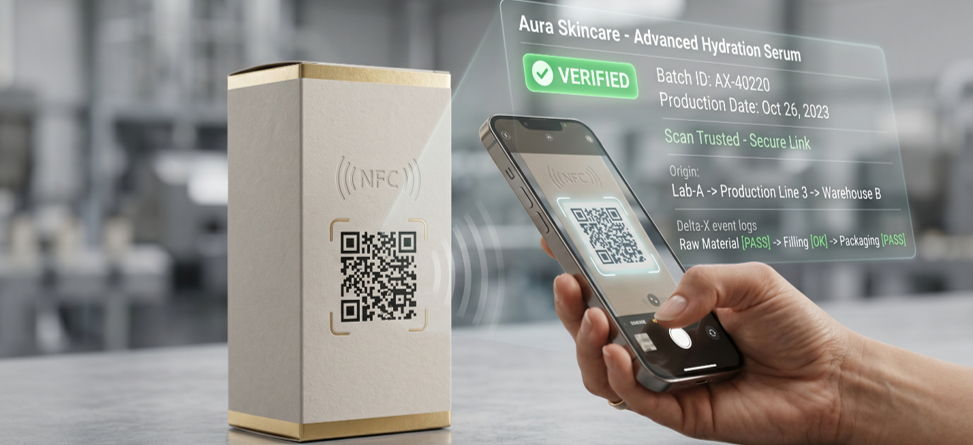
The interaction may be simple for the end user: scan, tap, verify, register, redeem, or access product content. Behind that interaction, the production system must control the product identity, data carrier, package format, print or encoding process, inspection logic, production record, and destination experience.
This is where connected packaging moves beyond marketing execution. It becomes a production, data, and trust architecture.
Why Connected Packaging Matters
The pressure on packaging has changed.
Consumers want more product information. Retailers need cleaner item data. Regulators and quality teams expect stronger traceability. Brand owners want direct post-purchase engagement. Security teams need better authentication tools. Operations teams still need to protect throughput, changeover discipline, and pack-out accuracy.
Connected packaging solutions answer these needs when they are implemented as part of the production process, not added as a disconnected code or campaign. They can support trust, traceability, recall readiness, authentication, and campaign performance, but only when production can prove which identity went on which package.
The Benefits of Connected Packaging Solutions
Connected packaging creates value when the scan, tap, or read event connects to a verified product identity.
For customers, that value begins with trust. A scan may provide product origin, usage instructions, authenticity, registration, safety guidance, sustainability information, or customer support. The experience only works when the information is accurate and connected to the right product.
For brand teams, connected packaging creates a direct channel after the product leaves the shelf, warehouse, clinic, or fulfilment centre. The package can connect customers to education, loyalty programs, campaigns, reorder flows, registration, or personalized experiences.
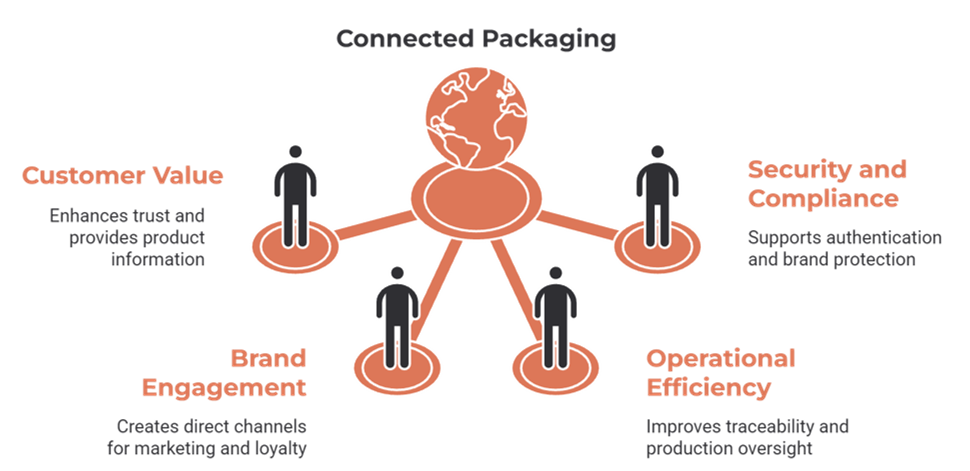
For operations and quality teams, traceability becomes stronger when packaging carries a verified identifier connected to production data. That identifier may represent the product, batch, serialized unit, carton, case, or pallet. When the identity is verified during production, teams gain a clearer view of what was printed, encoded, inspected, rejected, reworked, packed, and released.
For security and compliance teams, connected packaging can support authentication and brand protection. It can help users verify whether a product appears legitimate, whether a code has been scanned before, or whether the item is moving outside an intended channel.
Every connected package can also become a data event. Scan activity, engagement rates, authentication checks, campaign responses, and product interactions can help teams understand what happens after distribution. That data is only useful when upstream identity is reliable.
How Connected Packaging Works
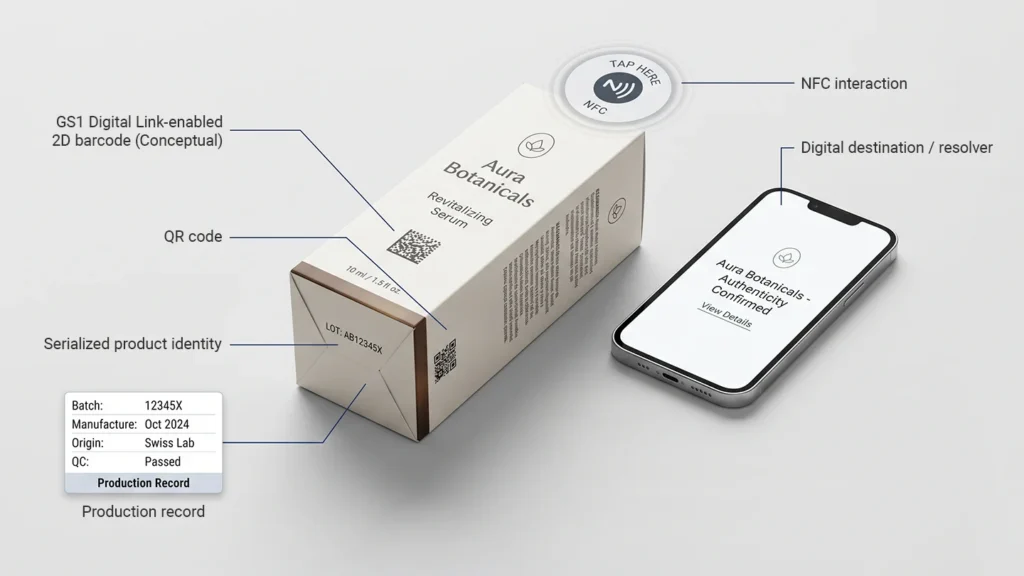
Connected packaging works through four layers: the physical package, data carrier, governed identity, and digital destination.
Physical Package
The package carries the connected element. This may be a folding carton, pressure-sensitive label, sleeve, tray, insert, card carrier, flexible package, bottle label, security seal, or secondary package.
The packaging format affects performance. Coatings, folds, textures, material variation, line speed, lighting, and surface quality can all affect readability, placement, encoding performance, and durability.
Data Carrier
The data carrier is the visible or embedded technology that connects the package to digital information.
Common data carriers include QR codes, GS1 Digital Link-enabled 2D barcodes, Data Matrix codes, serialized barcodes, NFC tags / RFID labels, smart labels, tamper-evident labels, and variable data printed directly on the package.
Each option has a different role:
- QR codes and 2D barcodes support smartphone and scanner-based interaction.
- NFC supports tap-based engagement and authentication.
- RFID supports item-level tracking and non-line-of-sight reads.
- Serialized codes distinguish one product or package from another.
Governed Product Identity
The product identity is the data behind the scan, tap, or read event.
It may identify a product type, batch, serialized unit, promotion, secure credential, carton, case, or pallet. In more advanced connected packaging solutions, the identity may also connect to authentication status, lifecycle information, recall data, region-specific content, or a campaign rule.
This identity must be generated, assigned, applied, verified, secured, and reconciled. If that process is not controlled, the package may look connected while the underlying data remains unreliable.
Digital Destination
The digital destination is what the user reaches after interacting with the package. It may include product information, authentication pages, GS1 Digital Link resolver destinations, loyalty experiences, instructions, warranty registration, recall updates, recycling guidance, customer support, or region-specific campaign content.
That flexibility creates value only when the physical product identity remains accurate.
Where GS1 Digital Link Fits
GS1 Digital Link is relevant to connected packaging because it provides a standards-based way to connect product identifiers to web-based information.
In practical terms, GS1 Digital Link allows GS1 identifiers, such as GTINs and related attributes, to be expressed in a web-friendly structure. When encoded in a 2D barcode, this can connect a physical product to online information while supporting product identification.
This matters because many brands want to reduce disconnected symbols on packaging. A single package may carry a retail barcode, promotional QR code, traceability code, authentication mark, and internal production identifier, creating clutter, operational complexity, and data fragmentation.
GS1 Digital Link can create a more structured path as the market moves toward 2D barcodes that carry richer product information and connect packaging to digital content.
However, GS1 Digital Link does not eliminate the need for production control.
The barcode still needs to be printed or applied correctly. Product data still needs accurate assignment. The code still needs inspection. Physical output still needs reconciliation against the job record. Rejected or reworked products still need controlled handling before they move downstream.
GS1 Digital Link strengthens the data structure. Production control protects the physical and operational integrity of the package carrying that data.
The Hardware and Software Behind Connected Packaging
Connected packaging solutions depend on production hardware and software working as one controlled environment.
On the hardware side, this may include digital printing systems for variable data and serialized marks, label applicators, RFID or NFC encoding stations, barcode readers, machine vision inspection, camera systems, registration modules, feeders, conveyors, reject systems, diverters, and pack-out labeling systems.
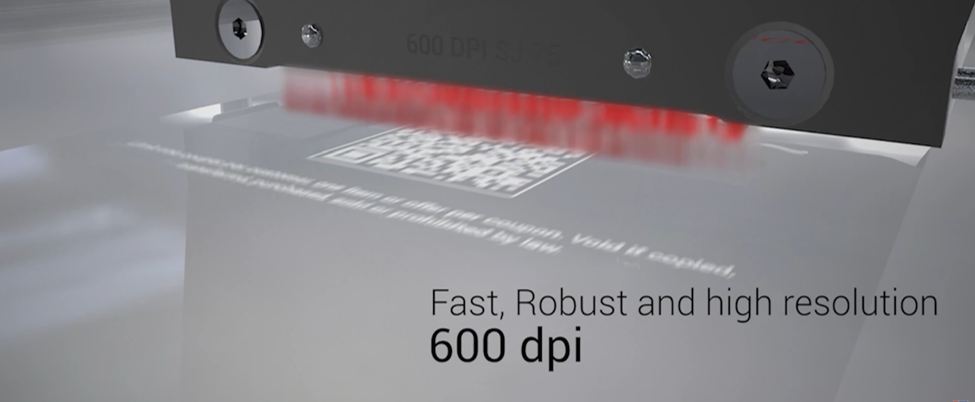
These technologies must do more than place a code on a package. The line must verify that the code is present, readable, correctly placed, associated with the right product, and reconciled before pack-out.
On the software side, connected packaging may require serialization management, identity generation, job control, variable data management, inspection rules, barcode verification, RFID and NFC data management, reject reconciliation, audit records, APIs, resolver logic, authentication portals, and dashboards.
The software layer must control how identity moves through production and how exceptions are handled.
When hardware and software operate as separate islands, connected packaging becomes fragile. When they operate as one governed environment, the line can create a stronger production record and a more reliable downstream experience.
How Connected Packaging Solutions Are Implemented
Connected packaging implementation should begin with the business outcome, then move into production requirements.
First, define the use case. The package may need to support product education, authentication, traceability, recall readiness, loyalty, sustainability information, regulatory guidance, personalization, or supply chain visibility.
Second, define the identity model. The connected element may represent a product type, batch, serialized unit, bundle, carton, case, pallet, campaign, or secure credential.
Third, select the data carrier. QR codes and GS1 Digital Link-enabled 2D barcodes may support consumer-facing scans and structured product information. NFC may support tap-based experiences or authentication. RFID may support inventory visibility and item-level tracking.
Fourth, integrate production hardware and govern data flow. The line must be able to print, apply, encode, inspect, verify, reject, rework, and clear product without destabilizing production. Data may also need to pass between serialization systems, ERP, MES, WMS, print controllers, inspection systems, brand platforms, or resolver infrastructure.
Finally, verify and reconcile output. The line should be able to confirm what was printed, encoded, inspected, accepted, rejected, reworked, packed, and released.
Connected Packaging Value by Stakeholder
Connected packaging solutions affect multiple teams. The strongest programs align requirements before production begins.
| Stakeholder | What They Need | Connected Packaging Value |
| Brand and marketing leaders | Trusted post-purchase interaction | Product education, loyalty, personalization, campaign measurement, and customer trust |
| Operations leaders | Stable throughput and fewer manual exceptions | Inline application, inspection, reject handling, and production visibility |
| Quality teams | Earlier defect containment | Verification of presence, placement, readability, print quality, and product status |
| Compliance and security teams | Traceable records and controlled access | Serialization, auditability, access control, and defensible production records |
| Executive buyers | Lower operating exposure and clearer business value | Stronger alignment between customer trust, traceability, production control, and commercial performance |
Connected packaging is not only a brand initiative. It is an operating model that must serve the line, data environment, and customer experience together.
Common Risks in Connected Packaging Programs
Connected packaging programs struggle when teams focus on the visible technology but under-design the production system behind it.
Common risks include codes that are printed but not verified, NFC or RFID tags that are applied but not encoded or validated, serialized identities that are created but not reconciled, package materials that reduce code readability, scan destinations that are disconnected from product status, and rejected products that remain active in downstream systems.
Other risks include marketing platforms disconnected from production records, manual rework that breaks traceability, late data privacy rules, and multiple symbols that create package clutter and data fragmentation.
These issues are not only technical. They create operational, commercial, compliance, and trust consequences.
How Pack-Smart Inc. Supports Connected Packaging Solutions
Pack-Smart Inc. supports connected packaging solutions by engineering the production systems that create, apply, verify, reconcile, and govern product identity at line level.
That work includes material handling, digital printing, labeling, serialization, RFID and NFC integration, machine vision, reject handling, data reconciliation, and pack-out logic.
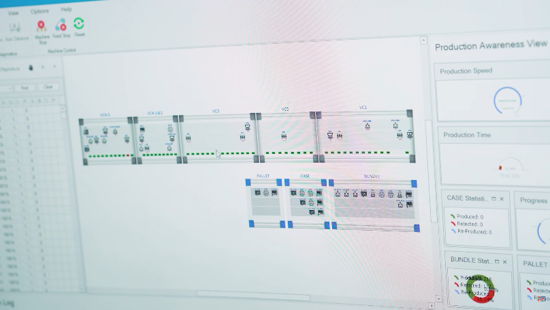
Delta-X Trust provides the governed data environment behind these workflows. It connects product identity, production events, verification outcomes, exception handling, and downstream engagement so brands can move from disconnected codes to controlled packaging intelligence.
For manufacturers, connected packaging introduces a new operating requirement. The line must protect the integrity of the product, package, and data at the same time.
Final Thought: Trust Is Built Before the Scan
Connected packaging is often judged by what happens after the scan. That is understandable. The scan is what the customer sees.
But the scan is not where trust begins.
Trust begins when the product identity is created correctly. It continues when that identity is applied to the right package, inspected in-line, reconciled against production data, and connected to the right digital destination.
Connected packaging solutions create the most value when the package becomes more than a digital touchpoint. It becomes a verified data event.