

Blog
Counterfeit Pharmaceuticals: Why Product Integrity Depends on Serialization Architecture
Part 1 of 2
The Architecture Question Pharmaceutical Executives Can’t Ignore
Today, every major pharmaceutical market has a serialization mandate. The U.S. Drug Supply Chain Security Act requires electronic, interoperable, package-level product tracing across the supply chain.
The EU Falsified Medicines Directive requires unique identifiers and tamper-evident features on all prescription medicines sold in Europe. Additionally, Brazil, Saudi Arabia, India, Turkey, China, most of Southeast Asia and the Gulf Cooperation Council issued equivalent requirements. Regulatory environments are no longer ambiguous.
Typically, the distinction between implemented serialization and serialization architecture is misunderstood. Strategic exposure determines which organizations can defend product integrity, survive regulatory scrutiny, manage recalls with precision and sustain market access. As requirements evolve, organizations find themselves in perpetual catch-up. They are attempting to close visible gaps while absorbing operational systems that barely meet minimum standards.
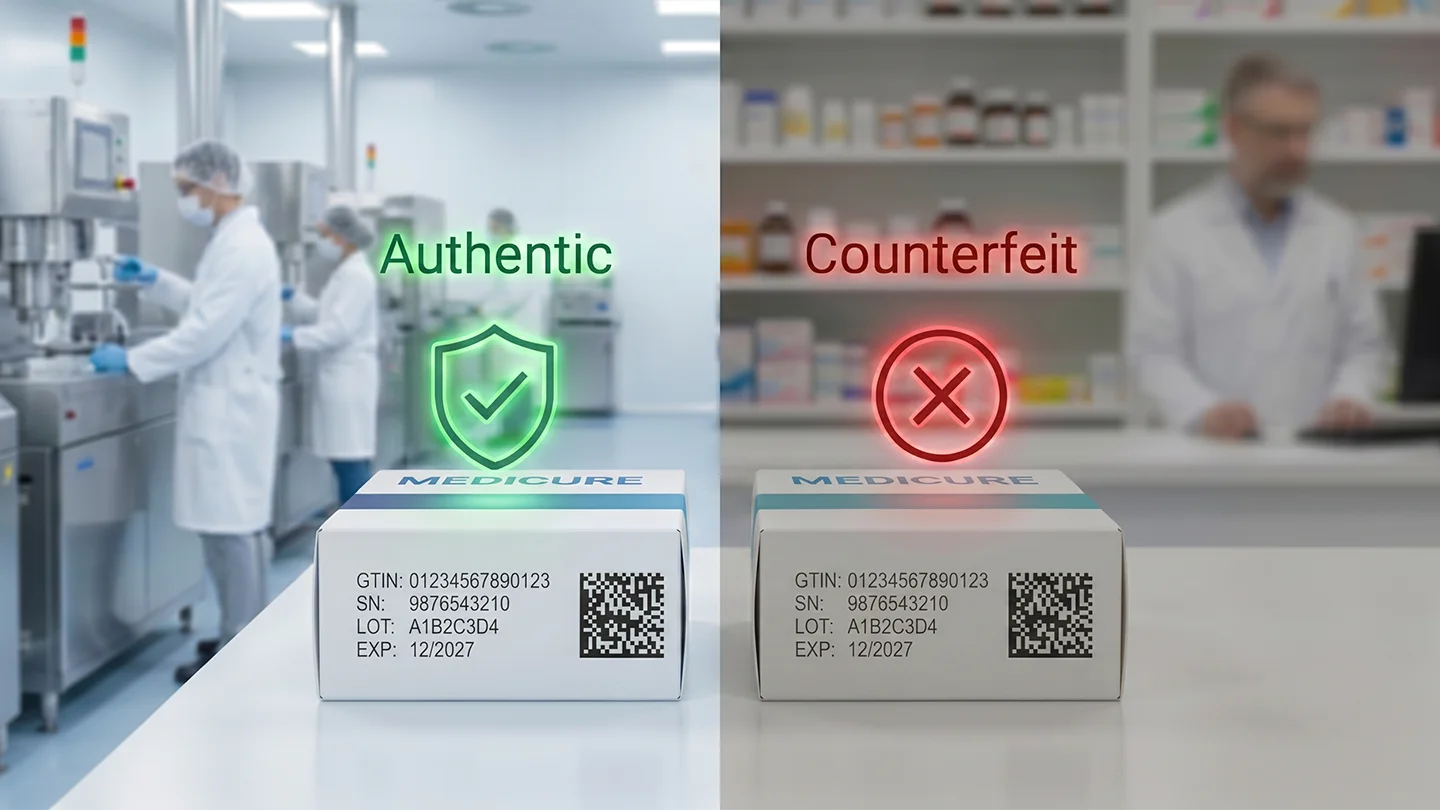
Pharmaceutical serialization is now infrastructure the same way financial transaction processing, telecommunications networks, and enterprise resource planning systems are considered infrastructure. When serialization works invisibly and reliably at scale, it builds the foundation for everything built above it. When serialization is fragmented, poorly integrated, or built to meet requirements at a specific moment in time, operational risk compounds.
The strategic question for pharmaceutical executives isn’t whether serialization exists inside the organization. The question is whether business serialization architecture can scale over the next decade. Can it defend product integrity from the production line to the last authorized point of verification? Can it support precision-recall execution, sustain compliance across evolving market requirements, and deliver supply chain overwatch? Will it meet the demands of modern pharmaceutical operations? And, can serialization be done without losing control of the identity record at any point in between?
“Compliance deadlines created serialization programs but didn’t guarantee serialization architecture. The difference between the two determines which organizations control product integrity over the next decade and which perpetually manage the consequences of systems built only to satisfy the minimum.”
Counterfeit Risk Represents Identity Failure, Not a Marking Problem
The framing of pharmaceutical counterfeiting as a marketing problem led many organizations to underinvest in the architecture required to solve it. If the problem was ‘products lacked machine-readable codes’, any system capable of generating and printing compliant codes would constitute an adequate response.
Fundamental problems exist: counterfeit packages threaten pharmaceutical supply chains. Any product incapable of verification against trusted, authoritative records is a threat.
This includes falsified units bearing fake codes and diverted inventory transported outside authorized distribution channels. It includes products entering markets they weren’t intended for, often at lower cost. It includes aggregation errors allowing product hierarchies to become internally inconsistent without an error surfacing downstream. And it includes repackaged products where physical containers are separated from legitimate identity records.
The World Health Organization estimates one in ten medicines in low-and middle-income countries fails quality control testing. This indicates the product is likely substandard or falsified. This figure should not be deemed a universal counterfeit rate across pharmaceutical markets. It should be read as evidence product integrity failures remain systemic when supply-chain controls, regulatory enforcement, and authentication infrastructure are weak.
The implication for manufacturers operating across complex, multi-market distribution networks is not reassuring. The strength of your serialization architecture is only as effective as the weakest control point through which your product travels.
Distinction matters operationally because a printed code is a claim. Serialized identity, supported by governed commissioning events, line-level inspection records, aggregation relationships and transaction history across the distribution network is a verifiable record.
A counterfeit operation can reproduce the physical appearance of a code; however, it cannot reproduce the production event, the inspection result and aggregation hierarchy through the authorized custody chain.
Where Identity Failures Occur
In pharmaceutical operations, identity failures occur at the edge of serialization architecture. This is the intersection where data, print, and inspection operate in precise synchronization. Failure occurs in the aggregation layer, where parent-child relationships become inconsistent due to exception handling, rework, or manual intervention. Also, the enterprise data environment overlaps when multiple systems maintain conflicting versions of the same identity record. This reality results in downstream failures across the distribution network, where trading partner readiness, EPCIS event integrity, and custody verification vary significantly.
Each boundary condition represents a gap between the identity an organization issued and an unverified identity at POS. Often, the gap is invisible during normal operations. It only becomes visible during a high-cost recall, regulatory inquiry, customs examination or channel integrity dispute.
OPERATIONAL IMPLICATION “A serialized code is as trustworthy as the production/data architecture behind it. Organizations focusing exclusively on code generation and regulatory reporting without governing the full chain of commissioning, inspection, aggregation and custody events are producing serialized artifacts rather than verifiable product identities. The commercial exposure is not the cost of printing a serial number. It is the cost of being unable to prove a specific product belongs in a specific place at a specific point in the chain of custody.”
The Tylenol Lesson Was Never About Tampering
In 1982, the Tylenol Crisis was regularly cited in pharmaceutical industry discourse as the origin point of tamper-evident packaging requirements. It represented the broad commitment to consumer safety through product integrity infrastructure.
When seven people died in the Chicago area after ingesting cyanide-laced Tylenol capsules, Johnson & Johnson decided to remove approximately 31 million bottles from the market. The decision was made because the company had no reliable mechanism to determine which bottles were compromised, not because 31 million bottles were contaminated. The decision was made in the absence of verifiable product identity, representing the only defensible containment perimeter available.
The architecture of 1982 made a targeted recall impossible. No unit-level identity, custody record, or distribution trace could confidently isolate the exposure. The response that became a case study in crisis management was, at its foundation, a response to an information failure.
The lesson pharmaceutical executives should carry forward from the Tylenol case is not that decisive action in a crisis is admirable. The architecture available at the time of the crisis determined the scope of the required response. In a modern pharmaceutical supply chain, threats are not localized. Retail tampering events include systemic parallel trade, unauthorized geographic diversion, repackaging fraud, secondary wholesaler leakage, digitally coordinated counterfeit networks, contract manufacturing opacity, and aggregation breakdowns. These allow unverifiable inventory to travel downstream. The architecture available at the time of the event once again determines the scope of the defensible response required.

An organization with precise, governed, unit-level traceability can isolate affected batches with surgical precision. It can identify specific distribution pathways through an integrity failure. It provides regulators with a defensible chain-of-custody record, limiting the scope of the investigation. It can tell affected downstream partners exactly which serialized units require action.
An organization without architecture faces a similar challenge to the one Johnson & Johnson faced in 1982: expand the perimeter until confidence is restored, accept the associated costs and channel disruption, and operate knowing the next incident will present the same choice.
“The Tylenol decision was not a courageous product strategy. It was the only option available to organizations unable to verify exposure boundaries. Modern serialization architecture is built specifically so organizations never have to make that choice again.”
Compliance Programs and Infrastructure Are Not the Same Thing
The conditions under which most pharmaceutical serialization programs were implemented created a structural bias towards producing compliance artifacts versus developing enterprise architecture. Regulatory deadlines are binary: compliant or non-compliant. Capital allocation follows perceived risk. Project governance tracks completion against mandate requirements. In this environment, the rational organizational response is to implement the minimum architecture necessary to achieve compliance by the required date.
The response was both understandable and architecturally consequential in ways most organizations absorb operational costs.
Serialization programs designed for compliance inspection rather than operational use tend to produce identifiable architectural patterns. Data environments become fragmented across systems integrated under time pressure without coherent governance or master data connecting them. Line-level practices become uneven across sites. Production formats as individual implementations are optimized for local compliance versus enterprise consistency. Manual reconciliation processes stack because exception-handling procedures during initial deployment become permanent operating requirements. And integration debt accumulates as the compliance-era architecture becomes the new baseline for every subsequent mandate change, system upgrade, and new market entry.
What Minimum Compliance Costs Over Time
The economic exposure of a compliance-grade serialization architecture is not always visible in operating budgets at the granular level required to make the investment case for architectural improvement. Instead, it emerges as a recurring cost signature that is individually manageable but collectively significant.
Exception resolution consumes operator time and quality resources at a rate well-architected systems reduce substantially. Integration maintenance costs accumulate as the number of systems, sites, markets, and trading-partner connections grows. Compare this against an architecture not designed for extension.
Recall preparedness testing reveals gaps that require manual remediation because the traceability record is insufficient to support the precision required for targeted isolation. Regulatory submissions should be automated and require manual intervention because the authoritative data source is unclear or reporting infrastructure is disconnected from the production record.
The cumulative cost of these patterns across a mid-size pharmaceutical manufacturer operating in multiple regulated markets over five years is not trivial. It is also structurally resistant to reduction without addressing the underlying architecture. Incremental process improvement does not solve an integration design problem. Adding compliance staff does not solve a data governance problem. Extending existing systems does not solve a fundamental architecture problem.
The organizations that recognized this distinction early and invested in serialization architecture rather than serialization compliance are accumulating advantages that compound over time. Their systems adapt to new market requirements without full redeployment. Their exception rates decline as production proof quality improves. Their recall readiness costs decrease because the traceability infrastructure already exists at the precision level the event would require. And their regulatory relationships benefit from the demonstrable quality of the records they produce.
STRATEGIC FRAMING “The serialization investment decision should not be framed as a code-management decision. It is an enterprise risk architecture decision. The serialized identifier is the prerequisite infrastructure layer upon which regulatory interoperability, authentication, recall precision, supply-chain observability, and market access continuity all depend. Organizations that frame it more narrowly will make narrower investments and receive narrower returns.”
The Production Line Is the Decisive Control Point
Serialization architecture begins with enterprise data governance, master data management, regulatory reporting frameworks, and trading partner integration. But it does not become a product integrity claim until it operates successfully on a production line moving product at commercial speed, under real manufacturing conditions, with the variability, exception states, and operational complexity that production environments always introduce.
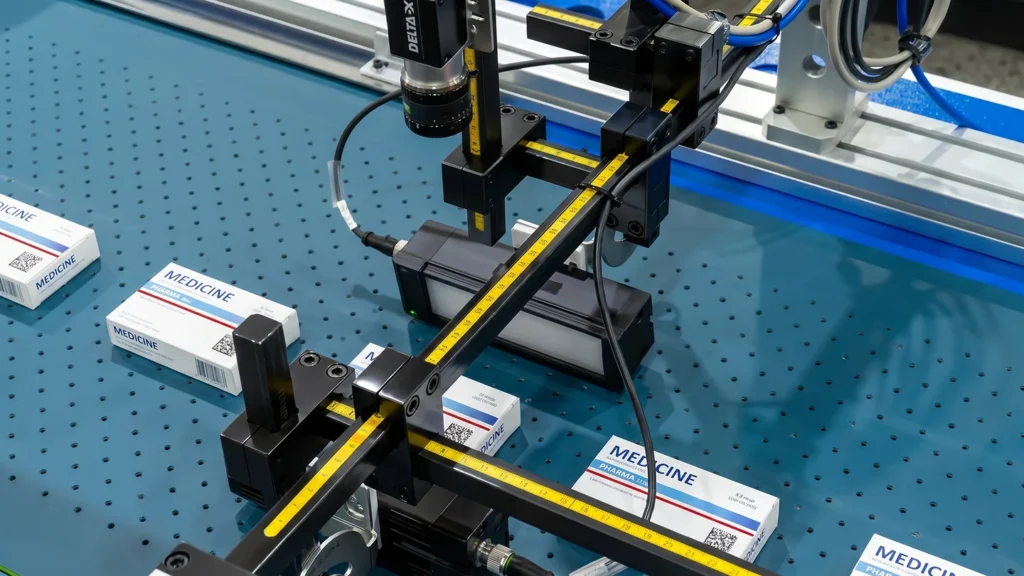
The production line is where a digital identity becomes a physical claim. It is where the serial number transitions from a data record to a marked carton, label, bundle, shipper, or pallet that will travel through a distribution network and arrive in a regulatory jurisdiction where it will be verified against the record created at the moment of marking. If the production record is compromised at this stage, no downstream process can reconstruct the integrity that was lost. The enterprise record inherits the quality of production execution, for better or worse.
Part 2 Coming Monday, June 22
Want to learn more? Get in touch with us here!