RPP Series
Reciprocating Pick and Place Series
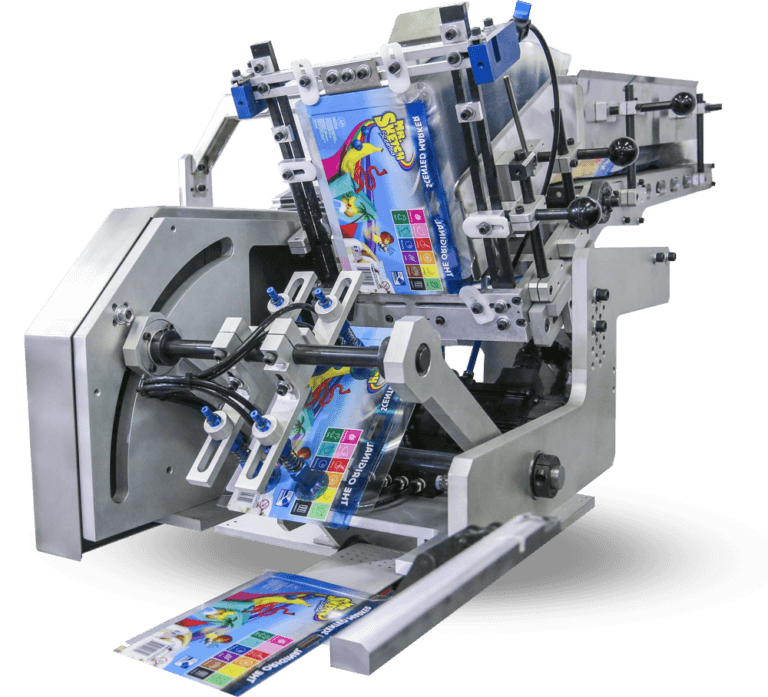
Maximize your production efficiency with the RPP Series, designed for high-speed, accurate handling of delicate materials and uniquely shaped products.
Technology Category
Pick and place robotics control product acquisition, transfer, orientation, placement, and release between production operations. Pack-Smart Inc. integrates robotic motion with product presentation, registration, vacuum handling, inspection, and downstream line logic.
Pick & Place Robotics Technologies
Pick-and-place performance depends on controlling the entire transfer event, from reliable product presentation and acquisition through motion, release, and verification at the destination.
Pack-Smart integrates rotary, reciprocating, and multi-axis pick-and-place approaches into feeding, assembly, affixing, packaging, kitting, sorting, and finishing workflows. Vacuum, grippers, guides, sensing, registration, and motion control are selected around the product and the placement requirement.
The architecture depends on product geometry, mass, stiffness, porosity, surface sensitivity, orientation, pick location, travel distance, placement tolerance, line speed, and target condition. Upstream presentation and downstream registration are often the dominant factors because the robot can only place accurately what it can acquire predictably.
Technology Category
Explore the Pack-Smart technologies assigned to this category. A category can include multiple technologies with different functions, configurations, and application requirements.
Maximize your production efficiency with the RPP Series, designed for high-speed, accurate handling of delicate materials and uniquely shaped products.
Consistently feed, insert, attach, and batch delicate materials and oddly shaped products at 30,000 PPH, with vacuum pick & place motion and ±0.02" placement accuracy.
Relevant Systems
The technologies in this category are used in the following Pack-Smart automated systems.
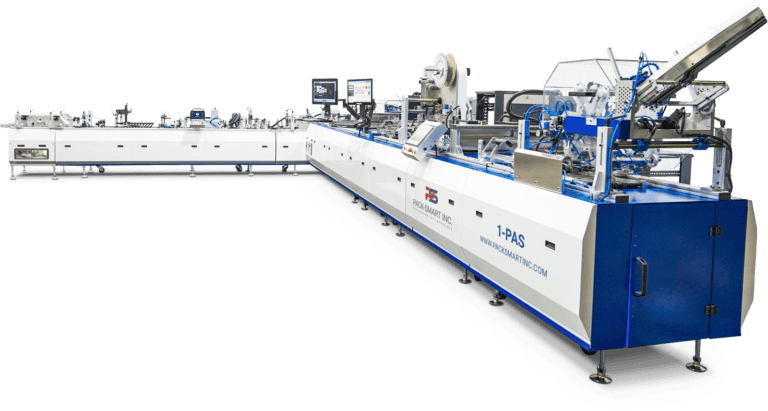
The 1-PAS Inline Secure Card Packaging System personalizes, affixes, seals, batches, bundles, and packs out secure open and closed loop cards in one workflow. It supports 20,000 PPH, duplex personalization, 600 DPI UV DOD printing, ±0.5 mm affixing accuracy, and Delta-X reporting.
The CP-250 Duplex Card Personalization System automates high-speed card printing, encoding, labeling, verification, and defect diversion for open loop, closed loop, and payment cards. It supports DOD personalization, barcode inspection, Delta-X tracking, 24/7 operation, and speeds up to 30,000 PPH.
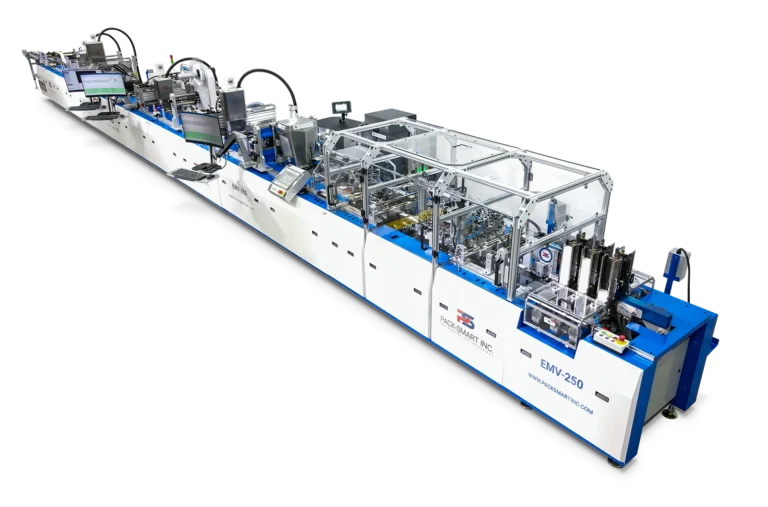
The EMV-250 Smart Card Issuance System automates contact and contactless encoding, DOD personalization, verification, and production tracking for dual interface chip cards. It supports payment cards, SIM cards, and open loop cards at speeds up to 10,000 cards per hour.
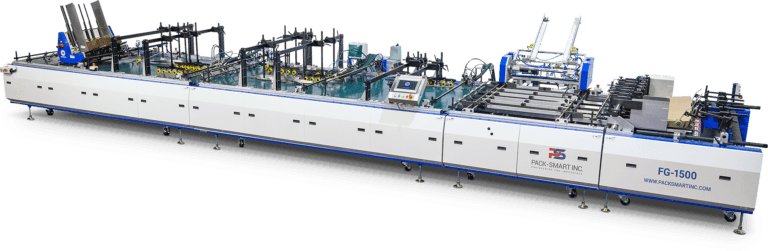
The FG-1500 Specialty Corrugated Folder Gluer produces POP displays and reinforced corrugated packaging with integrated folding, gluing, affixing, and finishing. It processes E, B, C flute and double-wall corrugated board with up to 60-inch blank width, 2,500 PPH speeds, and ±0.5 mm affixing accuracy.
The FG-800 Reinforced Carton Specialty Finishing System combines folding, gluing, affixing, personalization, and sorting for high-value cartons and auto-erect cartons. It supports speeds up to 10,000 PPH, carton widths up to 30 inches, and ±0.4 mm affixing accuracy.
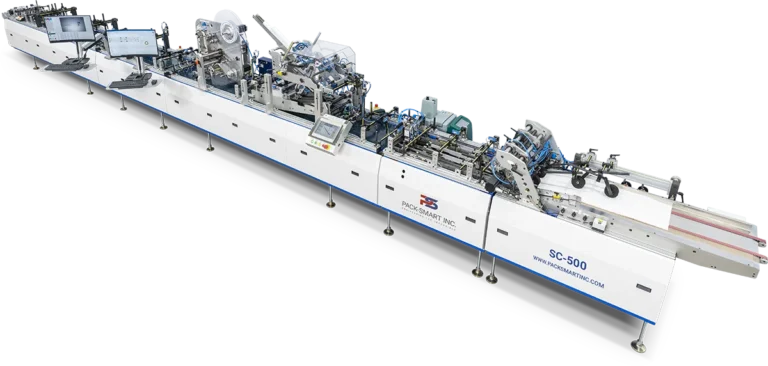
The SC-500 Secure Card Packaging System automates inline card-to-carrier affixing, booklet tipping, DOD personalization, folding, gluing, verification, and pack-out. Designed for SIM, phone, loyalty, gift, open loop, closed loop, and ID cards, it supports high-speed secure packaging with Delta-X traceability.
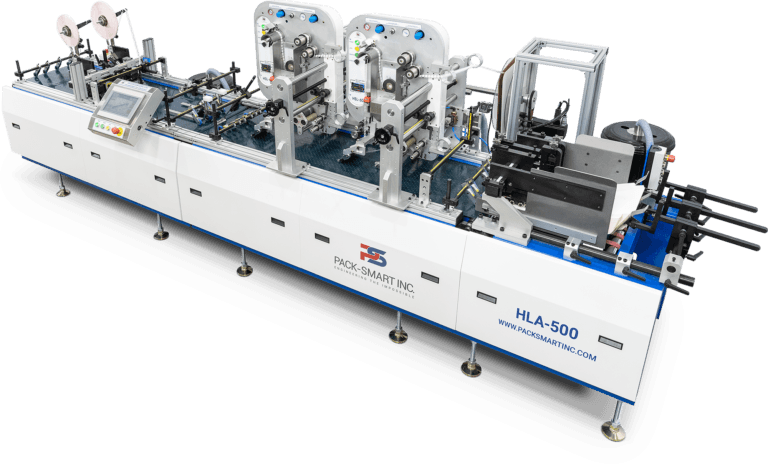
The HLA-500 High-Speed Label Application System applies pressure-sensitive labels, Velcro labels, and hi/low tack tape for high-value packaging and print finishing workflows. It supports speeds up to 15,000 PPH, ±0.5 mm affixing accuracy, quick changeovers, and modular inline integration.
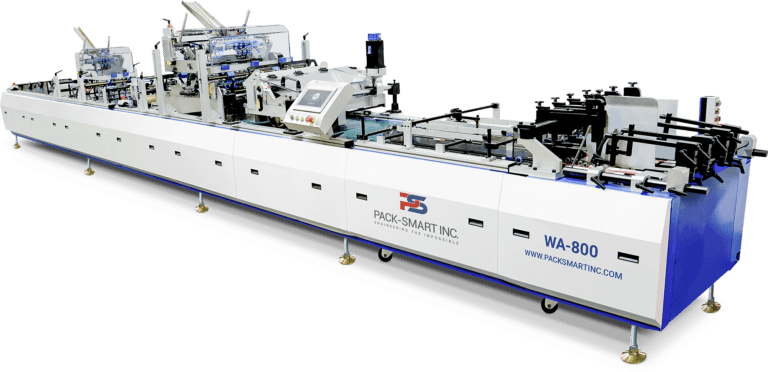
The WA-800r Rigid Window Affixing System applies rigid windows to high-value cartons and specialty packaging with scratch-free handling, servo-driven placement, and flexible inline finishing. It supports speeds up to 25,000 PPH, product widths up to 30 inches, and materials including PVC, PET, PLA, and polystyrene.
Production Challenges
Reliable robotic handling depends on predictable presentation, suitable end-of-arm tooling, controlled motion, and a destination that remains registered to the placement event.
Stack position, feeder output, orientation, curl, static, and random product location can change the acquisition point.
Porous, flexible, textured, delicate, irregular, or small products may require different vacuum, gripping, tooling, or support strategies.
Acceleration, long travel, unsupported edges, low rigidity, or changing center of gravity can cause slip, rotation, vibration, or loss of vacuum.
Accurate robot motion cannot compensate for a carrier, carton, web, or target product that has moved outside the expected reference position.
Application Fit
The motion platform and end-effector are selected around product behaviour, pick presentation, destination geometry, cycle requirement, and verification needs.
Pick cards, labels, windows, inserts, samples, closures, or rigid components and place them onto a controlled target product.
Move products between conveyors, pockets, fixtures, lanes, or process stations while changing orientation when required.
Coordinate multiple feeders and pick operations to build a defined component set or product assembly.
Use imaging to locate products or target features and support adaptive pick or placement when fixed mechanical registration is not sufficient.
Frequently Asked Questions
These are the questions manufacturers and production teams commonly ask when evaluating this application.
Pick-and-place handling can be engineered for cards, paper products, labels, cartons, inserts, pouches, rigid components, and irregular products after geometry, mass, stiffness, surface, porosity, orientation, and gripping restrictions are evaluated.
Potentially. Integration depends on available space, product path, line controls, speed synchronization, guarding, utilities, and the upstream and downstream equipment. Pack-Smart evaluates the complete process before defining the interface.
Vacuum or gripper sensing, product sensors, machine vision, and downstream inspection can be used to confirm product acquisition, release, presence, orientation, or final position when required.
The response is application-specific. The control system can identify the affected product or process state and trigger a controlled reject, alternate route, alarm, hold condition, or line stop when that response is required.
Changeover requirements depend on product range and module configuration. Mechanical adjustments, recipes, guides, sensors, tooling, and control parameters can be designed around repeatable setup and clear line-clearance requirements.
Provide representative products, dimensions and weight range, surface restrictions, pick presentation, destination, required orientation, placement tolerance, target output, available footprint, inspection requirement, and upstream and downstream equipment.
Technology Assessment
Share representative products, pick presentation, destination geometry, orientation, placement requirement, target output, and inspection criteria. Pack-Smart can identify the motion platform, end-effector, sensing, registration, and verification approach required for controlled transfer.