Assembly Automation
3D product assembly automation coordinates feeding, orientation, placement, inspection, and pack-out around a defined process sequence. Pack-Smart connects material handling and verification so each…
Automation for loose, rigid, and dimensional products that must be fed, oriented, assembled, personalized, inspected, packaged, and tracked without losing control of product flow.
3D Product Systems
Loose and dimensional products create production variation before packaging even begins.
Shape, orientation, surface condition, presentation, and part mix can all affect feeding, assembly, personalization, inspection, and pack-out. Pack-Smart approaches 3D product automation as a coordinated handling problem, connecting material flow, product placement, verification, and downstream packaging around the required output.
The system architecture is defined by the physical product, how it arrives at the line, how it must be oriented or assembled, what must be verified, and the controlled output required by the next production stage.
Brands We Work With






Product Applications
Explore the production applications associated with this Product Type. Each application page connects the process requirement to relevant systems, production challenges, and application fit.
3D product assembly automation coordinates feeding, orientation, placement, inspection, and pack-out around a defined process sequence. Pack-Smart connects material handling and verification so each…
3D product feeding and sorting systems separate, orient, space, and route dimensional products before assembly, packaging, personalization, or inspection. Pack-Smart coordinates product presentation with sensors,…
3D product packaging automation coordinates product presentation, placement, package handling, inspection, and pack-out for rigid or dimensional items. Pack-Smart integrates these steps around the…
3D product serialization and labelling connects variable identity, code or label application, verification, and product handling within the production line. Pack-Smart helps preserve the…
Relevant Systems
Explore Pack-Smart systems assigned to this Product Type. Final system configuration depends on the product, material presentation, process sequence, inspection requirements, data requirements, throughput target, and surrounding line.
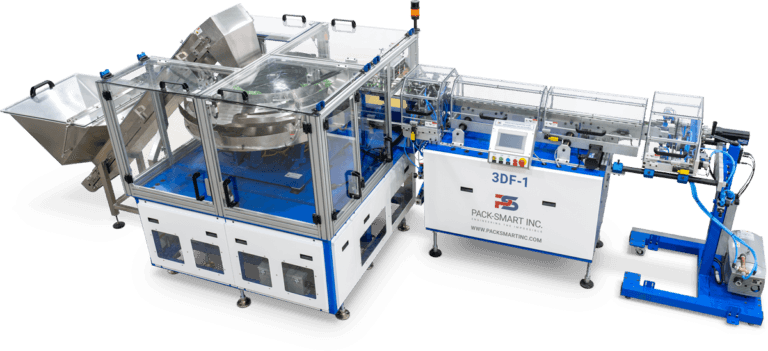
The 3D Product Feeding System automates bulk loading, sorting, orienting, buffering, and placement of loose 3D products. Designed for FMCG and pharmaceutical packaging workflows, it uses vibratory feeding, redundant buffers, lugged transport, and pick-and-place handling to deliver up to 200 products per minute.
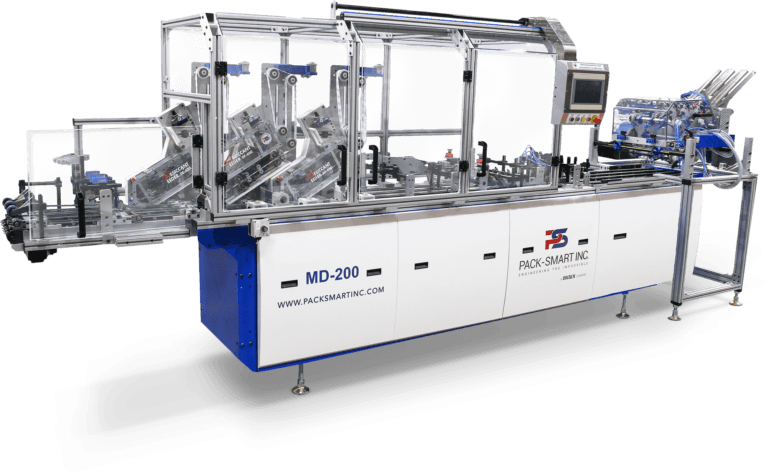
The MD-200 Multi-Stream Finishing and Packaging System automates final assembly for medical-grade kits, including rapid antigen test kits. It adds kit components, folds carriers, applies DOD serialization, and guides finished kits into wrapping at speeds up to 200 PPM.
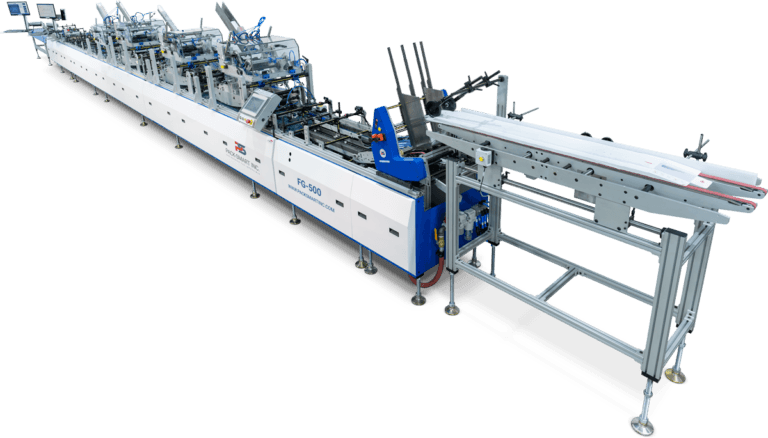
The FG-500 Specialty Carton Folding and Finishing System automates carton kitting, affixing, folding, gluing, DOD personalization, inspection, and reject handling. It supports ±0.4 mm affixing accuracy, 600 DPI printing, and Delta-X quality control for secure, conforming finished packages.
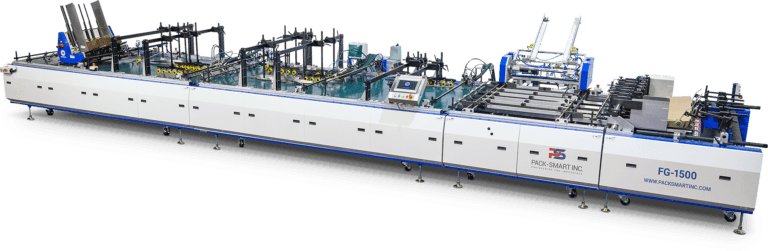
The FG-1500 Specialty Corrugated Folder Gluer produces POP displays and reinforced corrugated packaging with integrated folding, gluing, affixing, and finishing. It processes E, B, C flute and double-wall corrugated board with up to 60-inch blank width, 2,500 PPH speeds, and ±0.5 mm affixing accuracy.
Production Challenges
Variation in product geometry and presentation can compound across the line unless each transfer and process step is controlled.
Bulk-fed or randomly presented products must be separated and oriented before downstream operations can remain repeatable.
Kits and assemblies require the right component, in the right position, at the right process stage.
Affixing, insertion, pick-and-place, or packaging operations depend on controlled product position before the next step can execute.
Missing, incorrect, damaged, or mis-presented components need to be identified and contained before pack-out.
Control Points
The production architecture should create repeatable product presentation, preserve the required sequence, verify critical attributes, and contain exceptions before they move downstream.
Establish repeatable presentation from bulk or variable infeed before assembly, personalization, or packaging begins.
Coordinate component handling, orientation, insertion, and affixing around the required product sequence.
Apply variable print, labels, codes, or product identity where the application requires controlled association.
Verify configured attributes, contain exceptions, and move conforming output into the required package or delivery format.
Frequently Asked Questions
These are the questions manufacturers and production teams commonly ask when defining a 3D product handling or packaging application.
The category covers dimensional products that need controlled feeding, orientation, placement, assembly, inspection, packaging, or pack-out. Final fit depends on product geometry, surface, presentation, tolerances, and production requirements.
The handling method is selected from the product and process requirement. Depending on the application, this can involve feeding, singulation, orientation, buffering, robotics, sensors, and vision before downstream operations begin.
Format flexibility depends on the system architecture, tooling, product geometry, and required changeover. Product samples and the expected format range should be reviewed before a specific capability is confirmed.
Where configured, sensors, machine vision, code reading, and production logic can identify non-conforming conditions and trigger reject or exception handling before the product moves deeper into the workflow.
Product geometry, surface, rigidity, weight, presentation, required orientation, replenishment method, throughput target, and downstream process all influence the feeding and handling architecture.
Representative product samples, drawings when available, acceptable variation, target throughput, process sequence, placement tolerances, inspection requirements, reject handling, and details about upstream and downstream equipment provide the strongest starting point.
System Assessment
Share the product, how it enters the line, the required process sequence, verification criteria, and target output. Pack-Smart can evaluate the control points and determine the modular system architecture required for the application.