3D Product Application

Feeding and Sorting

3D product feeding and sorting systems separate, orient, space, and route dimensional products before assembly, packaging, personalization, or inspection. Pack-Smart coordinates product presentation with sensors, vision, and line control.

3D Product Applications

3D Product Feeding and Sorting Systems for Controlled Line Entry

Loose products cannot be placed, assembled, inspected, or packaged consistently until the line can present them in a repeatable orientation and at a controlled rate.

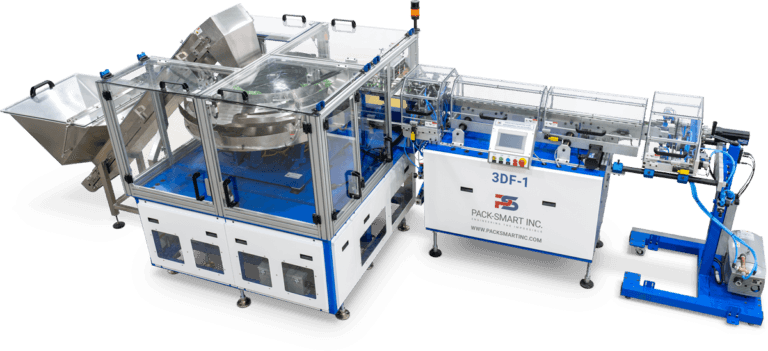
Pack-Smart combines bulk loading, singulation, orientation, buffering, controlled transport, and pick-and-place handling to convert irregular product flow into a stable production input. The feeding system is engineered around the physical behaviour of the part, not around a generic conveyor assumption.

Product geometry, centre of gravity, surface finish, fragility, acceptable contact points, required orientation, and downstream demand all influence the final configuration. Buffering and line-control logic help protect downstream throughput by reducing both product starvation and uncontrolled surges.


Relevant Systems

Feeding & Sorting Systems for 3D Products

Explore Pack-Smart systems for feeding, singulating, orienting, sorting, and presenting 3D products for downstream production. System configuration depends on product geometry, infeed condition, orientation requirements, presentation tolerance, inspection logic, throughput, and the next process step.

Production Challenges

Why loose-product handling becomes a line constraint

A feeding system must do more than move parts. It must create the repeatable product presentation required by every downstream process.

Random orientation

Bulk-loaded parts arrive with uncontrolled position and orientation. The system must singulate and present each item correctly before placement or inspection.

Jams and product damage

Irregular shapes, delicate finishes, and unstable contact points can create jams, scuffing, or deformation when the handling method is not matched to the product.

Inconsistent product flow

Downstream equipment can be starved by gaps or overloaded by surges. Buffering and controlled release are required to stabilize the handoff.

Format changeover pressure

Different product sizes and behaviours may require new tooling, recipes, guides, or presentation logic. Changeover requirements need to be engineered into the application.

Application Fit

Common feeding and sorting use cases

Feeding architecture is selected around the product and the next production task, whether that task is assembly, affixing, inspection, or packaging.

Loose consumer components

Singulate and orient small three-dimensional products before placement into carriers, cartons, trays, or packages.

Medical and kit components

Present defined components at a controlled rate for downstream kit assembly, marking, inspection, or wrapping.

Tokens, badges, and rigid inserts

Control products with distinctive shapes or surfaces before registered pick-and-place handling.

Product-to-package placement

Feed and transfer an oriented item directly into a packaging, finishing, or fulfilment process.

Frequently Asked Questions

Planning a 3D product feeding and sorting system

These are the questions manufacturers and production teams commonly ask when evaluating this application.

How are loose 3D products oriented for production?

The handling method depends on the part. Vibratory feeding, guides, tracks, sensing, buffering, vacuum handling, and pick-and-place technologies can be combined to create the required presentation.

Can delicate or finished products be handled without damage?

The system can be engineered around approved contact points, surface finish, product rigidity, and acceptable handling forces. Representative product testing is required before the method is confirmed.

Why is buffering important in a feeding system?

Buffering separates the variable behaviour of bulk feeding from the steady demand of downstream equipment. It helps reduce product starvation, absorb short interruptions, and maintain controlled transfer.

Can one system handle several product formats?

Potentially. Format range depends on product geometry and the amount of common handling logic between products. Tooling changes, guide adjustments, and stored recipes may be required.

Can feeding and sorting integrate with inspection or packaging equipment?

Yes. The output can be synchronized with downstream pick-and-place, vision inspection, printing, assembly, wrapping, cartoning, or other production modules after the interface is defined.

What samples and data are needed to evaluate the application?

Provide representative parts, acceptable product variation, required orientation, target rate, refill method, handling restrictions, changeover expectations, and information about the downstream process.

Application Assessment

Start with the product, orientation, and downstream demand

Share representative samples and the required line output. Pack-Smart can evaluate how the product behaves in bulk, how it must be presented, and which feeding, buffering, and transfer technologies fit the application.