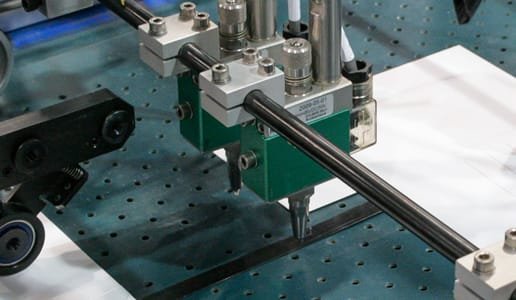
CEG-1
Cold Glue System
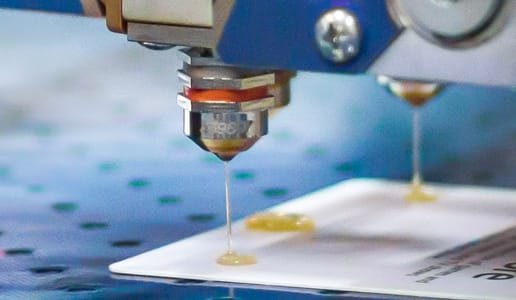
The CEG-1 Cold Glue System is engineered for high-precision, tamper-proof adhesive applications.
Technology Category
Gluing and coating technologies control material metering, pattern placement, timing, and bond formation across packaging and assembly applications. Pack-Smart Inc. integrates hot melt, cold glue, and patterned application with registration, transport, inspection, and line control.
Gluing & Coating Technologies
Adhesive and coating performance starts with controlled metering and placement. The line must apply the right material to the right area at the right point in the product path.
Pack-Smart integrates hot-melt, cold-glue, pattern-application, and application-specific coating technologies into carton, card, print-finishing, assembly, and packaging workflows. Glue or coating application can be synchronized with product registration, component placement, folding, compression, inspection, and reject handling.
The correct method depends on adhesive or coating chemistry, viscosity, open time, substrate, surface energy, application pattern, quantity, temperature, line speed, bond area, and downstream compression. The process must control both the application event and the product condition entering and leaving it.
Technology Category
Explore the Pack-Smart technologies assigned to this category. A category can include multiple technologies with different functions, configurations, and application requirements.
The CEG-1 Cold Glue System is engineered for high-precision, tamper-proof adhesive applications.
Elevate your production capabilities with the PG-900 Flexo Pattern Glue Module, designed for precise and flexible adhesive applications.
Revolutionize your production with the HM-10 Hot Melt Glue System, offering precision application for a wide range of adhesive needs.
Relevant Systems
The technologies in this category are used in the following Pack-Smart automated systems.
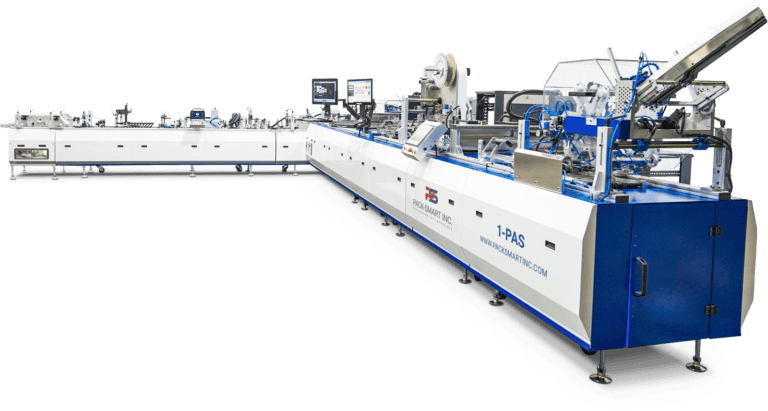
The 1-PAS Inline Secure Card Packaging System personalizes, affixes, seals, batches, bundles, and packs out secure open and closed loop cards in one workflow. It supports 20,000 PPH, duplex personalization, 600 DPI UV DOD printing, ±0.5 mm affixing accuracy, and Delta-X reporting.
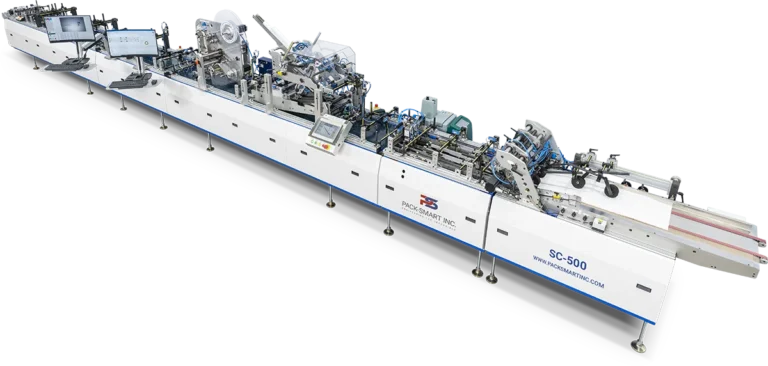
The SC-500 Secure Card Packaging System automates inline card-to-carrier affixing, booklet tipping, DOD personalization, folding, gluing, verification, and pack-out. Designed for SIM, phone, loyalty, gift, open loop, closed loop, and ID cards, it supports high-speed secure packaging with Delta-X traceability.
The FG-800 Reinforced Carton Specialty Finishing System combines folding, gluing, affixing, personalization, and sorting for high-value cartons and auto-erect cartons. It supports speeds up to 10,000 PPH, carton widths up to 30 inches, and ±0.4 mm affixing accuracy.
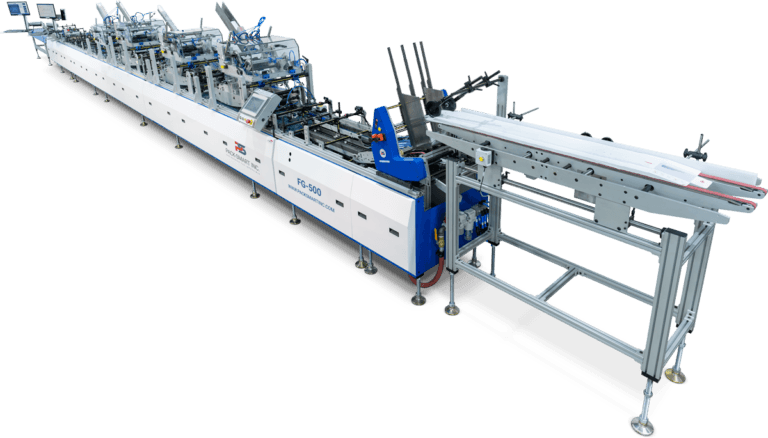
The FG-500 Specialty Carton Folding and Finishing System automates carton kitting, affixing, folding, gluing, DOD personalization, inspection, and reject handling. It supports ±0.4 mm affixing accuracy, 600 DPI printing, and Delta-X quality control for secure, conforming finished packages.
Production Challenges
Application quality depends on material condition, substrate behaviour, registration, dispensing or transfer control, and the timing of the downstream joining process.
Temperature, viscosity, contamination, pot life, pressure, or supply variation can change the amount and shape of material applied.
Product skew, timing drift, encoder mismatch, or guide movement can place glue or coating outside the intended target area.
Coatings, dust, low-surface-energy materials, moisture, texture, and porosity can change wetting, transfer, and bond behaviour.
Correct adhesive placement can still fail if component placement, folding, compression, or cure timing occurs outside the required process window.
Application Fit
The application method is selected around chemistry, pattern, substrate, production speed, bond requirement, and the process immediately after material application.
Apply controlled adhesive patterns to panels, flaps, or seams before folding and compression.
Apply adhesive to support attachment of cards, inserts, windows, reinforcements, labels, or other components.
Place defined glue or coating patterns relative to printed, structural, or product-reference features.
Coordinate application with printing, surface treatment, affixing, folding, inspection, and delivery in multi-stage finishing systems.
Frequently Asked Questions
These are the questions manufacturers and production teams commonly ask when evaluating this application.
The technology can support many paper, board, plastic, film, and laminated substrates, but suitability depends on the selected adhesive or coating, surface condition, application method, and bond requirement. Representative materials must be tested.
Potentially. Integration depends on available space, product path, line controls, speed synchronization, guarding, utilities, and the upstream and downstream equipment. Pack-Smart evaluates the complete process before defining the interface.
Sensors or machine vision can be configured to inspect measurable attributes such as product presence, glue or coating presence, pattern position, component placement, or another defined process criterion. Bond strength requires an appropriate validation method.
The response is application-specific. The control system can identify the affected product or process state and trigger a controlled reject, alternate route, alarm, hold condition, or line stop when that response is required.
Changeover requirements depend on product range and module configuration. Mechanical adjustments, recipes, guides, sensors, tooling, and control parameters can be designed around repeatable setup and clear line-clearance requirements.
Provide representative substrates, adhesive or coating specification, target pattern, application quantity if defined, bond requirement, target speed, temperature limits, downstream compression or cure process, and inspection criteria.
Technology Assessment
Share the substrate, adhesive or coating, target area, required pattern, target speed, and downstream joining or curing sequence. Pack-Smart can identify the application, registration, monitoring, compression, and inspection approach required for the process.