BF-100
Back Fold Module
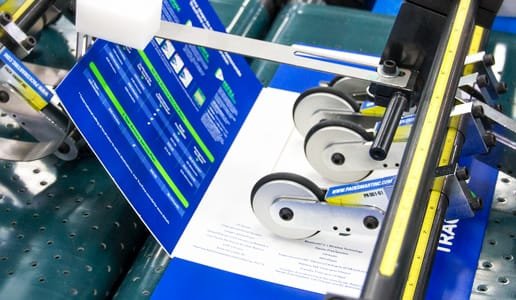
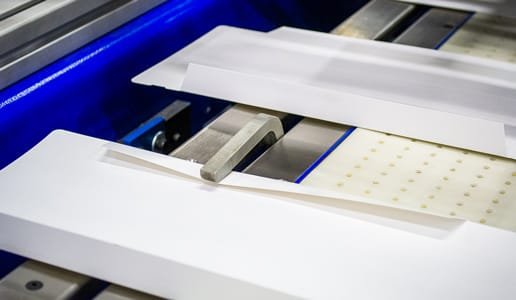
An ultra-lightweight alloy folding attachment. The BF-100 delivers unmatched productivity for four and six-corner folding tasks.
Technology Category
Folding and finishing technologies control fold location, material movement, geometry, and final conversion before the product enters the next production stage. Pack-Smart Inc. integrates folding with registration, transport, inspection, gluing, and downstream handling.
Folding & Finishing Technologies
Folding becomes production logic when the line controls where the fold begins, how the material moves through it, and what finished geometry reaches the next operation.
Pack-Smart integrates plow folding, front and back folding, panel manipulation, compression, gluing, affixing, inspection, and delivery into modular finishing systems. These operations can be applied to cartons, carriers, printed products, and other structures that require controlled conversion after printing, personalization, or component placement.
The required folding method depends on material stiffness, score pattern, fold direction, panel geometry, product thickness, surface finish, line speed, and the operations before and after the fold. Registration and product support must be maintained so the finished structure remains aligned with print, adhesive, labels, inserts, and closures.
Technology Category
Explore the Pack-Smart technologies assigned to this category. A category can include multiple technologies with different functions, configurations, and application requirements.
An ultra-lightweight alloy folding attachment. The BF-100 delivers unmatched productivity for four and six-corner folding tasks.
Streamline your production with the MFF-120 Front Fold Module, designed for high-speed, precise folding of various products at right angles.
The PF50-90 Plow Fold Module integrates seamlessly into production lines, offering both left and right folding configurations.
Relevant Systems
The technologies in this category are used in the following Pack-Smart automated systems.
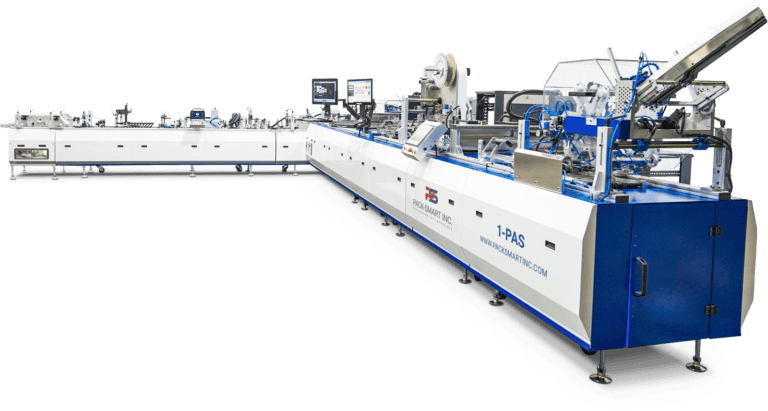
The 1-PAS Inline Secure Card Packaging System personalizes, affixes, seals, batches, bundles, and packs out secure open and closed loop cards in one workflow. It supports 20,000 PPH, duplex personalization, 600 DPI UV DOD printing, ±0.5 mm affixing accuracy, and Delta-X reporting.
The BA-250 Automated Pack-Out System automates inline batching, wrapping, scanning, weighing, verification, and aggregate labeling for high-speed packaging fulfillment. It produces up to 2,000 finished bundles per hour with camera-based aggregation, weight verification, automated bundle labeling, and Delta-X Trust.
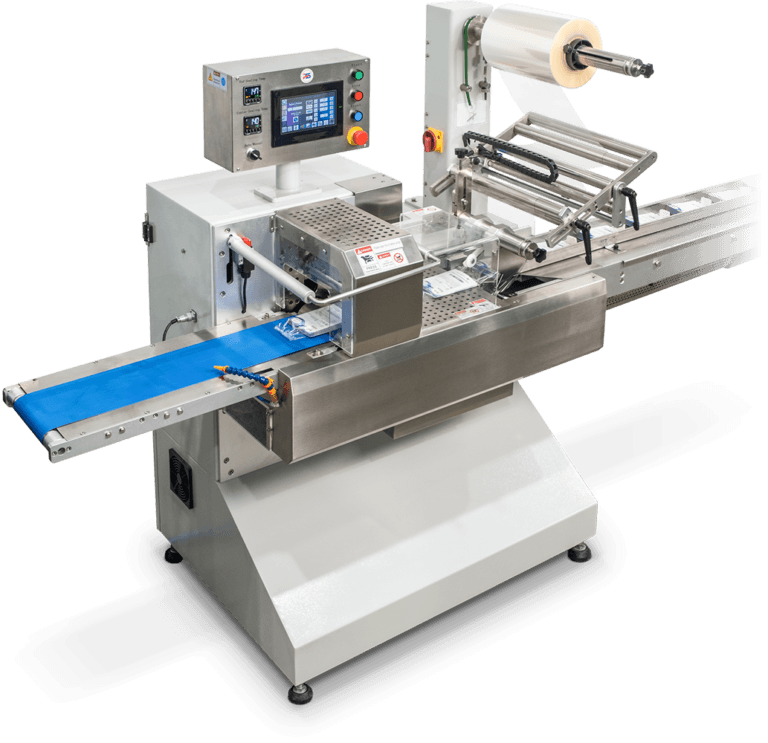
The CP-250 Duplex Card Personalization System automates high-speed card printing, encoding, labeling, verification, and defect diversion for open loop, closed loop, and payment cards. It supports DOD personalization, barcode inspection, Delta-X tracking, 24/7 operation, and speeds up to 30,000 PPH.
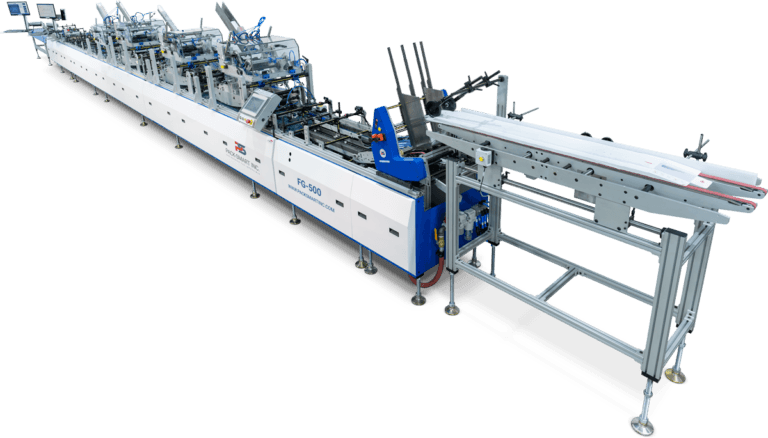
The FG-500 Specialty Carton Folding and Finishing System automates carton kitting, affixing, folding, gluing, DOD personalization, inspection, and reject handling. It supports ±0.4 mm affixing accuracy, 600 DPI printing, and Delta-X quality control for secure, conforming finished packages.
The FG-800 Reinforced Carton Specialty Finishing System combines folding, gluing, affixing, personalization, and sorting for high-value cartons and auto-erect cartons. It supports speeds up to 10,000 PPH, carton widths up to 30 inches, and ±0.4 mm affixing accuracy.
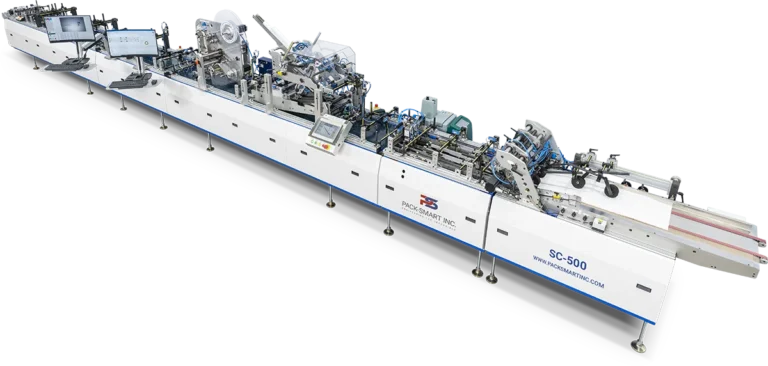
The SC-500 Secure Card Packaging System automates inline card-to-carrier affixing, booklet tipping, DOD personalization, folding, gluing, verification, and pack-out. Designed for SIM, phone, loyalty, gift, open loop, closed loop, and ID cards, it supports high-speed secure packaging with Delta-X traceability.
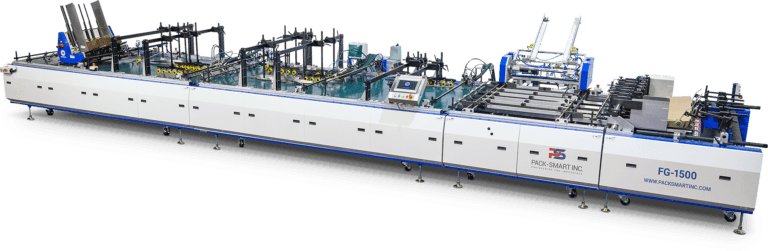
The FG-1500 Specialty Corrugated Folder Gluer produces POP displays and reinforced corrugated packaging with integrated folding, gluing, affixing, and finishing. It processes E, B, C flute and double-wall corrugated board with up to 60-inch blank width, 2,500 PPH speeds, and ±0.5 mm affixing accuracy.
Production Challenges
Reliable finishing depends on material behaviour, score geometry, product registration, tooling position, and controlled compression through the fold sequence.
Board, paper, laminated structures, and mixed-thickness products can resist folding or reopen after the forming point.
Product skew, register changes, guide movement, or tooling adjustment can shift the fold relative to print, scores, adhesive, or attached components.
Labels, cards, inserts, windows, tapes, or adhesive buildup can change local thickness and affect how the product enters or exits folding tooling.
Insufficient compression or unsupported transfers can allow panels to open, distort, or move before the next process.
Application Fit
The folding method and finishing sequence are selected around product structure, material behaviour, component placement, and required final geometry.
Create controlled longitudinal folds as products travel through shaped guides and supported transport.
Use controlled folding mechanisms to manipulate leading or trailing sections where the product geometry requires an active fold.
Combine affixing, gluing, folding, compression, inspection, and delivery around a defined carton or carrier structure.
Complete folding after variable printing, labelling, encoding, or component matching while preserving product identity and sequence.
Frequently Asked Questions
These are the questions manufacturers and production teams commonly ask when evaluating this application.
Folding can be configured for paperboard, cards, carriers, printed sheets, laminated products, and other foldable structures after material stiffness, thickness, score geometry, surface, fold direction, and product range are reviewed.
Potentially. Integration depends on available space, product path, line controls, speed synchronization, guarding, utilities, and the upstream and downstream equipment. Pack-Smart evaluates the complete process before defining the interface.
Sensors or machine vision can be used to inspect measurable attributes such as product presence, panel position, fold alignment, closure state, component placement, or another defined acceptance criterion.
The response is application-specific. The control system can identify the affected product or process state and trigger a controlled reject, alternate route, alarm, hold condition, or line stop when that response is required.
Changeover requirements depend on product range and module configuration. Mechanical adjustments, recipes, guides, sensors, tooling, and control parameters can be designed around repeatable setup and clear line-clearance requirements.
Provide representative products, dielines or structural drawings, material specifications, scores, fold sequence, target dimensions, attached components, adhesive requirements, target speed, inspection criteria, and downstream process.
Technology Assessment
Share the product structure, material, scores, required folds, attached components, target output, and downstream process. Pack-Smart can identify the registration, folding, compression, inspection, and delivery modules required for the finishing sequence.