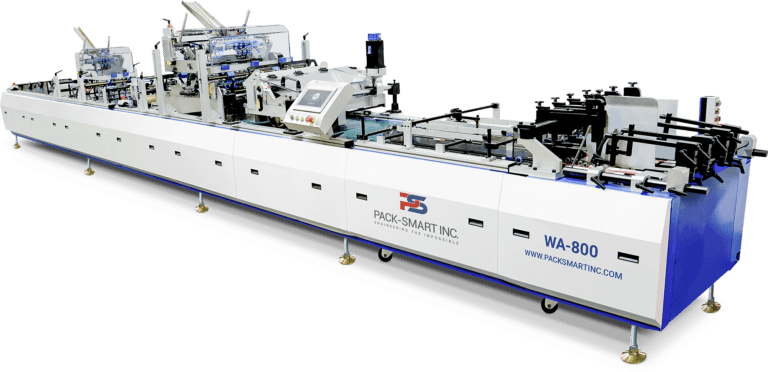
DL Series
Shingled Delivery Transport
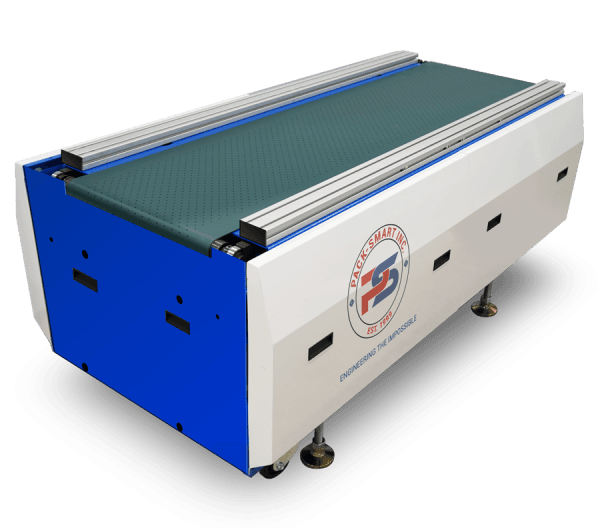
Discover the DL Series Shingled Delivery Transport, designed for efficient and ergonomic conveying of diverse printed materials.
Technology Category
Packaging conveyor technologies control product position, spacing, speed, orientation, and handoff conditions between production operations. Pack-Smart Inc. uses conveying as part of line control, supporting registration, inspection, printing, assembly, and pack-out.
Conveying Technologies
A conveyor is part of the production control system when it maintains product position, spacing, speed, and handoff conditions between operations.
Pack-Smart integrates vacuum transports, shingled delivery, belt conveyors, transfer sections, accumulation, and application-specific product handling throughout modular packaging lines. Conveying provides the physical link between feeding, printing, affixing, inspection, folding, sorting, packaging, and delivery.
The correct transport method depends on product size, mass, stiffness, surface condition, friction, porosity, speed, orientation, required registration, and downstream interface. Transport must be engineered around what the next process needs, not only around moving product from one point to another.
Technology Category
Explore the Pack-Smart technologies assigned to this category. A category can include multiple technologies with different functions, configurations, and application requirements.
Discover the DL Series Shingled Delivery Transport, designed for efficient and ergonomic conveying of diverse printed materials.
High torque servo driven vacuum transport conveys products at accurate speeds and controls product placement with 8 selectable vacuum zones.
Relevant Systems
The technologies in this category are used in the following Pack-Smart automated systems.
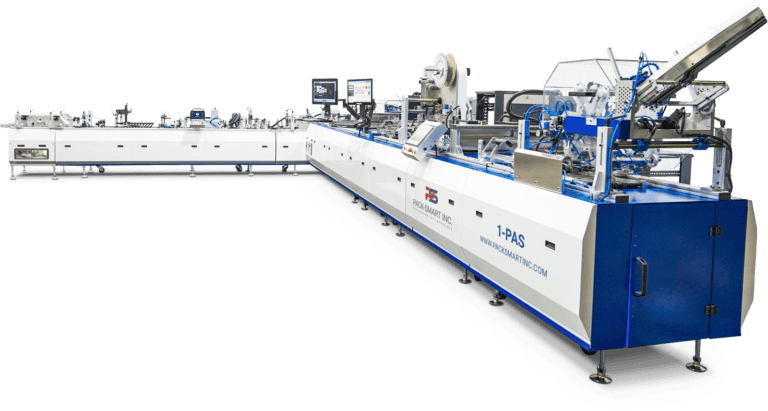
The 1-PAS Inline Secure Card Packaging System personalizes, affixes, seals, batches, bundles, and packs out secure open and closed loop cards in one workflow. It supports 20,000 PPH, duplex personalization, 600 DPI UV DOD printing, ±0.5 mm affixing accuracy, and Delta-X reporting.
The CP-250 Duplex Card Personalization System automates high-speed card printing, encoding, labeling, verification, and defect diversion for open loop, closed loop, and payment cards. It supports DOD personalization, barcode inspection, Delta-X tracking, 24/7 operation, and speeds up to 30,000 PPH.
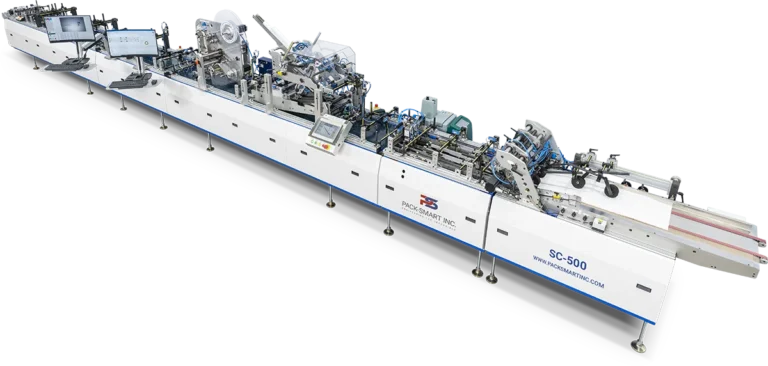
The SC-500 Secure Card Packaging System automates inline card-to-carrier affixing, booklet tipping, DOD personalization, folding, gluing, verification, and pack-out. Designed for SIM, phone, loyalty, gift, open loop, closed loop, and ID cards, it supports high-speed secure packaging with Delta-X traceability.
The FG-800 Reinforced Carton Specialty Finishing System combines folding, gluing, affixing, personalization, and sorting for high-value cartons and auto-erect cartons. It supports speeds up to 10,000 PPH, carton widths up to 30 inches, and ±0.4 mm affixing accuracy.
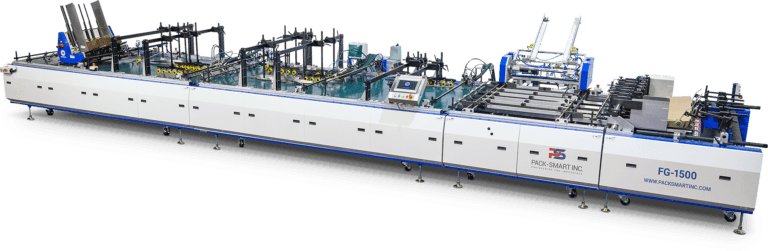
The FG-1500 Specialty Corrugated Folder Gluer produces POP displays and reinforced corrugated packaging with integrated folding, gluing, affixing, and finishing. It processes E, B, C flute and double-wall corrugated board with up to 60-inch blank width, 2,500 PPH speeds, and ±0.5 mm affixing accuracy.
The WA-800r Rigid Window Affixing System applies rigid windows to high-value cartons and specialty packaging with scratch-free handling, servo-driven placement, and flexible inline finishing. It supports speeds up to 25,000 PPH, product widths up to 30 inches, and materials including PVC, PET, PLA, and polystyrene.
Production Challenges
Transport problems appear downstream as print errors, missed inspections, poor placement, jams, or unstable delivery because each process inherits the product position created by the conveyor.
Low friction, curl, acceleration, vibration, or weak vacuum can allow products to drift relative to the controlled motion.
Gaps, height changes, narrow products, flexible edges, and speed differences can cause tipping, catching, rotation, or loss of spacing.
Sensitive print, coatings, films, rigid features, or soft packaging can be scratched, marked, compressed, or deformed by unsuitable contact surfaces.
Products can collide, overlap, back up, or starve downstream equipment when buffering is not coordinated with line state and demand.
Application Fit
The transport architecture is selected around the product, required registration, process speed, and the handoff conditions between modules.
Hold sheets, cartons, cards, labels, or other products against a controlled belt surface where registration and stable motion are required.
Convert individual product flow into controlled overlapped delivery for ergonomic unloading, collection, or downstream handling.
Maintain product orientation, pitch, and supported movement between printing, vision, affixing, folding, sealing, and sorting stations.
Decouple variable upstream and downstream demand with accumulation that protects product order and production flow.
Frequently Asked Questions
These are the questions manufacturers and production teams commonly ask when evaluating this application.
The transport method can be designed around sheets, cards, cartons, labels, pouches, rigid components, and other products after size, mass, stiffness, surface, friction, porosity, and orientation are evaluated.
Potentially. Integration depends on available space, product path, line controls, speed synchronization, guarding, utilities, and the upstream and downstream equipment. Pack-Smart evaluates the complete process before defining the interface.
Encoders, product sensors, vacuum monitoring, line-state logic, and machine vision can be used where required to confirm transport position, spacing, presence, registration, or another defined condition.
The response is application-specific. The control system can identify the affected product or process state and trigger a controlled reject, alternate route, alarm, hold condition, or line stop when that response is required.
Changeover requirements depend on product range and module configuration. Mechanical adjustments, recipes, guides, sensors, tooling, and control parameters can be designed around repeatable setup and clear line-clearance requirements.
Provide representative products, dimensions and weight range, surface restrictions, target line speed, required registration, product spacing, transfer points, accumulation needs, upstream and downstream equipment, and available footprint.
Technology Assessment
Share the product, required speed, orientation, spacing, registration, transfer points, and downstream process. Pack-Smart can identify the conveying, vacuum, accumulation, sensing, and synchronization approach required to maintain controlled product flow.