SP Series
Smart Plasma Surface Treatment
Revolutionize material adhesion with Pack-Smart’s SP Series, employing advanced plasma technology to enhance bonding for inks, adhesives, and coatings on diverse substrates.
Technology Category
Surface treatment technologies prepare substrates for printing, gluing, coating, or handling when the existing surface condition is not suitable for the next process. Pack-Smart Inc. integrates cleaning, plasma treatment, static control, and activation within the production sequence.
Surface Treatment Technologies
When a substrate does not provide the surface condition required by the next process, treatment has to occur at the right location, with controlled exposure, before the surface changes again.
Pack-Smart integrates application-specific surface treatment, including plasma-based approaches where appropriate, before printing, adhesive application, coating, labelling, or other bonding processes. Treatment can be synchronized with product or web transport so the intended area receives a repeatable process before downstream application.
The required method depends on substrate chemistry, coating, contamination, surface energy, treatment width, product geometry, line speed, exposure distance, and the ink, adhesive, or coating that follows. Treatment should be evaluated as part of the full bond or print process because a change in surface condition only matters if it improves the downstream requirement being measured.
Technology Category
Explore the Pack-Smart technologies assigned to this category. A category can include multiple technologies with different functions, configurations, and application requirements.
Revolutionize material adhesion with Pack-Smart’s SP Series, employing advanced plasma technology to enhance bonding for inks, adhesives, and coatings on diverse substrates.
Relevant Systems
The technologies in this category are used in the following Pack-Smart automated systems.
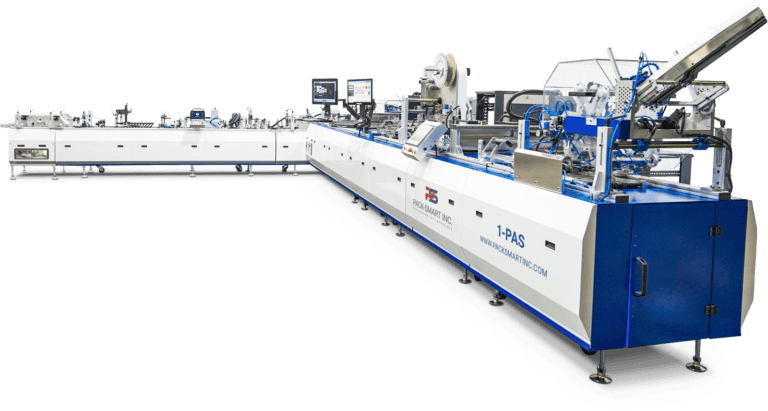
The 1-PAS Inline Secure Card Packaging System personalizes, affixes, seals, batches, bundles, and packs out secure open and closed loop cards in one workflow. It supports 20,000 PPH, duplex personalization, 600 DPI UV DOD printing, ±0.5 mm affixing accuracy, and Delta-X reporting.
The CP-250 Duplex Card Personalization System automates high-speed card printing, encoding, labeling, verification, and defect diversion for open loop, closed loop, and payment cards. It supports DOD personalization, barcode inspection, Delta-X tracking, 24/7 operation, and speeds up to 30,000 PPH.
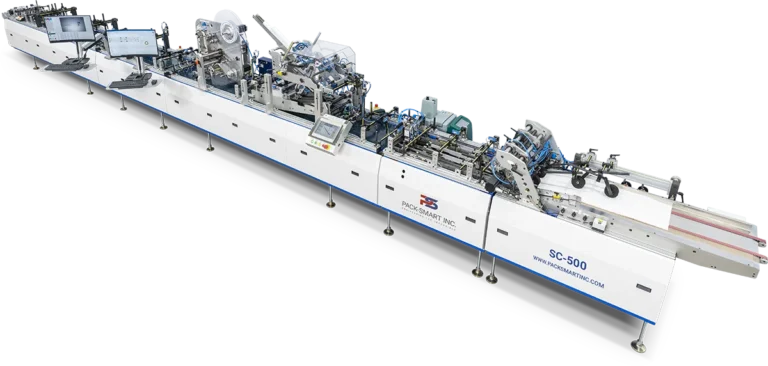
The SC-500 Secure Card Packaging System automates inline card-to-carrier affixing, booklet tipping, DOD personalization, folding, gluing, verification, and pack-out. Designed for SIM, phone, loyalty, gift, open loop, closed loop, and ID cards, it supports high-speed secure packaging with Delta-X traceability.
Production Challenges
Treatment performance depends on substrate condition, geometry, exposure, contamination, and the downstream chemistry it is intended to support.
Different plastics, films, laminates, varnishes, inks, release agents, and recycled content can respond differently to the same treatment settings.
Dust, oil, moisture, silicone, additives, or handling residue can interfere with treatment and the downstream bond or print process.
Product height, web flutter, speed variation, or inconsistent presentation can change the energy delivered to the target surface.
A treatment device running does not prove that ink adhesion or bond performance meets the application requirement. The finished process still needs the appropriate validation method.
Application Fit
Treatment is selected around the substrate, target surface, downstream chemistry, production speed, and the measurable result required from the final process.
Condition suitable films, plastics, coated materials, or other substrates before inkjet or another compatible printing process.
Prepare difficult bonding surfaces before glue, pressure-sensitive attachment, coating, or component affixing.
Apply treatment only to defined product areas when the downstream print or bond location is known and product registration is controlled.
Integrate treatment with web handling, printing, curing, coating, affixing, inspection, or converting in a controlled sequence.
Frequently Asked Questions
These are the questions manufacturers and production teams commonly ask when evaluating this application.
Suitability depends on substrate chemistry, coating, contamination, thickness, geometry, and the downstream ink, adhesive, or coating. Representative finished materials and the complete downstream process should be tested.
Potentially. Integration depends on available space, product path, line controls, speed synchronization, guarding, utilities, and the upstream and downstream equipment. Pack-Smart evaluates the complete process before defining the interface.
The system can monitor treatment-device state, product presence, speed, distance, and other process parameters. Changes in surface energy or final adhesion require an appropriate test method tied to the application acceptance criteria.
The response is application-specific. The control system can identify the affected product or process state and trigger a controlled reject, alternate route, alarm, hold condition, or line stop when that response is required.
Changeover requirements depend on product range and module configuration. Mechanical adjustments, recipes, guides, sensors, tooling, and control parameters can be designed around repeatable setup and clear line-clearance requirements.
Provide representative substrates, coatings, current surface condition, downstream ink or adhesive, target treatment area, target speed, product or web geometry, contamination concerns, and the validation method used for the final print or bond.
Technology Assessment
Share the material, surface condition, treatment area, target speed, and the ink, coating, or adhesive process that follows. Pack-Smart can identify the treatment, transport, registration, monitoring, and integration approach required for the application.