ABM
Automatic Product Alignment
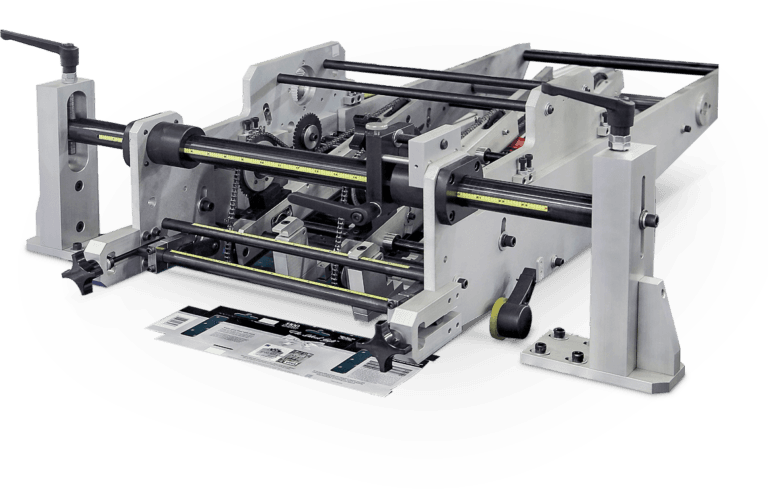
The ABM module features modern servo motor technology and a robust construction, making it ideal for various applications, including feeding plastic cards, labels, and product samples.
Technology Category
Registration and alignment technologies reduce positional uncertainty before printing, affixing, inspection, folding, cutting, or assembly. Pack-Smart Inc. controls product position, orientation, side registration, and reorientation so downstream processes receive a repeatable product reference.
Registration & Alignment Technologies
Printing, affixing, inspection, folding, cutting, and assembly all inherit the product position created immediately before the process. Registration is where that positional uncertainty is reduced.
Pack-Smart integrates mechanical alignment, servo-controlled registration, vacuum transport, sensing, and machine vision where products must enter a process at a defined position and orientation. Registration can correct incoming skew or lateral variation before a placement, printing, inspection, cutting, or finishing operation.
The required method depends on product geometry, rigidity, surface, incoming variation, reference edge or feature, conveyor speed, target tolerance, and how much correction distance is available. Registration should be engineered against the real production tolerance stack rather than evaluated as an isolated module specification.
Technology Category
Explore the Pack-Smart technologies assigned to this category. A category can include multiple technologies with different functions, configurations, and application requirements.
The ABM module features modern servo motor technology and a robust construction, making it ideal for various applications, including feeding plastic cards, labels, and product samples.
Relevant Systems
The technologies in this category are used in the following Pack-Smart automated systems.
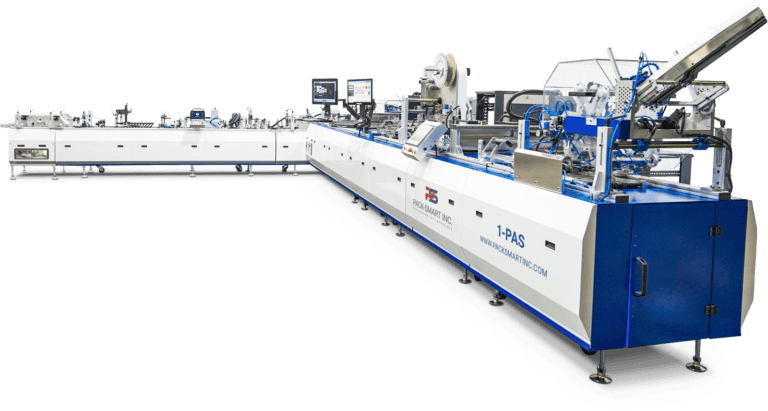
The 1-PAS Inline Secure Card Packaging System personalizes, affixes, seals, batches, bundles, and packs out secure open and closed loop cards in one workflow. It supports 20,000 PPH, duplex personalization, 600 DPI UV DOD printing, ±0.5 mm affixing accuracy, and Delta-X reporting.
The CP-250 Duplex Card Personalization System automates high-speed card printing, encoding, labeling, verification, and defect diversion for open loop, closed loop, and payment cards. It supports DOD personalization, barcode inspection, Delta-X tracking, 24/7 operation, and speeds up to 30,000 PPH.
The CC-800 combines controlled feeding, stabilized transport, machine vision, and bridge module to integrate inspection and reject handling ahead of existing downstream equipment. This contains defects before they consume adhesive, machine capacity, labour, or packaging materials.
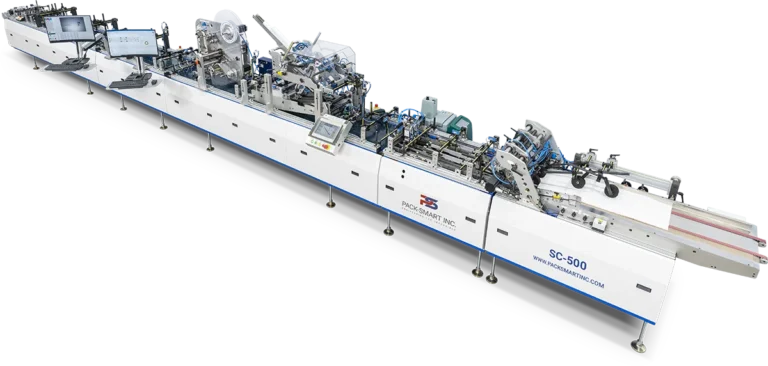
The SC-500 Secure Card Packaging System automates inline card-to-carrier affixing, booklet tipping, DOD personalization, folding, gluing, verification, and pack-out. Designed for SIM, phone, loyalty, gift, open loop, closed loop, and ID cards, it supports high-speed secure packaging with Delta-X traceability.
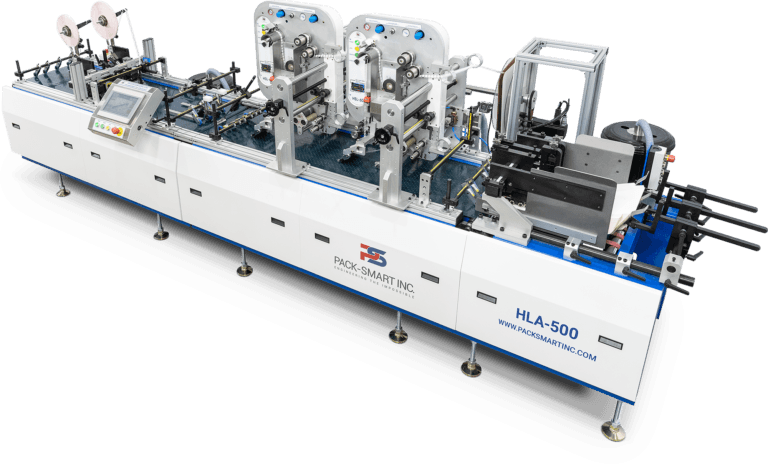
The HLA-500 High-Speed Label Application System applies pressure-sensitive labels, Velcro labels, and hi/low tack tape for high-value packaging and print finishing workflows. It supports speeds up to 15,000 PPH, ±0.5 mm affixing accuracy, quick changeovers, and modular inline integration.
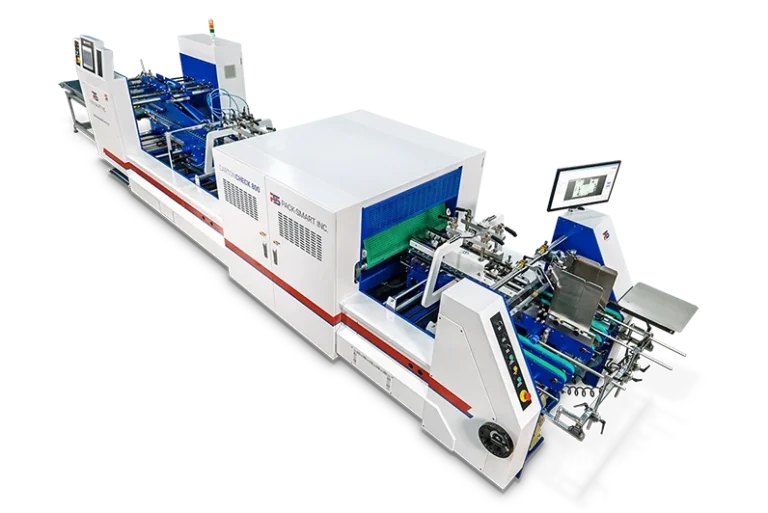
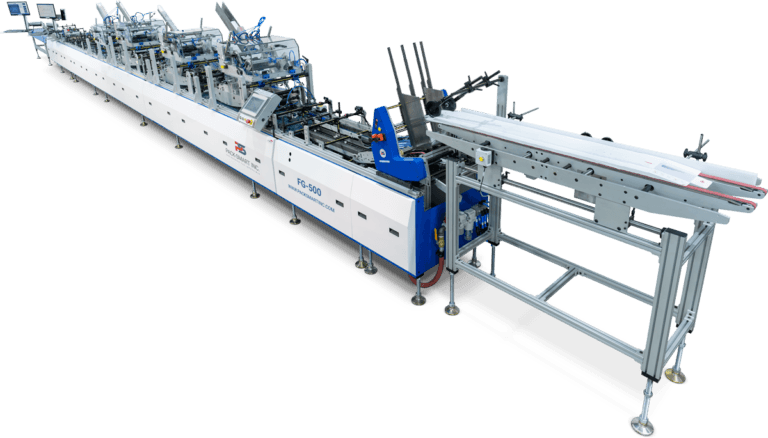
The FG-500 Specialty Carton Folding and Finishing System automates carton kitting, affixing, folding, gluing, DOD personalization, inspection, and reject handling. It supports ±0.4 mm affixing accuracy, 600 DPI printing, and Delta-X quality control for secure, conforming finished packages.
Production Challenges
Alignment performance depends on the condition of the incoming product, the reference used for correction, and whether the product remains stable after registration.
Feeding, transfers, product curl, friction, or conveyor motion can create a wider correction range than the alignment system was designed to absorb.
Damaged edges, irregular shapes, changing print, transparent materials, or poorly defined datums make it harder to establish a repeatable registration target.
Acceleration, low friction, unstable transfer, vacuum loss, or long distance to the next process can allow a registered product to drift again.
A registration module can reduce one source of variation, but tooling, printing, component presentation, camera calibration, and product dimensions still contribute to the final process tolerance.
Application Fit
The registration method is selected around the incoming variation, reference feature, product behaviour, required tolerance, and the process immediately downstream.
Align cards, cartons, sheets, or products before variable printing so content is positioned relative to the intended product reference.
Control the target product position before labels, cards, windows, inserts, or other components are placed.
Stabilize orientation and position so machine vision or data readers see the expected inspection region consistently.
Align products to structural, printed, or mechanical references before downstream conversion operations.
Frequently Asked Questions
These are the questions manufacturers and production teams commonly ask when evaluating this application.
Registration can be engineered for cards, cartons, sheets, labels, rigid products, and other discrete materials after dimensions, rigidity, edges, surface, incoming positional variation, target reference, and required tolerance are evaluated.
Potentially. Integration depends on available space, product path, line controls, speed synchronization, guarding, utilities, and the upstream and downstream equipment. Pack-Smart evaluates the complete process before defining the interface.
Sensors, encoders, position feedback, or machine vision can confirm product location or reference features before and after correction when the application requires measured registration.
The response is application-specific. The control system can identify the affected product or process state and trigger a controlled reject, alternate route, alarm, hold condition, or line stop when that response is required.
Changeover requirements depend on product range and module configuration. Mechanical adjustments, recipes, guides, sensors, tooling, and control parameters can be designed around repeatable setup and clear line-clearance requirements.
Provide representative products, dimensional range, incoming skew and lateral variation, target reference, required tolerance, target speed, available correction distance, downstream process, and the measurement method used to judge final position.
Technology Assessment
Share the product, current positional variation, registration reference, target tolerance, line speed, and downstream operation. Pack-Smart can identify the alignment, sensing, motion, transport, and verification approach required to reduce positional uncertainty.