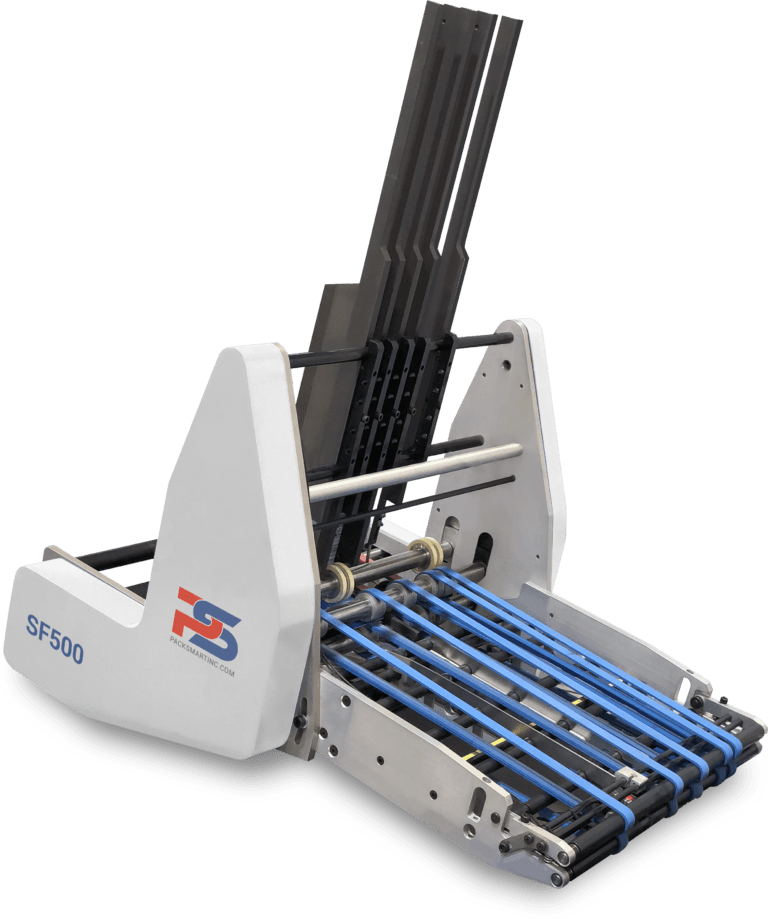
SF Series
Secondary Friction Feeder
Reaching up to 600 products per minute, the SF Series is a perfect choice for handling light paper to heavy stock material.
Technology Category
Automated inspection systems verify defined product attributes, identify non-conforming output, trigger containment, and preserve the production decision. Pack-Smart Inc. connects inspection with tracking, reject handling, reconciliation, and release logic rather than treating quality as an offline checkpoint.
Quality Assurance Technologies
Quality assurance becomes part of production control when the line can verify defined attributes, identify non-conforming product, contain it, and preserve a record of the decision.
Pack-Smart integrates sensors, machine vision, barcode and data reading, weight or count verification, process monitoring, reject handling, and production reporting into automated packaging systems. The inspection method is selected around the defect or attribute that can be measured reliably during production.
The control architecture depends on acceptance criteria, product presentation, sampling or inspection requirement, measurement method, line speed, false-reject tolerance, reject mechanism, rework rules, and the evidence required before product release. The objective is not an abstract claim of perfection. It is a defined verification process with controlled containment when output falls outside the approved condition.
Technology Category
Explore the Pack-Smart technologies assigned to this category. A category can include multiple technologies with different functions, configurations, and application requirements.
Reaching up to 600 products per minute, the SF Series is a perfect choice for handling light paper to heavy stock material.
Relevant Systems
The technologies in this category are used in the following Pack-Smart automated systems.
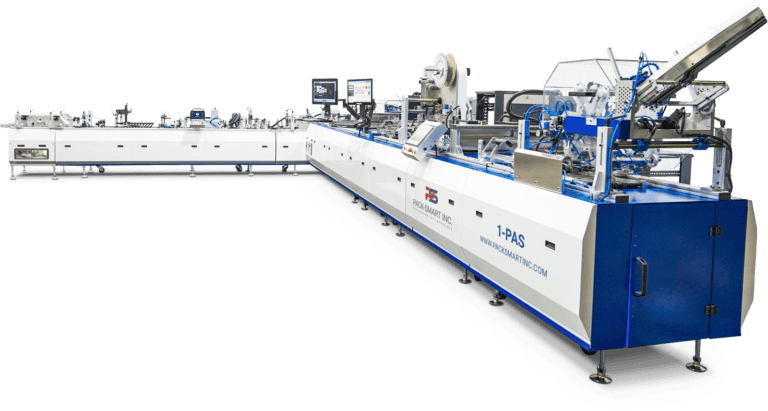
The 1-PAS Inline Secure Card Packaging System personalizes, affixes, seals, batches, bundles, and packs out secure open and closed loop cards in one workflow. It supports 20,000 PPH, duplex personalization, 600 DPI UV DOD printing, ±0.5 mm affixing accuracy, and Delta-X reporting.
The FG-800 Reinforced Carton Specialty Finishing System combines folding, gluing, affixing, personalization, and sorting for high-value cartons and auto-erect cartons. It supports speeds up to 10,000 PPH, carton widths up to 30 inches, and ±0.4 mm affixing accuracy.
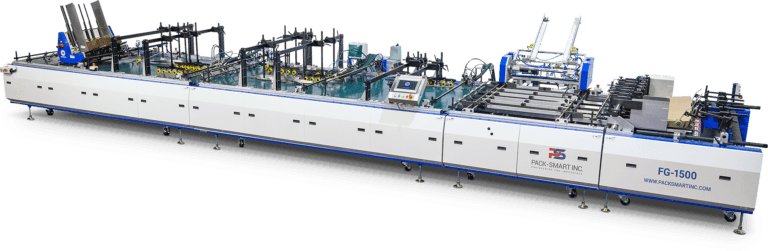
The FG-1500 Specialty Corrugated Folder Gluer produces POP displays and reinforced corrugated packaging with integrated folding, gluing, affixing, and finishing. It processes E, B, C flute and double-wall corrugated board with up to 60-inch blank width, 2,500 PPH speeds, and ±0.5 mm affixing accuracy.
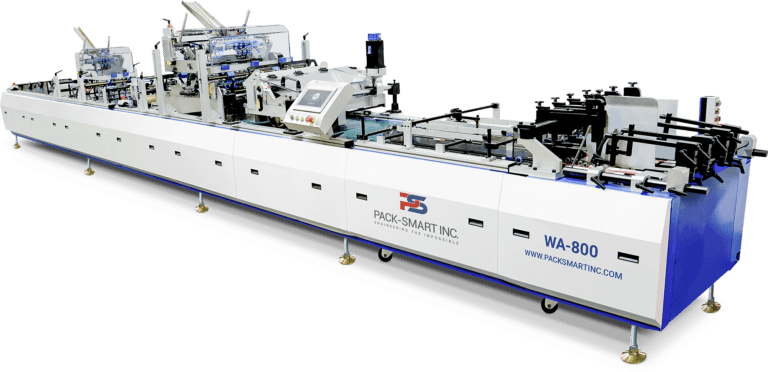
The WA-800r Rigid Window Affixing System applies rigid windows to high-value cartons and specialty packaging with scratch-free handling, servo-driven placement, and flexible inline finishing. It supports speeds up to 25,000 PPH, product widths up to 30 inches, and materials including PVC, PET, PLA, and polystyrene.
Production Challenges
Inspection loses value when criteria are unclear, product presentation is unstable, or detected defects are not tied to containment and the production record.
If good variation and actual defects are not defined, automated inspection can over-reject acceptable product or miss conditions the business cares about.
Lighting, product position, speed, sensor distance, temperature, vibration, or material variation can change the inspection signal.
An alarm or failed result does not protect output if the affected product cannot be tracked to a verified reject, hold, rework, or line-stop state.
Accepted, rejected, remade, destroyed, and reworked units can become disconnected from the final production count when exception handling is manual or fragmented.
Application Fit
The inspection method and production response are selected around the attribute that must be verified and the consequence of releasing non-conforming product.
Confirm required components, labels, inserts, closures, folds, or package features are present and correctly positioned.
Inspect variable print, text, barcodes, identifiers, or other product data against the expected job or production record.
Check batch quantity, bundle state, package weight, or other measurable indicators used to support pack-out confidence.
Track failed units to controlled reject or rework locations and record inspection status for reconciliation and production reporting.
Frequently Asked Questions
These are the questions manufacturers and production teams commonly ask when evaluating this application.
The answer depends on the sensing method and product. Machine vision, code readers, sensors, weight devices, data comparison, and process monitoring can be configured around defined measurable attributes and representative defect conditions.
No. Inspection performance must be validated against the defined defect set, product variation, measurement method, production conditions, and acceptance thresholds. Pack-Smart focuses on verification and containment rather than absolute quality claims.
Good product variation and known defects should be represented during development and validation. Thresholds, lighting, sensing conditions, algorithms, tolerances, and production samples are adjusted around the approved acceptance criteria.
The system can track the affected unit to a controlled reject, hold, rework, alternate route, or line-stop condition, depending on the required production logic.
Yes, when required by the system architecture. Counts, defect classes, images, product identities, timestamps, reject states, or other approved events can be captured for production reporting and reconciliation.
Provide representative good and defective samples, acceptance criteria, tolerances, target speed, product presentation, inspection location, reject and rework rules, required records, and the consequence of a missed or false reject.
Technology Assessment
Share representative products, known defects, tolerances, production conditions, target output, reject rules, and reporting requirements. Pack-Smart can identify the sensing, vision, data, tracking, containment, and reconciliation approach required for the application.