AL Series
Powered Autoloader
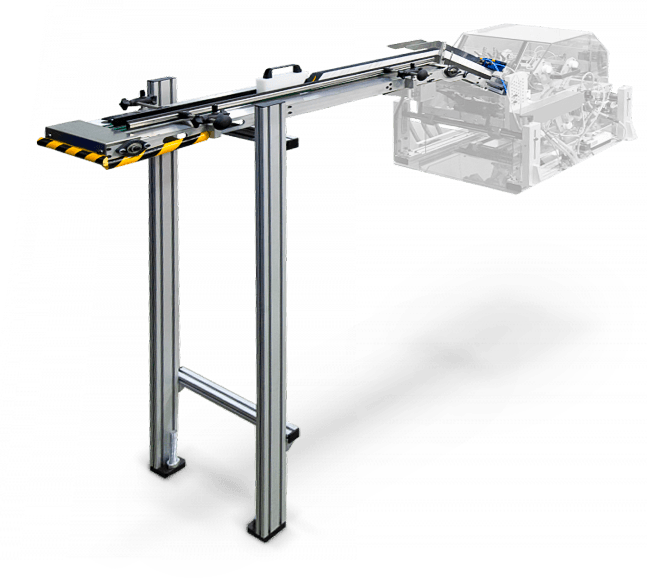
Maximize productivity with the AL Series Powered Autoloader. Designed to extend loading capacities and reduce manual reloading for high-speed applications, ensuring continuous operation and efficiency.
Technology Category
Material handling automation can reduce avoidable operator intervention while preserving controlled material supply, buffering, replenishment, and access. Pack-Smart Inc. integrates loading, buffering, unwinding, and support technologies around production flow and operator requirements.
Productivity & Ergonomics Technologies
Production support technology should remove avoidable manual intervention without creating new variability in material flow, replenishment, or operator access.
Pack-Smart integrates buffering, extended-capacity loading, delivery, accumulation, and operator-support technologies into automated lines where repetitive loading, unloading, waiting, or manual handling can become a production constraint. These modules are engineered around the process state they support rather than added as isolated conveniences.
The right architecture depends on product weight and geometry, manual handling frequency, line speed, buffer requirement, replenishment method, operator reach, access, changeover, and surrounding equipment. The goal is stable production flow and clearer operator interaction while maintaining safe access and product control.
Technology Category
Explore the Pack-Smart technologies assigned to this category. A category can include multiple technologies with different functions, configurations, and application requirements.
Maximize productivity with the AL Series Powered Autoloader. Designed to extend loading capacities and reduce manual reloading for high-speed applications, ensuring continuous operation and efficiency.
Streamline your production process with the RBM-150 Rotary Buffer Module, expertly designed to queue and synchronize serialized documents for enhanced workflow efficiency.
Relevant Systems
The technologies in this category are used in the following Pack-Smart automated systems.
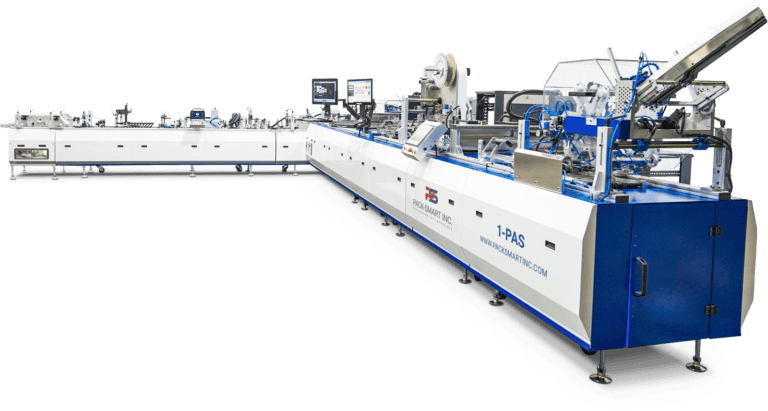
The 1-PAS Inline Secure Card Packaging System personalizes, affixes, seals, batches, bundles, and packs out secure open and closed loop cards in one workflow. It supports 20,000 PPH, duplex personalization, 600 DPI UV DOD printing, ±0.5 mm affixing accuracy, and Delta-X reporting.
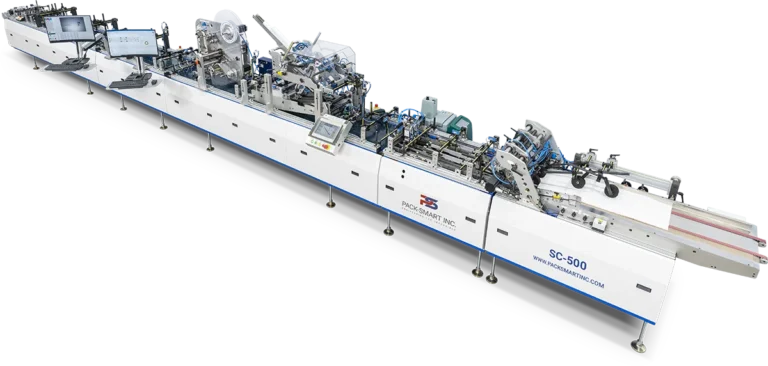
The SC-500 Secure Card Packaging System automates inline card-to-carrier affixing, booklet tipping, DOD personalization, folding, gluing, verification, and pack-out. Designed for SIM, phone, loyalty, gift, open loop, closed loop, and ID cards, it supports high-speed secure packaging with Delta-X traceability.
The CP-250 Duplex Card Personalization System automates high-speed card printing, encoding, labeling, verification, and defect diversion for open loop, closed loop, and payment cards. It supports DOD personalization, barcode inspection, Delta-X tracking, 24/7 operation, and speeds up to 30,000 PPH.
Production Challenges
Operator workload and line performance become linked when material supply, accumulation, and routine handling are not designed into the production system.
Small magazines or short loading windows require repeated operator attention and can introduce variation in stack condition or line restarts.
Short interruptions can propagate through the line when upstream and downstream modules are directly coupled without controlled accumulation.
Poor reach, lifting, repetitive handling, or inconvenient access can slow routine tasks and increase dependence on operator technique.
Increasing machine speed can shift the constraint to loading, unloading, material movement, or exception handling if those activities are not considered in the system design.
Application Fit
Support modules are selected around the real production constraint, material flow, operator task, and how the line should respond during short interruptions.
Increase available product supply so operators can replenish less frequently while maintaining a controlled feed condition.
Accumulate products or serialized items between processes to absorb short speed differences and reduce unnecessary line stops.
Present finished products in a stable, accessible format for collection, inspection, packing, or downstream transfer.
Structure access, adjustments, recipes, and material-handling points so routine setup can be performed consistently without unnecessary movement.
Frequently Asked Questions
These are the questions manufacturers and production teams commonly ask when evaluating this application.
Productivity modules are selected around the specific product and task. Product dimensions, mass, stack behaviour, handling frequency, required buffer quantity, operator interaction, and surrounding equipment all affect the design.
Potentially. Integration depends on available space, product path, line controls, speed synchronization, guarding, utilities, and the upstream and downstream equipment. Pack-Smart evaluates the complete process before defining the interface.
Sensors and line-control logic can monitor buffer levels, product presence, accumulation state, replenishment conditions, and downstream demand so support functions remain synchronized with production.
The response is application-specific. The control system can identify the affected product or process state and trigger a controlled reject, alternate route, alarm, hold condition, or line stop when that response is required.
Changeover requirements depend on product range and module configuration. Mechanical adjustments, recipes, guides, sensors, tooling, and control parameters can be designed around repeatable setup and clear line-clearance requirements.
Provide the current workflow, product range, target output, operator tasks, loading and unloading frequency, buffer requirement, interruption patterns, available space, changeover process, and the manual activities creating the constraint.
Technology Assessment
Share the product, current operator tasks, replenishment frequency, line interruptions, target output, and available footprint. Pack-Smart can identify loading, buffering, delivery, sensing, and workflow changes that support more controlled production flow.