SJ Series
DOD Inkjet
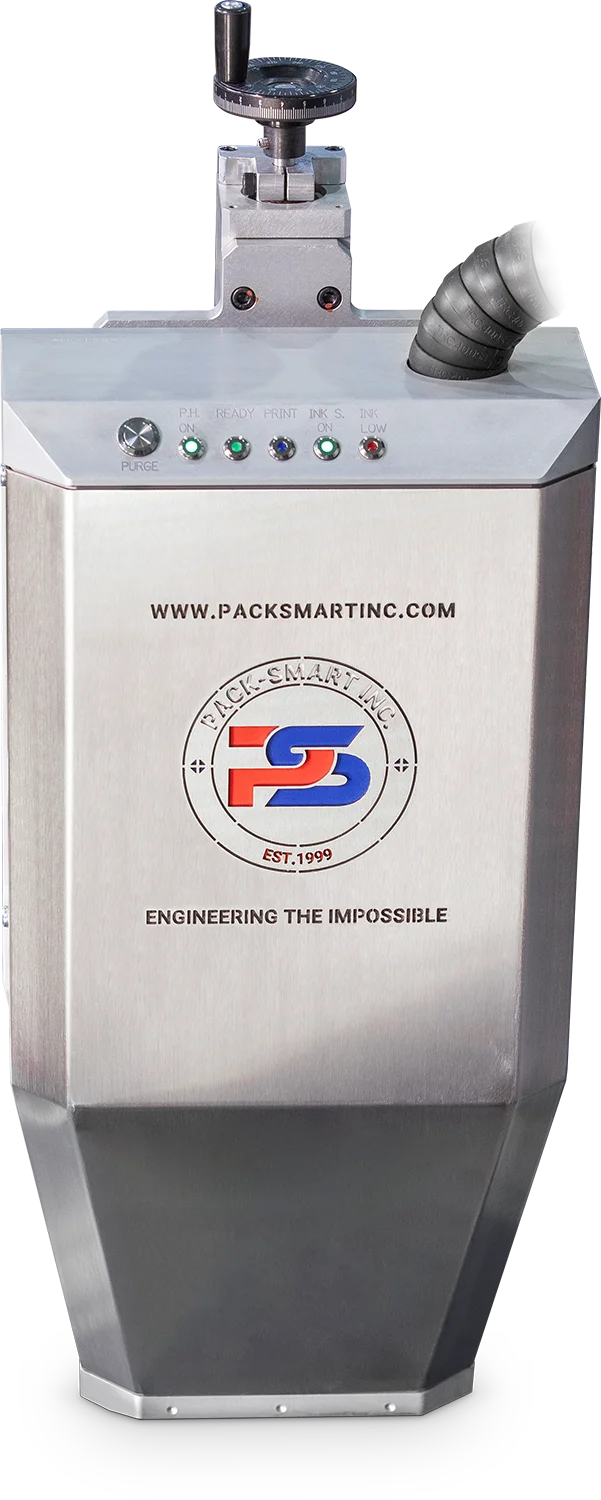
Smart Jet uses industry leading head technology to deliver UV Cured 600 DPI DOD Ink onto any surface.
Technology Category
Inkjet and variable printing technologies apply product-specific text, graphics, codes, dates, or identifiers while preserving association with the correct physical unit. Pack-Smart Inc. coordinates print data, registration, verification, and reconciliation within the production line.
Inkjet & Variable Printing Technologies
Variable print becomes part of line control when every mark is tied to the correct product, printed in the correct position, verified, and reconciled with the production record.
Pack-Smart integrates digital inkjet and variable printing into card, carton, web, label, packaging, and specialty finishing systems. Applications can include variable text, graphics, codes, identifiers, instructions, personalization, or other job-driven content applied while the product remains under controlled transport.
The print architecture depends on substrate, ink chemistry, print area, data source, resolution requirement, product or web speed, printhead configuration, curing method, registration tolerance, and verification rule. Data, motion, printing, curing, inspection, and reject handling must remain synchronized so a good print is also the correct print for the physical product.
Technology Category
Explore the Pack-Smart technologies assigned to this category. A category can include multiple technologies with different functions, configurations, and application requirements.
Smart Jet uses industry leading head technology to deliver UV Cured 600 DPI DOD Ink onto any surface.
Relevant Systems
The technologies in this category are used in the following Pack-Smart automated systems.
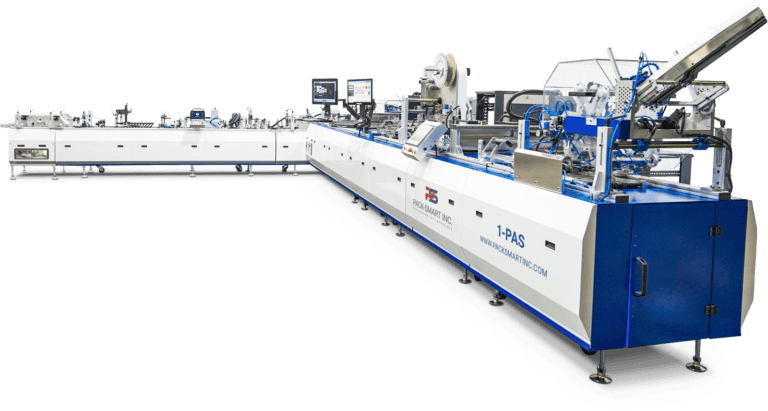
The 1-PAS Inline Secure Card Packaging System personalizes, affixes, seals, batches, bundles, and packs out secure open and closed loop cards in one workflow. It supports 20,000 PPH, duplex personalization, 600 DPI UV DOD printing, ±0.5 mm affixing accuracy, and Delta-X reporting.
The CP-250 Duplex Card Personalization System automates high-speed card printing, encoding, labeling, verification, and defect diversion for open loop, closed loop, and payment cards. It supports DOD personalization, barcode inspection, Delta-X tracking, 24/7 operation, and speeds up to 30,000 PPH.
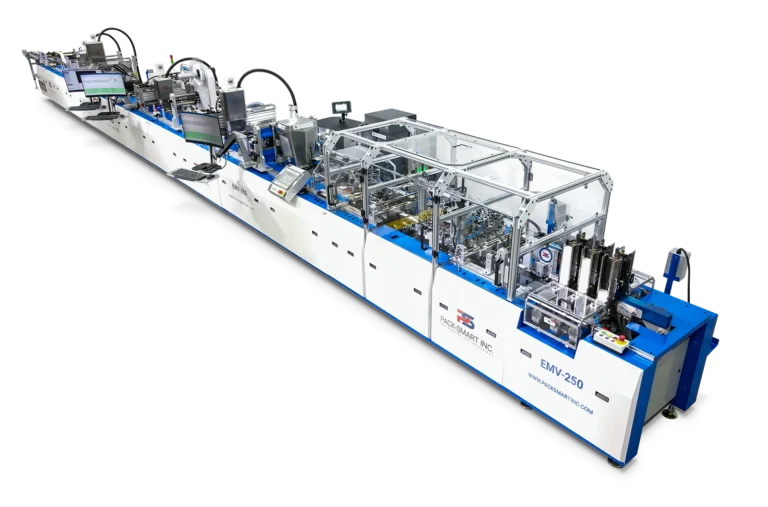
The EMV-250 Smart Card Issuance System automates contact and contactless encoding, DOD personalization, verification, and production tracking for dual interface chip cards. It supports payment cards, SIM cards, and open loop cards at speeds up to 10,000 cards per hour.
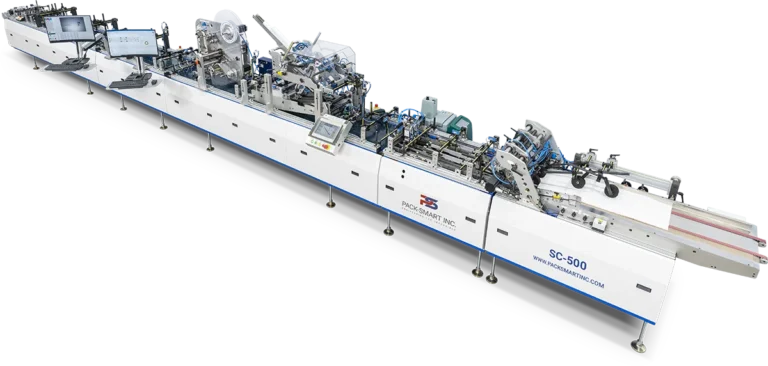
The SC-500 Secure Card Packaging System automates inline card-to-carrier affixing, booklet tipping, DOD personalization, folding, gluing, verification, and pack-out. Designed for SIM, phone, loyalty, gift, open loop, closed loop, and ID cards, it supports high-speed secure packaging with Delta-X traceability.
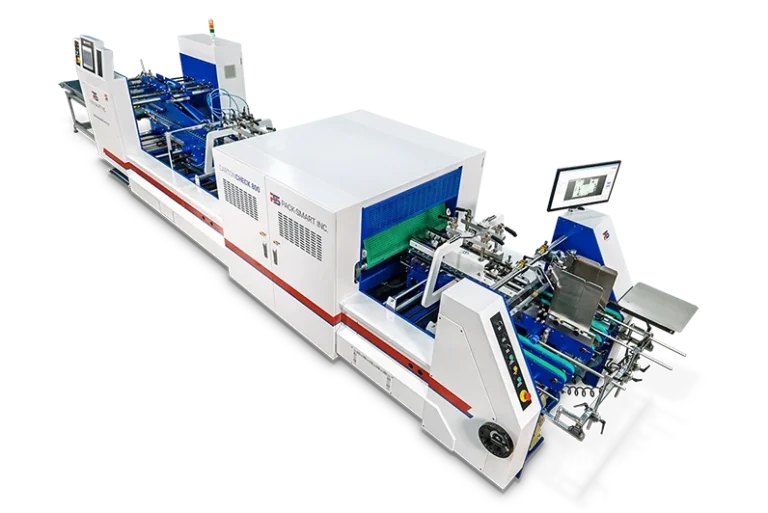
The CC-800 combines controlled feeding, stabilized transport, machine vision, and bridge module to integrate inspection and reject handling ahead of existing downstream equipment. This contains defects before they consume adhesive, machine capacity, labour, or packaging materials.
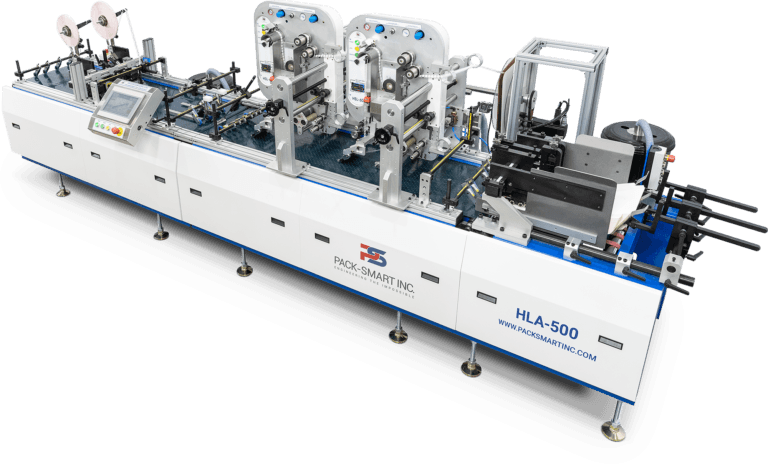
The HLA-500 High-Speed Label Application System applies pressure-sensitive labels, Velcro labels, and hi/low tack tape for high-value packaging and print finishing workflows. It supports speeds up to 15,000 PPH, ±0.5 mm affixing accuracy, quick changeovers, and modular inline integration.
The WP-360 Web Digital Printing, Inspection and Tracking System combines 600 DPI UV DOD printing, line scan inspection, defect tracking, and Delta-X reporting for pressure-sensitive labels and narrow web applications. It supports a 14.3-inch print area, 3.5 pL drop size, and speeds up to 500 feet per minute.
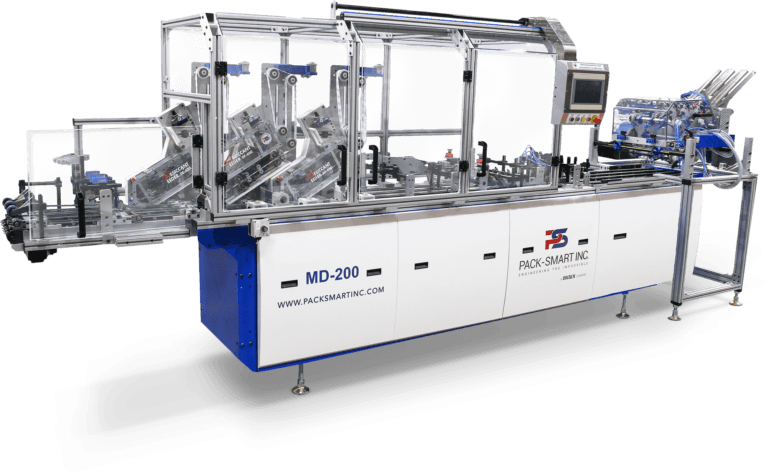
The MD-200 Multi-Stream Finishing and Packaging System automates final assembly for medical-grade kits, including rapid antigen test kits. It adds kit components, folds carriers, applies DOD serialization, and guides finished kits into wrapping at speeds up to 200 PPM.
Production Challenges
Print quality and data integrity are separate requirements. A visually acceptable mark can still be wrong if the content, sequence, or product association is uncontrolled.
Skew, conveyor slip, web stretch, speed changes, or inconsistent presentation can shift print relative to the intended target area.
Coatings, films, plastics, absorbency, texture, surface energy, and contamination can affect dot formation, adhesion, contrast, and cure.
Dropped, duplicated, delayed, or incorrectly assigned records can create a valid-looking mark on the wrong physical product.
A camera can identify a print defect, but the line must still track the affected product to a verified reject and reconcile its data state.
Application Fit
The print engine, transport, data interface, curing, inspection, and reject strategy are selected around the substrate, content, production speed, and downstream use.
Print names, identifiers, variable graphics, campaign content, or other approved job-specific information on cards, cartons, carriers, or packaging.
Apply serial numbers, barcodes, 2D codes, or other machine-readable identifiers tied to a controlled production record.
Apply language, region, SKU, regulatory, promotional, or order-specific content later in the production process to reduce preprinted variation.
Integrate variable print with web registration, curing, inspection, slitting, die cutting, folding, and downstream conversion.
Frequently Asked Questions
These are the questions manufacturers and production teams commonly ask when evaluating this application.
Inkjet suitability depends on the printhead and ink system, substrate, surface treatment, print area, required durability, line speed, and downstream process. Representative production materials should be tested before the final configuration is defined.
Potentially. Integration depends on available space, product path, line controls, speed synchronization, guarding, utilities, and the upstream and downstream equipment. Pack-Smart evaluates the complete process before defining the interface.
Machine vision, OCR, OCV, barcode reading, or other suitable inspection tools can compare printed content, position, readability, and expected data against defined acceptance criteria.
The response is application-specific. The control system can identify the affected product or process state and trigger a controlled reject, alternate route, alarm, hold condition, or line stop when that response is required.
Changeover requirements depend on product range and module configuration. Mechanical adjustments, recipes, guides, sensors, tooling, and control parameters can be designed around repeatable setup and clear line-clearance requirements.
Provide representative substrates, artwork and variable-data samples, print area, target resolution, required durability, target speed, data source, registration tolerance, curing requirements, inspection criteria, and reject or reconciliation rules.
Technology Assessment
Share the product, print area, data source, content types, target output, substrate, curing requirements, and acceptance criteria. Pack-Smart can identify the printing, registration, data-control, curing, inspection, and reject architecture required for the application.