Finishing
Explore systems, production challenges, and process requirements for this application.
Specialty print finishing often combines feeding, inserting, affixing, variable printing, die-cutting, embossing, folding, gluing, inspection, and controlled delivery. Pack-Smart systems coordinate these steps around production timing, data, and quality requirements.
Specialty Print Finishing Systems
Specialty print finishing can combine feeding, inserting, affixing, variable printing, die-cutting, embossing, folding, gluing, inspection, and delivery in a single production path.
The challenge is not simply adding more modules. It is keeping material movement, process timing, data, and inspection logic synchronized as complexity increases.
The system architecture is defined by substrate, infeed format, finishing sequence, applied components, variable data, inspection criteria, throughput, and the final delivery requirement.
Brands We Work With




Product Applications
Explore the production applications associated with this Product Type. Each application page connects the process requirement to relevant systems, production challenges, and application fit.
Explore systems, production challenges, and process requirements for this application.
Explore systems, production challenges, and process requirements for this application.
Explore systems, production challenges, and process requirements for this application.
Explore systems, production challenges, and process requirements for this application.
Relevant Systems
Explore Pack-Smart systems assigned to this Product Type. Final system configuration depends on the product, material presentation, process sequence, inspection requirements, data requirements, throughput target, and surrounding line.
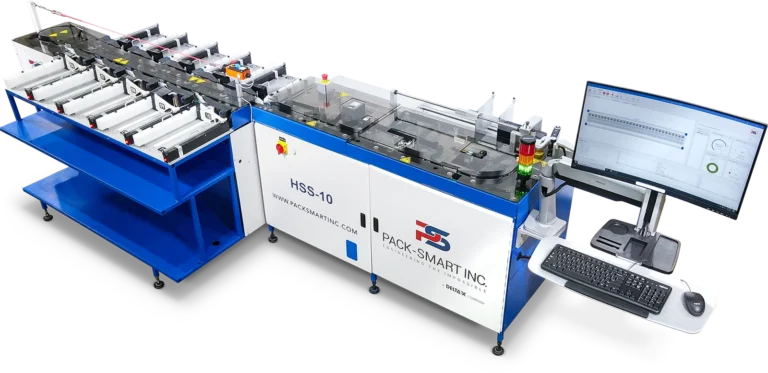
The HSS-10 feeds, stabilizes, reads and sorts barcode-identified envelopes across ten shingled delivery outputs while Delta-X provides live production status, exception visibility and event-level control.
The HLB-500 is a carton labeling and bundling system that automates feeding, pressure-sensitive top labeling, vision inspection, reject handling, counting, stacking, banding and finished-bundle delivery.
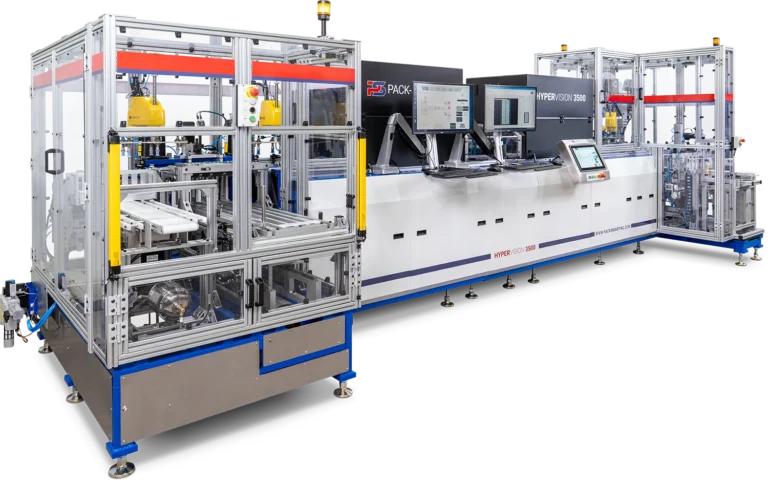
The HyperVision 3500 is a secure document inspection system for passports, IDs, financial cards, and currency substrates. It combines 8K optical inspection, 10-micron defect detection, NFC/RFID validation, lamination integrity checks, and Delta-X traceability at up to 3,500 units per hour.
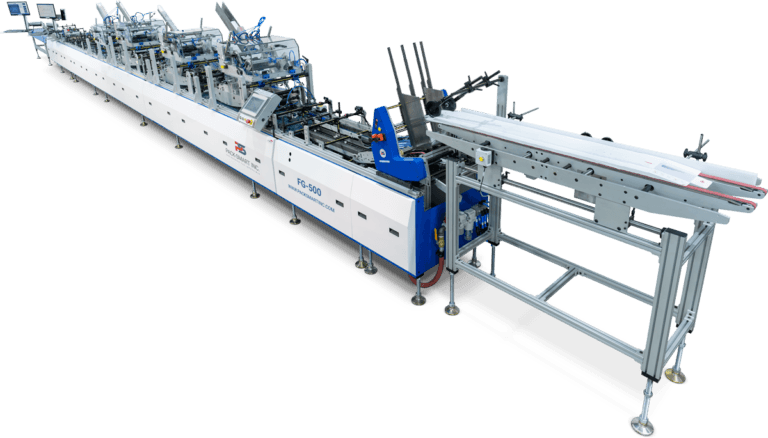
The FG-500 Specialty Carton Folding and Finishing System automates carton kitting, affixing, folding, gluing, DOD personalization, inspection, and reject handling. It supports ±0.4 mm affixing accuracy, 600 DPI printing, and Delta-X quality control for secure, conforming finished packages.
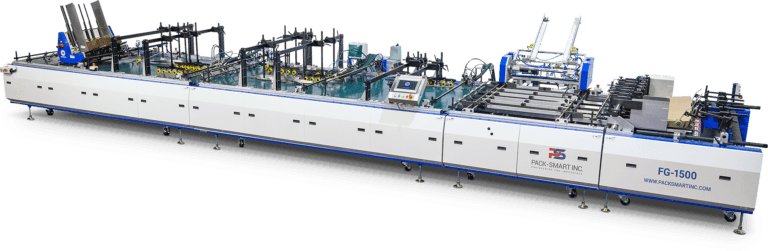
The FG-1500 Specialty Corrugated Folder Gluer produces POP displays and reinforced corrugated packaging with integrated folding, gluing, affixing, and finishing. It processes E, B, C flute and double-wall corrugated board with up to 60-inch blank width, 2,500 PPH speeds, and ±0.5 mm affixing accuracy.
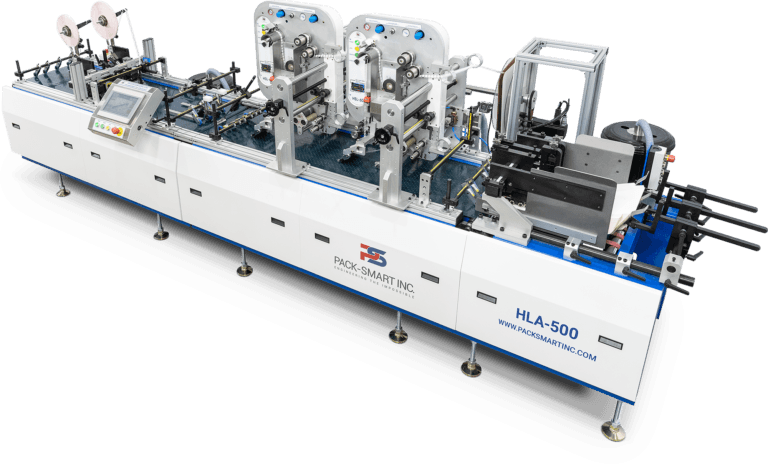
The HLA-500 High-Speed Label Application System applies pressure-sensitive labels, Velcro labels, and hi/low tack tape for high-value packaging and print finishing workflows. It supports speeds up to 15,000 PPH, ±0.5 mm affixing accuracy, quick changeovers, and modular inline integration.
Production Challenges
Each additional finishing process creates another dependency on registration, timing, data association, and inspection.
Each added finishing step creates another timing, registration, and quality dependency that must stay synchronized with material transport.
Inserts, labels, codes, or personalized print must remain associated with the correct piece throughout the production sequence.
Accurate finishing depends on repeatable material position before die-cutting, embossing, affixing, printing, or folding.
Exceptions must be detected and contained without losing production count or data association.
Control Points
A multi-step finishing line should operate as one production sequence, with material position, process timing, data, and inspection aligned to the same production record.
Establish consistent product spacing and registration before value-added finishing begins.
Add physical and digital content according to defined production logic and positional requirements.
Coordinate die-cutting, embossing, folding, gluing, curing, or other configured processes with material movement.
Verify output, contain exceptions, and deliver finished work in the required sequence or format.
Frequently Asked Questions
These are the production questions that should be defined before multiple finishing technologies are combined on one line.
A configured workflow can combine feeding, inserting, affixing, variable printing, die-cutting, embossing, folding, gluing, curing, inspection, and controlled delivery, depending on the production requirement.
The system architecture coordinates material transport, registration, process timing, device control, and inspection against the same production sequence so one operation does not drift independently from the others.
Where required, variable print, codes, labels, or other data-driven elements can be coordinated with physical finishing operations. Data association and verification requirements should be defined during application review.
Configured inspection and production logic can identify exceptions, trigger reject or review paths, and preserve production counts or event records so downstream output can be reconciled.
Integration can be evaluated after material transfer, controls, registration references, device interfaces, line speed, data exchange, and inspection ownership are defined.
Provide substrate samples, dimensions, infeed format, required finishing sequence, variable data or print requirements, placement tolerances, inspection criteria, target throughput, and the finished delivery format.
System Assessment
Share the substrate, infeed, finishing sequence, applied components, variable data, verification rules, and final delivery requirement so the complete production path can be evaluated.