Erecting and Packaging
Corrugated erecting and packaging systems control blank feeding, opening, forming, product loading, and downstream handoff. Pack-Smart Inc. coordinates material presentation and packaging operations around…
Explore corrugated packaging machinery for blank handling, reinforcement, folding, gluing, personalization, inspection, and controlled finishing.
Corrugated Systems
Corrugated production becomes more difficult when large blanks, reinforcement, affixing, folding, gluing, personalization, inspection, and specialty finishing must stay synchronized.
Pack-Smart systems coordinate material handling and finishing logic so the blank remains controlled through the operations that determine final package integrity.
The system architecture is shaped by blank size, board construction, reinforcement, finishing sequence, adhesive process, placement tolerance, inspection requirement, and the required delivery format.
Brands We Work With



Product Applications
Explore the production applications associated with this Product Type. Each application page connects the process requirement to relevant systems, production challenges, and application fit.
Corrugated erecting and packaging systems control blank feeding, opening, forming, product loading, and downstream handoff. Pack-Smart Inc. coordinates material presentation and packaging operations around…
Corrugated finishing and reinforcement systems add structural, printed, or applied elements while maintaining blank registration and material control. Pack-Smart Inc. coordinates reinforcement, affixing, finishing,…
Corrugated folding and gluing systems coordinate blank transport, fold sequence, adhesive application, compression, and inspection. Pack-Smart Inc. integrates these control points so package geometry…
Corrugated serialization and labelling systems apply and verify variable identity, labels, barcodes, or other production data on corrugated formats. Pack-Smart Inc. connects application, reading,…
Relevant Systems
Explore Pack-Smart systems assigned to this Product Type. Final system configuration depends on the product, material presentation, process sequence, inspection requirements, data requirements, throughput target, and surrounding line.
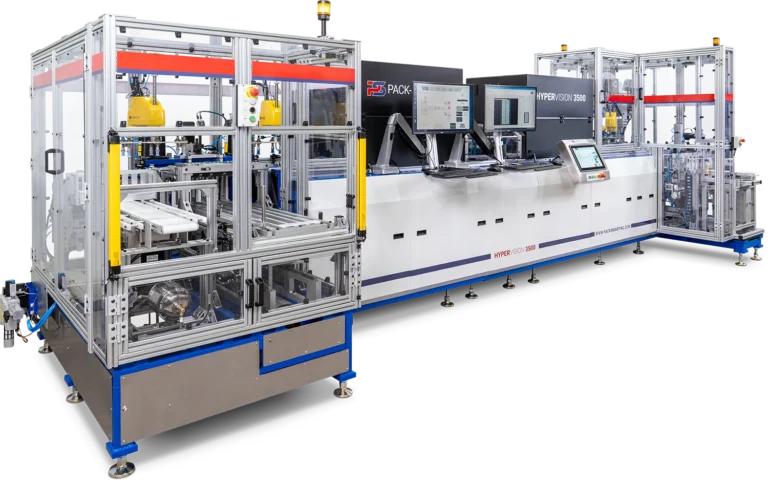
The HyperVision 3500 is a secure document inspection system for passports, IDs, financial cards, and currency substrates. It combines 8K optical inspection, 10-micron defect detection, NFC/RFID validation, lamination integrity checks, and Delta-X traceability at up to 3,500 units per hour.
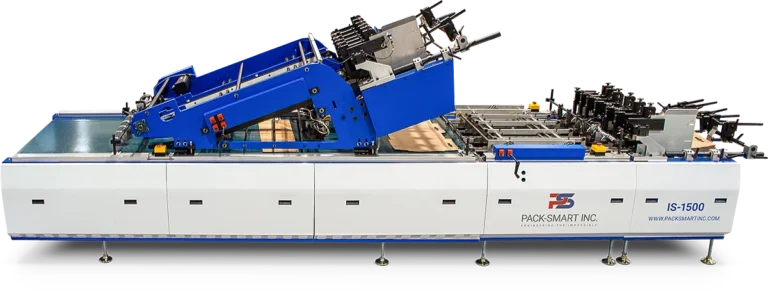
The IS-1500 High-Speed Inlet Spotter places stiffeners, windows, and secondary materials onto carriers for reinforced corrugated and display packaging.
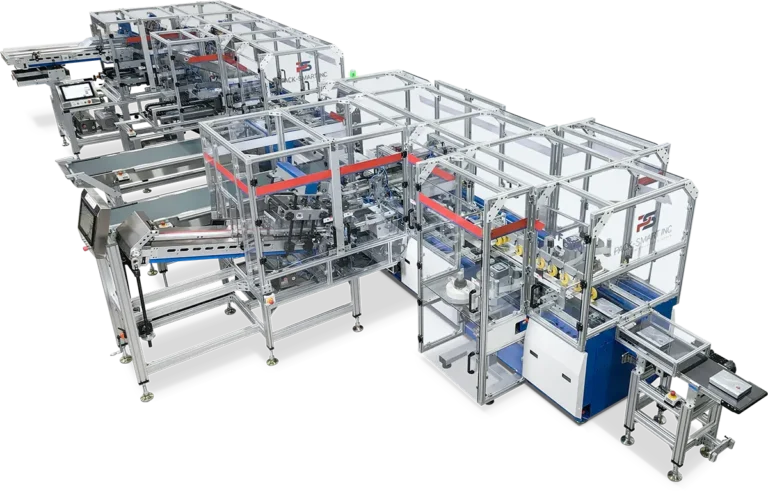
The TF-3500 Tray Forming and Fulfillment System automates rigid tray forming, product placement, inspection, lid placement, and closing for premium packaging workflows. It supports 4-corner folding, real-time vision inspection, recipe-based changeovers, and speeds up to 3,500 products per hour.
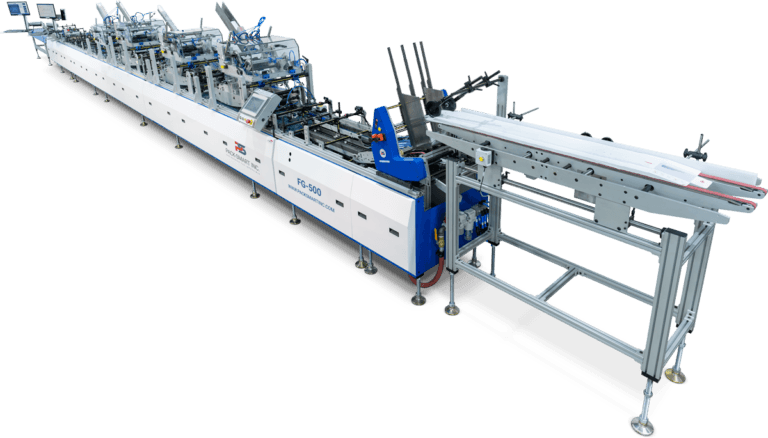
The FG-500 Specialty Carton Folding and Finishing System automates carton kitting, affixing, folding, gluing, DOD personalization, inspection, and reject handling. It supports ±0.4 mm affixing accuracy, 600 DPI printing, and Delta-X quality control for secure, conforming finished packages.
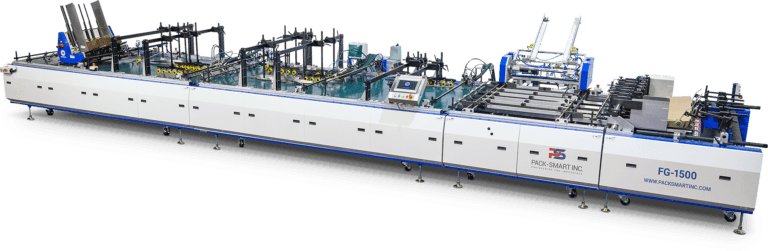
The FG-1500 Specialty Corrugated Folder Gluer produces POP displays and reinforced corrugated packaging with integrated folding, gluing, affixing, and finishing. It processes E, B, C flute and double-wall corrugated board with up to 60-inch blank width, 2,500 PPH speeds, and ±0.5 mm affixing accuracy.
The FG-800 Reinforced Carton Specialty Finishing System combines folding, gluing, affixing, personalization, and sorting for high-value cartons and auto-erect cartons. It supports speeds up to 10,000 PPH, carton widths up to 30 inches, and ±0.4 mm affixing accuracy.
Production Challenges
Large-format material, board behavior, placement, and adhesive processes can compound variation unless the blank remains registered through each finishing step.
Blank size, flute structure, stiffness, and board condition affect feeding, registration, and transport.
Inlets, panels, labels, or components must be positioned accurately before folding and gluing.
Fold sequence, glue pattern, compression, and curing time influence final structural integrity.
Non-conforming print, placement, fold, or glue conditions should be identified before finished output is released.
Control Points
Corrugated automation should establish stable blank presentation, preserve registration through finishing, and contain process exceptions before final delivery.
Establish stable material presentation before reinforcement, printing, folding, or gluing begins.
Place components or reinforcing structures according to the required geometry and process sequence.
Coordinate finishing sequence and adhesive process around line speed, board behavior, and required structure.
Verify critical attributes and deliver controlled finished output for the next production or fulfilment stage.
Frequently Asked Questions
These are the material, finishing, and control questions that shape a corrugated system architecture.
System fit depends on blank dimensions, flute or board construction, reinforcement, print and finishing requirements, folding and gluing sequence, and the required finished output. Specific format ranges should be verified against the selected system.
Accurate registration establishes the reference position for affixing, reinforcement, print, folding, gluing, and inspection. Variation early in the process can compound through every downstream operation.
Pack-Smart systems can combine multiple finishing functions where the application supports it. The exact sequence, adhesive method, placement tolerance, and material behavior should be reviewed before confirming a configuration.
Configured inspection and process feedback can be used to identify issues such as placement, print, code, fold, or glue conditions and support reject or exception handling before finished output is released.
Blank geometry, board construction, fold sequence, adhesive method, applied components, print or label requirements, inspection logic, throughput, and delivery format determine the required combination of modules.
Representative blanks, drawings or dielines, board specifications, required finishing sequence, adhesive details, applied components, inspection criteria, target throughput, and finished-output requirements are the key inputs.
System Assessment
Share the corrugated blank, board construction, reinforcement or affixing requirement, fold and glue sequence, inspection criteria, and delivery format so the required control points can be evaluated together.