DO Series
Overhead Divert Conveyor System
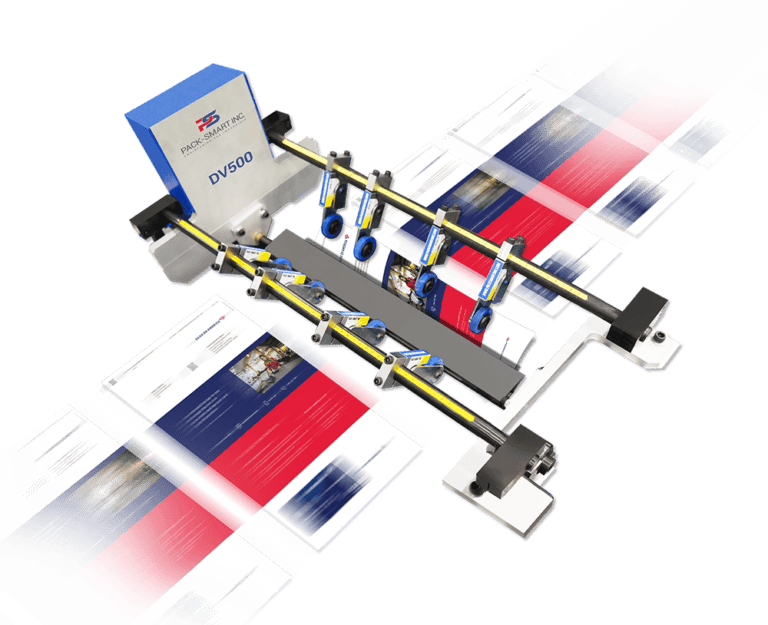
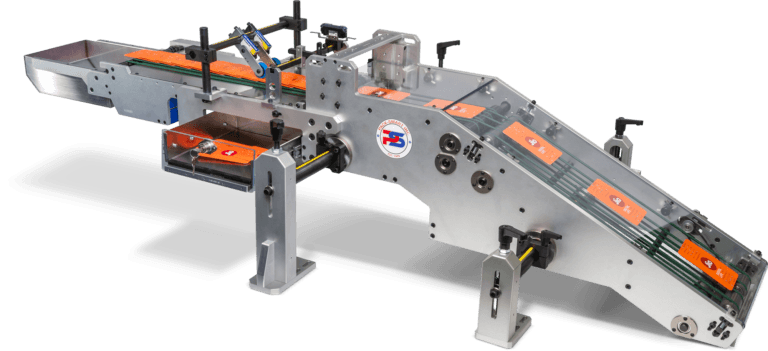
Enhance production line efficiency with the DO Series Overhead Divert, designed for high-speed, accurate product diversion and handling.
Technology Category
Diverting and sorting technologies convert inspection, weight, identity, or process status into a controlled routing decision. Pack-Smart Inc. coordinates product tracking, actuation timing, reject handling, and downstream flow so exceptions remain contained.
Diverting & Sorting Technologies
A divert is a production decision expressed mechanically. The line must know which product is moving, why its route should change, and where it must go before the actuation point is reached.
Pack-Smart integrates diverting and sorting technologies with inspection, barcode reading, data logic, product tracking, batching, accumulation, and pack-out. Routing can be driven by quality status, product identity, job rules, destination, count state, or another defined production condition.
The required mechanism depends on product size, mass, rigidity, line speed, spacing, conveyor geometry, destination count, divert angle, and the time available between the decision and the physical route change. Tracking logic is as important as the mechanism because the correct decision must remain associated with the correct product through the divert point.
Technology Category
Explore the Pack-Smart technologies assigned to this category. A category can include multiple technologies with different functions, configurations, and application requirements.
Enhance production line efficiency with the DO Series Overhead Divert, designed for high-speed, accurate product diversion and handling.
Elevate efficiency with the DZ Series Zoned Divert, designed for precise sorting and high-capacity handling in demanding industrial environments.
Relevant Systems
The technologies in this category are used in the following Pack-Smart automated systems.
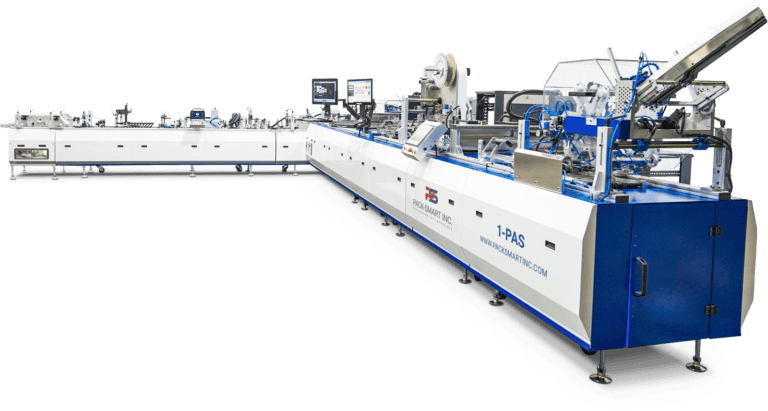
The 1-PAS Inline Secure Card Packaging System personalizes, affixes, seals, batches, bundles, and packs out secure open and closed loop cards in one workflow. It supports 20,000 PPH, duplex personalization, 600 DPI UV DOD printing, ±0.5 mm affixing accuracy, and Delta-X reporting.
The CP-250 Duplex Card Personalization System automates high-speed card printing, encoding, labeling, verification, and defect diversion for open loop, closed loop, and payment cards. It supports DOD personalization, barcode inspection, Delta-X tracking, 24/7 operation, and speeds up to 30,000 PPH.
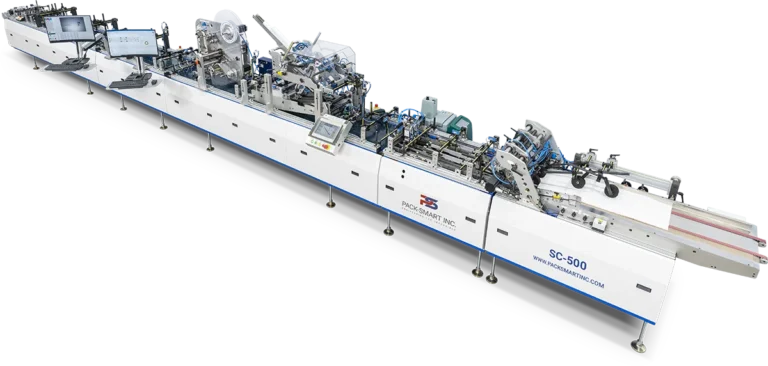
The SC-500 Secure Card Packaging System automates inline card-to-carrier affixing, booklet tipping, DOD personalization, folding, gluing, verification, and pack-out. Designed for SIM, phone, loyalty, gift, open loop, closed loop, and ID cards, it supports high-speed secure packaging with Delta-X traceability.
The BA-250 Automated Pack-Out System automates inline batching, wrapping, scanning, weighing, verification, and aggregate labeling for high-speed packaging fulfillment. It produces up to 2,000 finished bundles per hour with camera-based aggregation, weight verification, automated bundle labeling, and Delta-X Trust.
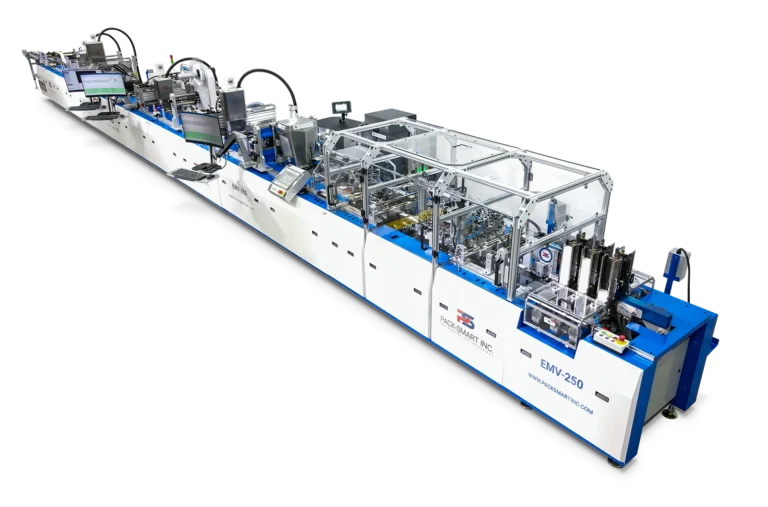
The EMV-250 Smart Card Issuance System automates contact and contactless encoding, DOD personalization, verification, and production tracking for dual interface chip cards. It supports payment cards, SIM cards, and open loop cards at speeds up to 10,000 cards per hour.
Production Challenges
Routing errors occur when decision logic, physical tracking, product motion, and downstream destination states are not coordinated.
A valid inspection or data decision can be applied to the wrong unit if spacing changes or the line loses position tracking before the divert.
Light, flexible, tall, unstable, or high-friction products can rotate, rebound, tip, or fail to enter the intended route.
Closely spaced products can make it difficult to actuate a divert for one unit without affecting adjacent accepted product.
A divert command does not prove that the product reached the correct destination. Critical applications may require confirmation and count reconciliation after routing.
Application Fit
The routing method is selected around the product, speed, decision source, destination, containment requirement, and downstream process.
Divert products that fail machine vision, code reading, weight, data matching, or another defined acceptance test.
Route products to different lanes, processing steps, orders, or pack-out destinations based on identity or production rules.
Use count state, group completion, or accumulation logic to release products to alternate paths or collection zones.
Move non-conforming or uncertain product into a controlled hold or rework route without mixing it with accepted output.
Frequently Asked Questions
These are the questions manufacturers and production teams commonly ask when evaluating this application.
Diverting can be engineered around cards, cartons, sheets, pouches, rigid products, and other discrete items after dimensions, mass, rigidity, surface, center of gravity, line speed, spacing, and destination geometry are evaluated.
Potentially. Integration depends on available space, product path, line controls, speed synchronization, guarding, utilities, and the upstream and downstream equipment. Pack-Smart evaluates the complete process before defining the interface.
Product sensors, encoders, machine vision, destination sensors, and production tracking can be combined to confirm the product reached the intended route when that level of verification is required.
The response is application-specific. The control system can identify the affected product or process state and trigger a controlled reject, alternate route, alarm, hold condition, or line stop when that response is required.
Changeover requirements depend on product range and module configuration. Mechanical adjustments, recipes, guides, sensors, tooling, and control parameters can be designed around repeatable setup and clear line-clearance requirements.
Provide representative products, dimensions and weight range, target speed, minimum spacing, decision source, number and location of destinations, reject containment requirements, required confirmation, and downstream equipment details.
Technology Assessment
Share the product, line speed, spacing, decision source, destination layout, reject or sorting rules, and reconciliation requirements. Pack-Smart can identify the tracking, divert mechanism, sensing, containment, and line-control approach required for the application.