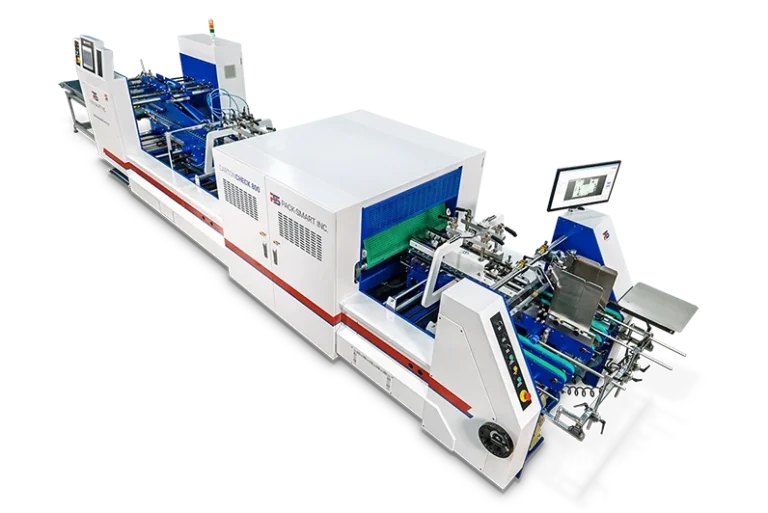
BSG-1000
Barcode Grading
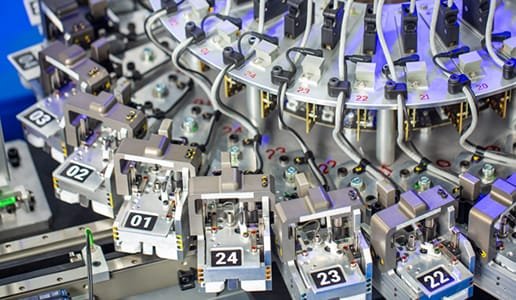
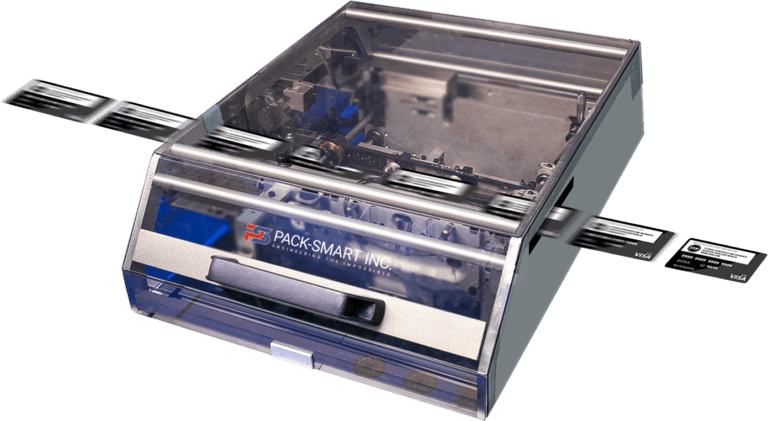
The BSG-1000 Barcode Grading module is designed to ensure that all your barcoded products meet ISO standards for quality.
Technology Category
Data read and write technologies encode, capture, verify, and reconcile information tied to cards, tags, chips, magnetic stripes, and other product identities. Pack-Smart Inc. connects each data event to the correct physical product and production record.
Data Read & Write Technologies
Production data is only useful when the system can write or capture the intended information, verify the result, associate it with the correct product, and reconcile exceptions.
Pack-Smart integrates data reading and writing into card, packaging, personalization, serialization, and secure production workflows. Depending on the application, the process can include barcode or code reading, barcode quality assessment, chip communication, magnetic-stripe read/write operations, product identification, database comparison, and production event tracking.
The architecture depends on the data carrier, encoding protocol, product presentation, data source, security model, production speed, read-after-write requirement, reject logic, and downstream record. The critical control point is the association between the physical product and the data state recorded by the system.
Technology Category
Explore the Pack-Smart technologies assigned to this category. A category can include multiple technologies with different functions, configurations, and application requirements.
The BSG-1000 Barcode Grading module is designed to ensure that all your barcoded products meet ISO standards for quality.
Maximize card security with the SCE-1 Smart Card Encoder, featuring robust EMV and contactless encoding up to 10,000 OPH. Discover versatile, compliant card encoding.
The MSE-1 offers robust, high-speed magnetic stripe encoding with advanced read and write capabilities that ensure accurate data storage on cards.
Relevant Systems
The technologies in this category are used in the following Pack-Smart automated systems.
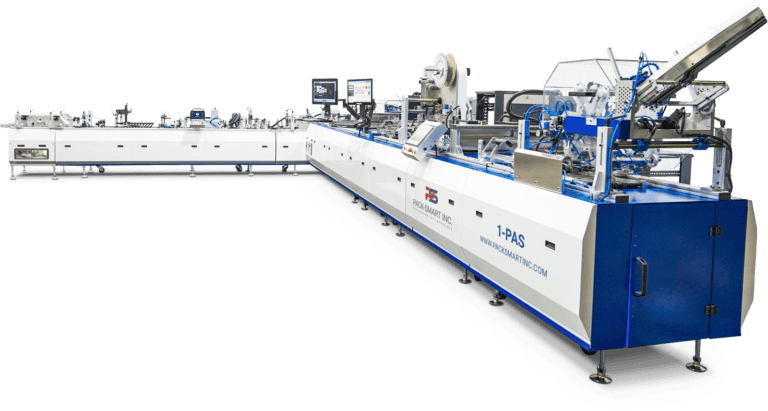
The 1-PAS Inline Secure Card Packaging System personalizes, affixes, seals, batches, bundles, and packs out secure open and closed loop cards in one workflow. It supports 20,000 PPH, duplex personalization, 600 DPI UV DOD printing, ±0.5 mm affixing accuracy, and Delta-X reporting.
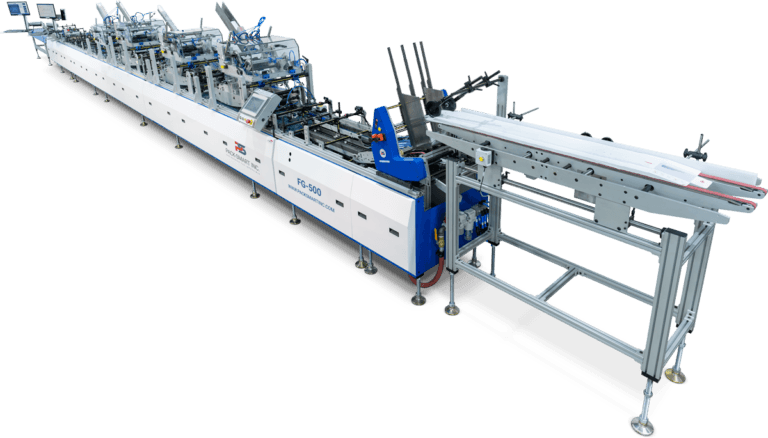
The FG-500 Specialty Carton Folding and Finishing System automates carton kitting, affixing, folding, gluing, DOD personalization, inspection, and reject handling. It supports ±0.4 mm affixing accuracy, 600 DPI printing, and Delta-X quality control for secure, conforming finished packages.
The CC-800 combines controlled feeding, stabilized transport, machine vision, and bridge module to integrate inspection and reject handling ahead of existing downstream equipment. This contains defects before they consume adhesive, machine capacity, labour, or packaging materials.
The CP-250 Duplex Card Personalization System automates high-speed card printing, encoding, labeling, verification, and defect diversion for open loop, closed loop, and payment cards. It supports DOD personalization, barcode inspection, Delta-X tracking, 24/7 operation, and speeds up to 30,000 PPH.
The SC-500 Secure Card Packaging System automates inline card-to-carrier affixing, booklet tipping, DOD personalization, folding, gluing, verification, and pack-out. Designed for SIM, phone, loyalty, gift, open loop, closed loop, and ID cards, it supports high-speed secure packaging with Delta-X traceability.
The EMV-250 Smart Card Issuance System automates contact and contactless encoding, DOD personalization, verification, and production tracking for dual interface chip cards. It supports payment cards, SIM cards, and open loop cards at speeds up to 10,000 cards per hour.
Production Challenges
Data errors become product errors when the line cannot prove that the intended information was written to, read from, and associated with the correct physical unit.
Position, contact, orientation, antenna coupling, magnetic media, print quality, or code presentation can affect communication and reading reliability.
A technically successful write can still be wrong if the record, sequence, job, or product association is incorrect.
Assuming that a command completed does not prove that the final data carrier contains the intended information.
Retries, rejected units, manual interventions, rework, and restarts can break the production record if product and data states are not reconciled together.
Application Fit
The reader, encoder, software interface, verification sequence, and production response are selected around the data carrier and the business rule the line must enforce.
Write or register approved data to compatible smart-card or contactless interfaces and verify the result against the expected production record.
Coordinate magnetic data writing and read-back verification with card feeding, personalization, inspection, and downstream packaging.
Decode printed identifiers, compare values with expected records, and assess defined code-quality attributes when required.
Track accepted, failed, rejected, reworked, or retired records so the final production output can be reconciled to physical units.
Frequently Asked Questions
These are the questions manufacturers and production teams commonly ask when evaluating this application.
Capability depends on the selected technology. Pack-Smart applications can incorporate barcode and 2D-code reading, smart-card or contactless interfaces, magnetic-stripe encoding, and other defined data carriers after the protocol and product requirements are confirmed.
After data is written, the system reads the carrier again and compares the result with the expected value or record. This confirms the final state rather than relying only on the write command.
Yes, when the required interface is defined. The line can receive or assign records, return production status, compare expected data, and support reconciliation with approved upstream or downstream systems.
The required response can include retry logic, controlled rejection, alternate routing, hold conditions, or line stops. Failed product and data states should remain linked so the production record can be reconciled.
Potentially. Barcode reading, variable printing, chip operations, magnetic-stripe encoding, inspection, and packaging can be coordinated in one workflow when the product path, timing, data rules, and interfaces are defined.
Provide representative products, data-carrier type, protocol or data specification, expected records, security requirements, target speed, read/write sequence, retry rules, reject and rework logic, and required system interfaces.
Technology Assessment
Share the product, data carrier, encoding or reading specification, production data source, target output, verification rules, and exception logic. Pack-Smart can identify the device integration, product handling, data control, read-back verification, and reconciliation approach required for the application.