ICR-500
Inline Compression Roller
The ICR-500 is an essential component for high-speed packaging lines, particularly in secure card packaging, premium branding, and specialty print finishing applications.
Technology Category
Compression technologies apply controlled force, contact, alignment, and dwell after gluing, joining, or forming operations. Pack-Smart Inc. integrates compression rolls and overhead compression with transport and line control to stabilize the product before downstream release.
Compression Technologies
Compression only creates value when force, contact, alignment, and dwell are controlled around the product and the process that came before it.
Pack-Smart integrates compression technologies after folding, gluing, affixing, lamination, or other operations where controlled pressure helps stabilize the product before downstream inspection or delivery. Roller, belt, or application-specific compression can be synchronized with product transport so pressure is applied without disrupting registration or product flow.
The required configuration depends on product thickness, stiffness, surface sensitivity, adhesive behaviour, fold geometry, contact area, line speed, and allowable compression. The objective is not maximum force. It is repeatable force at the right point in the process, with enough control to protect geometry and downstream handling.
Technology Category
Explore the Pack-Smart technologies assigned to this category. A category can include multiple technologies with different functions, configurations, and application requirements.
The ICR-500 is an essential component for high-speed packaging lines, particularly in secure card packaging, premium branding, and specialty print finishing applications.
Relevant Systems
The technologies in this category are used in the following Pack-Smart automated systems.
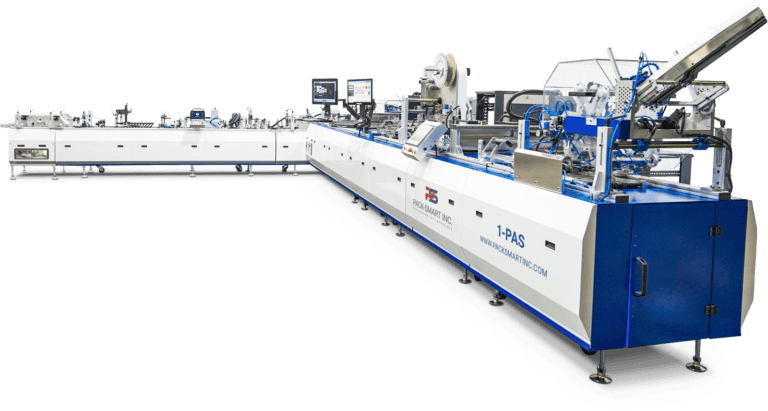
The 1-PAS Inline Secure Card Packaging System personalizes, affixes, seals, batches, bundles, and packs out secure open and closed loop cards in one workflow. It supports 20,000 PPH, duplex personalization, 600 DPI UV DOD printing, ±0.5 mm affixing accuracy, and Delta-X reporting.
The CP-250 Duplex Card Personalization System automates high-speed card printing, encoding, labeling, verification, and defect diversion for open loop, closed loop, and payment cards. It supports DOD personalization, barcode inspection, Delta-X tracking, 24/7 operation, and speeds up to 30,000 PPH.
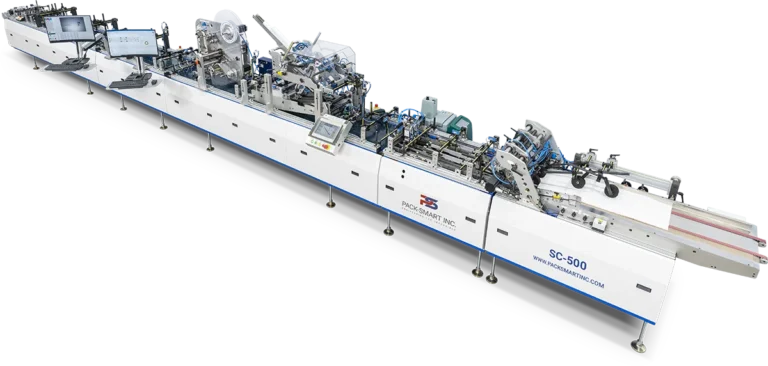
The SC-500 Secure Card Packaging System automates inline card-to-carrier affixing, booklet tipping, DOD personalization, folding, gluing, verification, and pack-out. Designed for SIM, phone, loyalty, gift, open loop, closed loop, and ID cards, it supports high-speed secure packaging with Delta-X traceability.
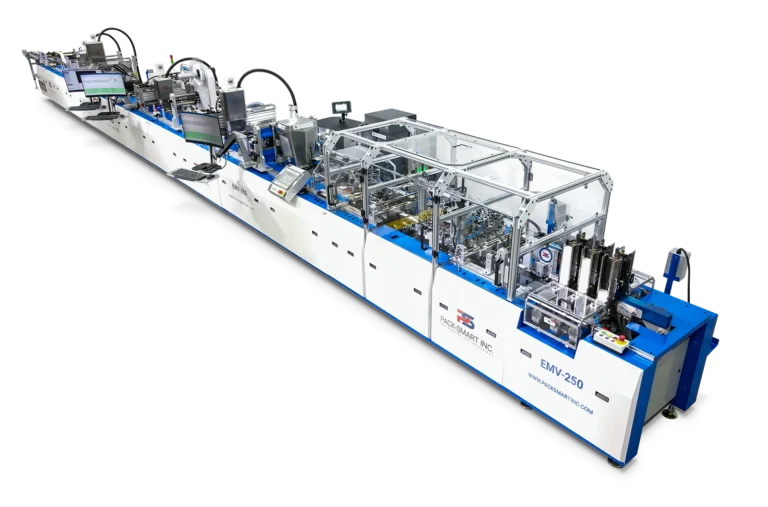
The EMV-250 Smart Card Issuance System automates contact and contactless encoding, DOD personalization, verification, and production tracking for dual interface chip cards. It supports payment cards, SIM cards, and open loop cards at speeds up to 10,000 cards per hour.
Production Challenges
Compression performance depends on stable product presentation, defined pressure, material behaviour, and the process condition entering the compression zone.
Changes in caliper, folds, inserts, adhesive build, or stacked components can alter pressure and finished geometry.
Too much pressure or poor alignment can mark surfaces, distort folds, shift components, squeeze adhesive, or damage sensitive products.
A short or inconsistent compression zone can leave folds, bonds, or assembled components unstable before the next production step.
Speed mismatch, product skew, belt tracking, or uncontrolled entry can create uneven contact and inconsistent output.
Application Fit
Compression is selected around the product structure, material sensitivity, attachment or folding process, and the condition required before downstream operations.
Apply controlled pressure after adhesive application and folding to support bond development before inspection or delivery.
Hold folded panels or product sections in the intended geometry as they transition to the next operation.
Apply controlled contact after labels, inserts, tapes, windows, or other attached components when the application requires pressure.
Use compression as part of the final transport path to maintain product shape, reduce spring-back, and present stable output for accumulation or pack-out.
Frequently Asked Questions
These are the questions manufacturers and production teams commonly ask when evaluating this application.
Compression can be configured for cartons, cards, printed products, laminated structures, folded pieces, and other discrete products after thickness range, surface sensitivity, geometry, and process requirements are evaluated.
Potentially. Integration depends on available space, product path, line controls, speed synchronization, guarding, utilities, and the upstream and downstream equipment. Pack-Smart evaluates the complete process before defining the interface.
The system can monitor product presence, transport state, gap or actuator position, and other defined process signals. Machine vision or sensing can also inspect measurable product attributes before or after compression when required.
The response is application-specific. The control system can identify the affected product or process state and trigger a controlled reject, alternate route, alarm, hold condition, or line stop when that response is required.
Changeover requirements depend on product range and module configuration. Mechanical adjustments, recipes, guides, sensors, tooling, and control parameters can be designed around repeatable setup and clear line-clearance requirements.
Provide representative products, thickness range, material and surface specifications, upstream process details, required compression zone, allowable force or deformation limits, target speed, and downstream handling requirements.
Technology Assessment
Share the product, thickness range, upstream folding or attachment process, surface restrictions, target speed, and required finished condition. Pack-Smart can identify the compression, transport, adjustment, and verification approach required for the application.