CB-750
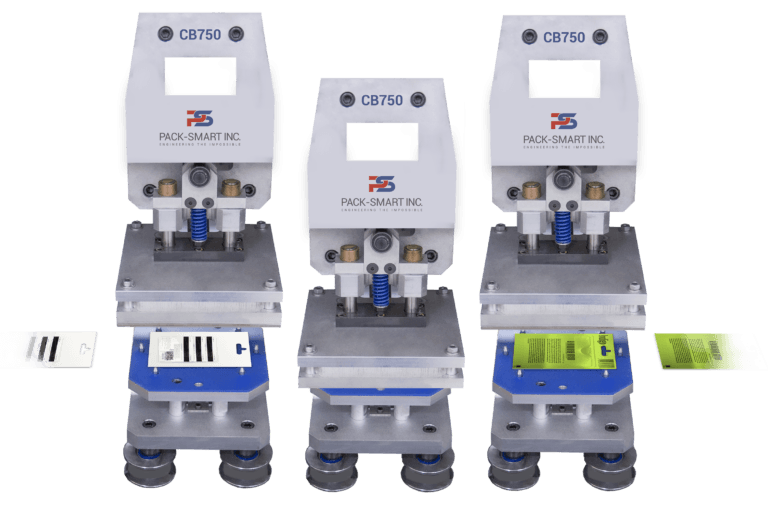
High-Speed Blister Seal Module
Ideal for industries requiring rapid and reliable blister sealing, the CB-750 enhances productivity and maintains stringent quality standards.
Technology Category
Blister and RF sealing technologies control material presentation, product position, pressure, timing, and seal formation so packages close consistently without disrupting downstream production. Pack-Smart Inc. integrates sealing with transport, inspection, and reject logic.
Blister & RF Sealing Technologies
A sealing process has to control material presentation, sealing conditions, pressure, timing, and product position so the package is closed consistently without damaging the product or surrounding material.
Pack-Smart integrates blister and RF sealing technologies into automated packaging workflows where formed materials, cards, films, or other compatible components must be brought together and sealed under controlled process conditions. The sealing station must remain synchronized with feeding, indexing or continuous transport, product loading, and downstream inspection.
The final process depends on the materials, seal geometry, package construction, sealing method, energy input, pressure, dwell time, cooling requirements, product sensitivity, and target output. Process monitoring and inspection can be added around the specific attributes that can be measured reliably on the line.
Technology Category
Explore the Pack-Smart technologies assigned to this category. A category can include multiple technologies with different functions, configurations, and application requirements.
Ideal for industries requiring rapid and reliable blister sealing, the CB-750 enhances productivity and maintains stringent quality standards.
Relevant Systems
The technologies in this category are used in the following Pack-Smart automated systems.
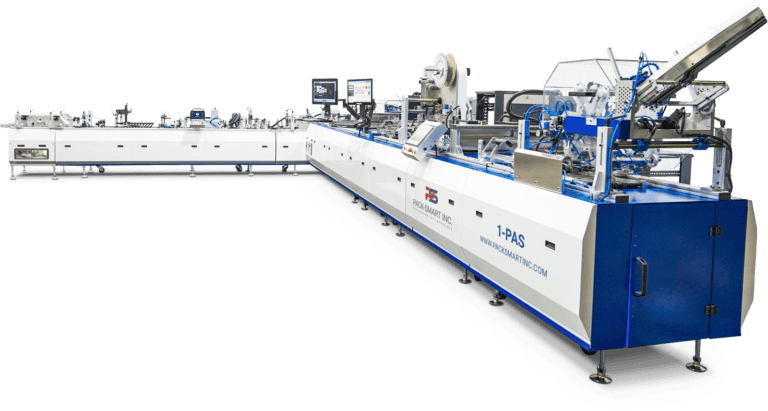
The 1-PAS Inline Secure Card Packaging System personalizes, affixes, seals, batches, bundles, and packs out secure open and closed loop cards in one workflow. It supports 20,000 PPH, duplex personalization, 600 DPI UV DOD printing, ±0.5 mm affixing accuracy, and Delta-X reporting.
The CP-250 Duplex Card Personalization System automates high-speed card printing, encoding, labeling, verification, and defect diversion for open loop, closed loop, and payment cards. It supports DOD personalization, barcode inspection, Delta-X tracking, 24/7 operation, and speeds up to 30,000 PPH.
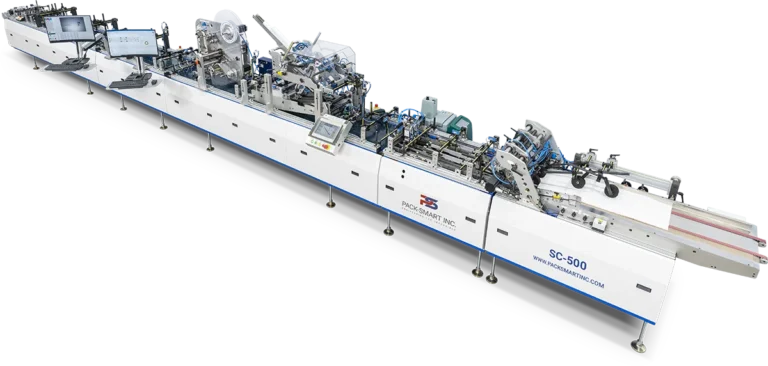
The SC-500 Secure Card Packaging System automates inline card-to-carrier affixing, booklet tipping, DOD personalization, folding, gluing, verification, and pack-out. Designed for SIM, phone, loyalty, gift, open loop, closed loop, and ID cards, it supports high-speed secure packaging with Delta-X traceability.
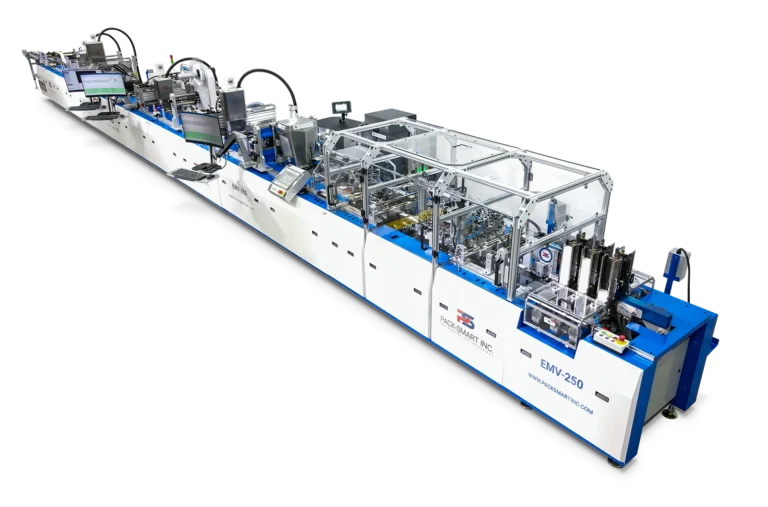
The EMV-250 Smart Card Issuance System automates contact and contactless encoding, DOD personalization, verification, and production tracking for dual interface chip cards. It supports payment cards, SIM cards, and open loop cards at speeds up to 10,000 cards per hour.
Production Challenges
Seal consistency depends on material compatibility, controlled presentation, stable process conditions, and a production response when the seal cycle falls outside the defined window.
Changes in films, cards, coatings, formed cavities, or backing materials can change the process window required for a consistent seal.
Product, blister, or backing material that shifts before the sealing station can create incomplete seals, trapped material, or damaged presentation.
Process variation can create weak bonds, excessive material deformation, scorching, or inconsistent finished geometry.
Visual inspection can confirm defined surface attributes, but seal integrity claims must be tied to the measurement method and acceptance criteria actually validated for the package.
Application Fit
The sealing method and tooling are selected around material compatibility, package geometry, product protection, and the required production sequence.
Seal compatible blister constructions used to present cards, accessories, promotional items, or other retail products.
Integrate product loading, blister presentation, sealing, inspection, and delivery for compatible packaged goods.
Use controlled sealing as one layer within a packaging architecture where opening evidence or product containment is required.
Coordinate sealing with feeding, personalization, labelling, inspection, sorting, or downstream pack-out when the process sequence supports it.
Frequently Asked Questions
These are the questions manufacturers and production teams commonly ask when evaluating this application.
The process depends primarily on material compatibility and package construction. Representative blister, backing, card, film, or other sealing materials must be reviewed and tested before the sealing method is defined.
Potentially. Integration depends on available space, product path, line controls, speed synchronization, guarding, utilities, and the upstream and downstream equipment. Pack-Smart evaluates the complete process before defining the interface.
The system can monitor defined process states and can use sensors or machine vision to inspect measurable attributes such as component presence, position, seal-area appearance, or package geometry. The verification method must match the actual acceptance requirement.
The response is application-specific. The control system can identify the affected product or process state and trigger a controlled reject, alternate route, alarm, hold condition, or line stop when that response is required.
Changeover requirements depend on product range and module configuration. Mechanical adjustments, recipes, guides, sensors, tooling, and control parameters can be designed around repeatable setup and clear line-clearance requirements.
Provide representative materials and products, package drawings, seal geometry, material specifications, sealing method if known, acceptable process window, target output, inspection requirements, and downstream handling details.
Technology Assessment
Share representative packaging materials, product samples, seal requirements, target output, and inspection criteria. Pack-Smart can identify the material handling, sealing, process-control, inspection, and reject architecture required for the application.