BC Series
Batch Counter & Bundling
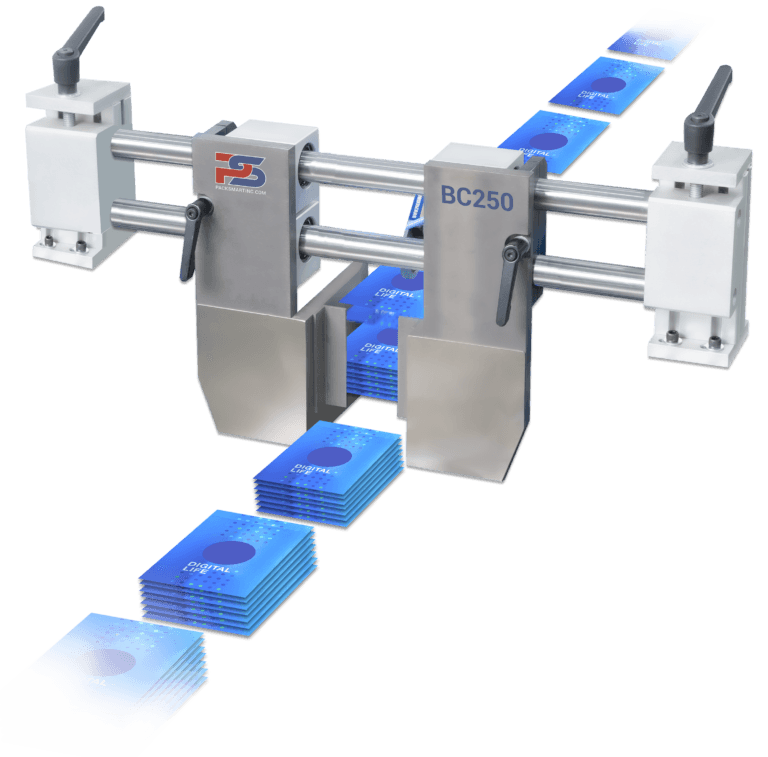
Efficiently batch single products into precise groups with Pack-Smart's BC Series, designed for a wide range of materials and applications.
Technology Category
Batching and bundling technologies control product separation, counting, group formation, and release so defined quantities move downstream as one controlled production event. Pack-Smart Inc. coordinates batching logic with transport, inspection, and pack-out.
Batching & Bundling Technologies
A batch is only correct when the line can separate products, count them reliably, build the required group, and release that group without losing control of quantity or sequence.
Pack-Smart integrates batching and bundling technologies into card, print, flexible packaging, fulfillment, and pack-out workflows where individual products must be converted into defined groups. The process can include feeding, separation, electronic counting, buffering, stacking, group transfer, wrapping, labelling, inspection, and delivery.
The system architecture depends on product thickness, friction, flexibility, stack behaviour, required batch quantity, line speed, bundle format, and downstream demand. The control logic must maintain count integrity through interruptions, rejects, changeovers, and restarts so incomplete or mixed groups are contained before pack-out.
Technology Category
Explore the Pack-Smart technologies assigned to this category. A category can include multiple technologies with different functions, configurations, and application requirements.
Efficiently batch single products into precise groups with Pack-Smart's BC Series, designed for a wide range of materials and applications.
Relevant Systems
The technologies in this category are used in the following Pack-Smart automated systems.
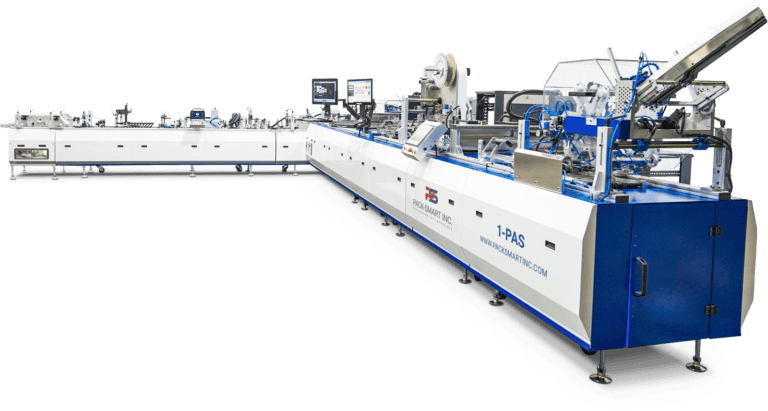
The 1-PAS Inline Secure Card Packaging System personalizes, affixes, seals, batches, bundles, and packs out secure open and closed loop cards in one workflow. It supports 20,000 PPH, duplex personalization, 600 DPI UV DOD printing, ±0.5 mm affixing accuracy, and Delta-X reporting.
The CP-250 Duplex Card Personalization System automates high-speed card printing, encoding, labeling, verification, and defect diversion for open loop, closed loop, and payment cards. It supports DOD personalization, barcode inspection, Delta-X tracking, 24/7 operation, and speeds up to 30,000 PPH.
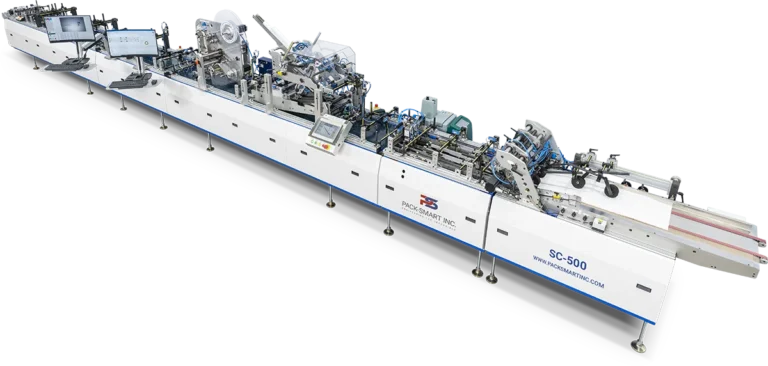
The SC-500 Secure Card Packaging System automates inline card-to-carrier affixing, booklet tipping, DOD personalization, folding, gluing, verification, and pack-out. Designed for SIM, phone, loyalty, gift, open loop, closed loop, and ID cards, it supports high-speed secure packaging with Delta-X traceability.
Production Challenges
Batch accuracy depends on product separation, counting, buffer logic, group formation, and the response to interruptions or rejected products.
Products that overlap, cling, bounce, or pass a sensor unpredictably can create false counts and incomplete groups.
Thickness, curl, trapped air, friction, and compression can change how a batch accumulates and transfers.
Without buffering and controlled release, variable supply or downstream stops can starve the process, overfill accumulation, or break batch sequence.
If product identity and batch state are not reconciled after an exception, the next group can inherit the wrong quantity or sequence.
Application Fit
Batch quantity, group geometry, wrapping method, labelling, and verification are selected around the product and downstream pack-out requirement.
Create defined quantities of cards, sheets, pouches, labels, or other individual products for downstream packaging or fulfillment.
Accumulate products into controlled stacks and transfer completed groups to wrapping, cartoning, banding, labelling, or case packing.
Maintain product identity and sequence while building batches that must remain associated with a job, order, or production record.
Coordinate counting, stacking, wrapping, bundle identification, inspection, and delivery as one controlled pack-out sequence.
Frequently Asked Questions
These are the questions manufacturers and production teams commonly ask when evaluating this application.
Batching can be engineered around cards, sheets, labels, pouches, packets, printed pieces, and other discrete products after thickness, friction, flexibility, stack behaviour, and required group size are evaluated.
Potentially. Integration depends on available space, product path, line controls, speed synchronization, guarding, utilities, and the upstream and downstream equipment. Pack-Smart evaluates the complete process before defining the interface.
Electronic sensing, data tracking, barcode reading, machine vision, weight checks, or another defined verification method can be used to confirm quantity or group status when appropriate for the application.
The response is application-specific. The control system can identify the affected product or process state and trigger a controlled reject, alternate route, alarm, hold condition, or line stop when that response is required.
Changeover requirements depend on product range and module configuration. Mechanical adjustments, recipes, guides, sensors, tooling, and control parameters can be designed around repeatable setup and clear line-clearance requirements.
Provide representative products, required batch quantities, allowable count tolerance, target output, stack or bundle geometry, serialization requirements, downstream packaging method, reject logic, and expected interruption scenarios.
Technology Assessment
Share representative products, required batch quantities, target output, bundle format, downstream process, and verification requirements. Pack-Smart can identify the feeding, counting, buffering, stacking, bundling, and reject controls required for the application.