BSC-1000
Barcode Scanning & CCD Reading
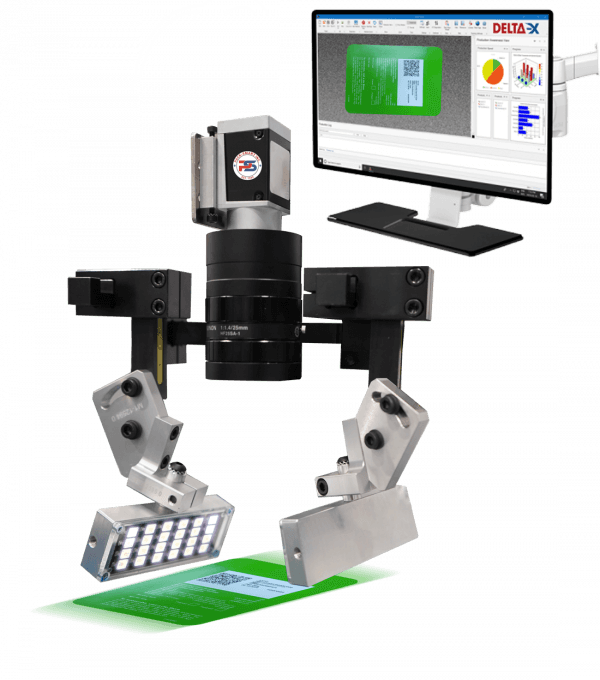
A user-friendly, fully packaged CCD reader, offering easy integration and several configurations to meet a variety of needs.
Technology Category
Barcode and data reading technologies support automated code capture, grading, verification, matching, and production decisions. Pack-Smart Inc. integrates readers and vision systems with product tracking, reject handling, and data reconciliation.
Barcode and Data Reading Technologies
A code is only useful when the system can read it reliably, compare it with the expected record, and apply the correct production decision to the physical product.
Pack-Smart integrates barcode and data reading into automated feeding, personalization, collation, assembly, packaging, inspection, sorting, and pack-out workflows. Readers and vision tools can capture linear barcodes, 2D codes, and defined human-readable information while the product remains under controlled transport.
The required reading architecture depends on the code, substrate, print quality, orientation, field of view, production speed, data source, acceptance criteria, and downstream response. A successful system does more than decode information. It connects the reading result to product tracking, matching, verification, rejection, reconciliation, and production reporting.
Technology Category
Explore the Pack-Smart technologies assigned to this category. A category can include multiple technologies with different functions, configurations, and application requirements.
A user-friendly, fully packaged CCD reader, offering easy integration and several configurations to meet a variety of needs.
The VSC-1000 Vision System offers state-of-the-art vision scanning and real-time image processing, ideal for high-speed production environments.
Relevant Systems
The technologies in this category are used in the following Pack-Smart automated systems.
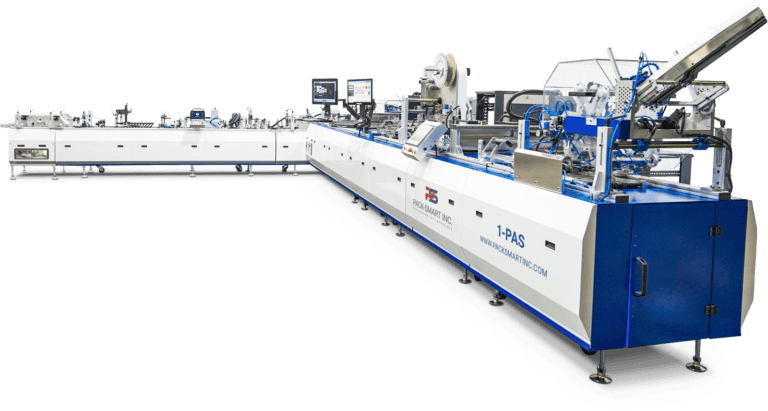
The 1-PAS Inline Secure Card Packaging System personalizes, affixes, seals, batches, bundles, and packs out secure open and closed loop cards in one workflow. It supports 20,000 PPH, duplex personalization, 600 DPI UV DOD printing, ±0.5 mm affixing accuracy, and Delta-X reporting.
The CP-250 Duplex Card Personalization System automates high-speed card printing, encoding, labeling, verification, and defect diversion for open loop, closed loop, and payment cards. It supports DOD personalization, barcode inspection, Delta-X tracking, 24/7 operation, and speeds up to 30,000 PPH.
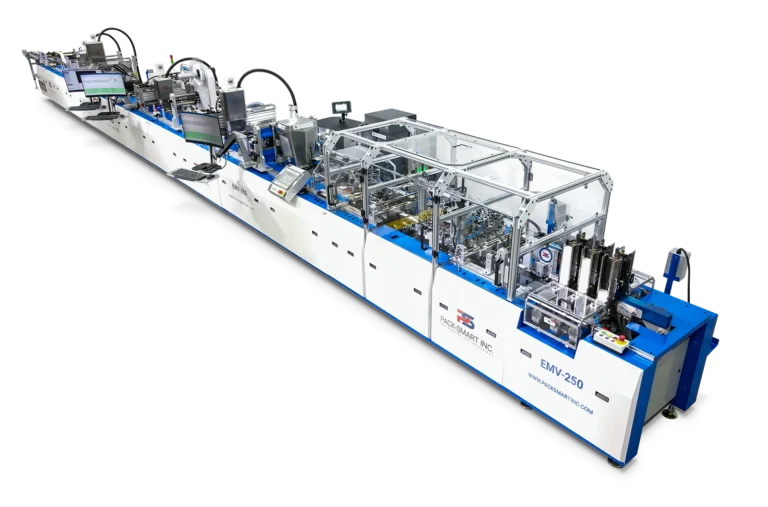
The EMV-250 Smart Card Issuance System automates contact and contactless encoding, DOD personalization, verification, and production tracking for dual interface chip cards. It supports payment cards, SIM cards, and open loop cards at speeds up to 10,000 cards per hour.
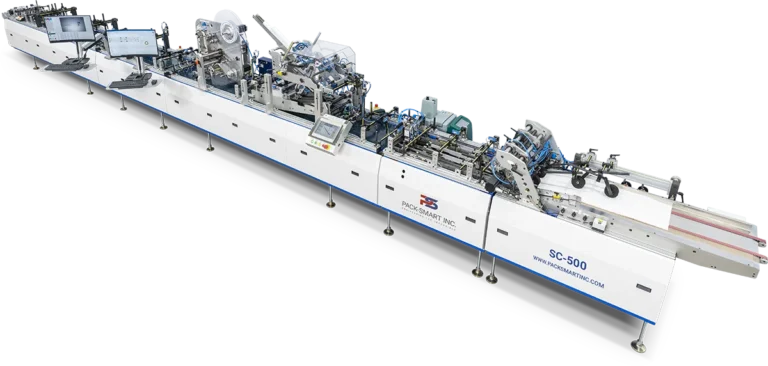
The SC-500 Secure Card Packaging System automates inline card-to-carrier affixing, booklet tipping, DOD personalization, folding, gluing, verification, and pack-out. Designed for SIM, phone, loyalty, gift, open loop, closed loop, and ID cards, it supports high-speed secure packaging with Delta-X traceability.
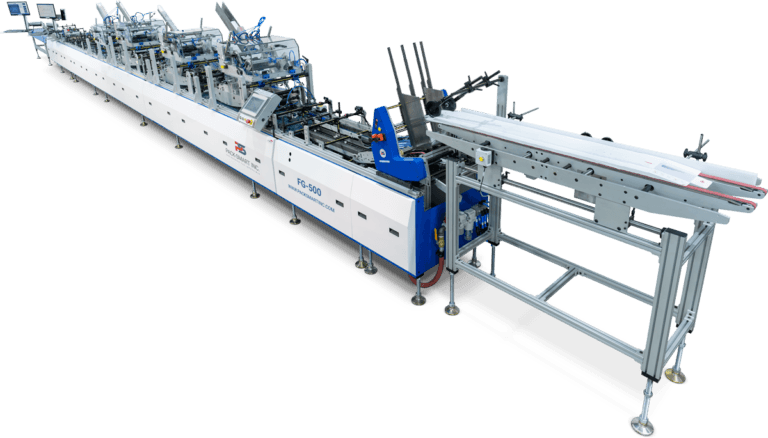
The FG-500 Specialty Carton Folding and Finishing System automates carton kitting, affixing, folding, gluing, DOD personalization, inspection, and reject handling. It supports ±0.4 mm affixing accuracy, 600 DPI printing, and Delta-X quality control for secure, conforming finished packages.
Production Challenges
Reading performance depends on the physical code, product presentation, optical conditions, data logic, and the response that follows the reading event.
Low contrast, damaged elements, ink spread, poor quiet zones, distortion, contamination, and inconsistent printing can reduce decoding reliability or grading performance.
Skew, vibration, inconsistent spacing, product curl, speed changes, and uncontrolled presentation can move the code outside the reader field or reduce image quality.
Gloss, foil, curvature, transparent material, lamination, folds, labels, and surrounding artwork can create glare, shadows, or insufficient contrast.
A successful decode does not confirm that the value is correct, in sequence, matched to the right product, or connected to a verified reject and reconciliation process.
Application Fit
The reader, camera, lighting, data connection, and production response are selected around the product, code, line speed, and required decision.
Read identifiers on multiple components and confirm that the correct pieces are assembled, collated, inserted, or packaged together.
Compare printed barcodes, 2D codes, serial numbers, or other machine-readable information with the expected job or product record.
Evaluate defined barcode quality characteristics and contain codes that do not meet the acceptance standard established for the application.
Use decoded information to track products through production, select a processing route, trigger variable operations, sort output, or create a verified production record.
Frequently Asked Questions
These are the questions manufacturers and production teams commonly ask when evaluating this application.
The supported symbologies depend on the selected reader or vision tool. Systems can be configured for common linear barcodes, 2D codes, and other defined machine-readable formats after the code specification and production samples are reviewed.
Decoding retrieves the information carried by the code. Grading evaluates defined print-quality characteristics against an applicable standard. A code may decode successfully while still failing the required quality threshold.
Some readers and image-processing tools can decode codes with limited damage or print variation, but performance depends on the symbology, remaining code structure, contrast, resolution, motion, and inspection settings. Representative testing is required.
Yes. A decoded value can be compared with an expected record, sequence, product identity, component list, job file, or another controlled data source when the required interface and decision logic are defined.
The system can track the affected product to a controlled reject, alternate route, rework process, or line-stop condition. The event can also be recorded for reconciliation and production reporting.
Provide representative good and defective samples, code symbologies, dimensions, print specifications, product orientation, target speed, expected data, matching rules, acceptance criteria, reject requirements, and details of the surrounding production line.
Technology Assessment
Share the product, code specification, production samples, expected data, line speed, acceptance criteria, and required response. Pack-Smart can identify the reading, imaging, data-control, tracking, and reject approach required for the application.