Collating
Flexible packaging collation controls counting, grouping, sequencing, and delivery of pouches, sachets, bags, or other flexible formats. Pack-Smart Inc. coordinates product presentation and collation…
Flexible packs can move, flex, curl, and vary under speed, creating control challenges for feeding, batching, printing, labeling, inspection, and collation. Pack-Smart systems coordinate presentation and verification around repeatable production logic.
Flexible Packaging Systems
Flexible packs can curl, flex, shift, or deform as speed increases, making presentation and transport a control problem before downstream operations can remain repeatable.
Pack-Smart systems are configured around controlled handling and verification of the specific flexible format before printing, labelling, inspection, batching, collation, or pack-out.
The system architecture is defined by format stiffness, dimensions, surface and friction characteristics, infeed presentation, coding or labelling requirement, inspection logic, batching requirement, and downstream delivery.
Brands We Work With





Product Applications
Explore the production applications associated with this Product Type. Each application page connects the process requirement to relevant systems, production challenges, and application fit.
Flexible packaging collation controls counting, grouping, sequencing, and delivery of pouches, sachets, bags, or other flexible formats. Pack-Smart Inc. coordinates product presentation and collation…
Flexible packaging feeding and batching systems separate, count, space, and group variable packs before downstream packaging, printing, inspection, or fulfilment. Pack-Smart Inc. coordinates infeed…
Flexible packaging serialization and labelling applies variable identity, labels, codes, or production data while the pack remains under controlled handling. Pack-Smart Inc. integrates application,…
Flexible packaging vision inspection verifies defined print, code, label, orientation, or package conditions without separating inspection from production flow. Pack-Smart Inc. connects inspection results…
Relevant Systems
Explore Pack-Smart systems assigned to this Product Type. Final system configuration depends on the product, material presentation, process sequence, inspection requirements, data requirements, throughput target, and surrounding line.
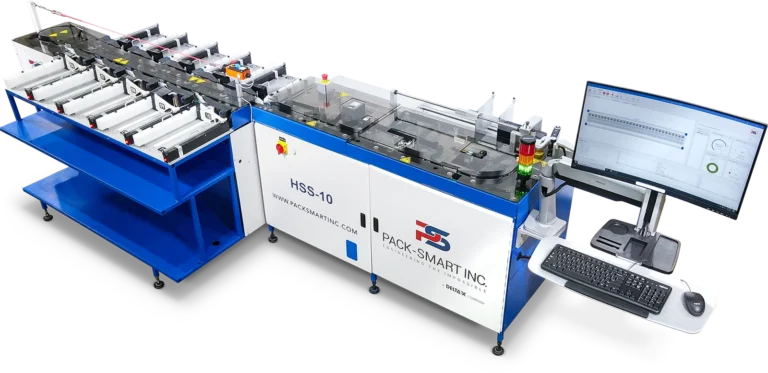
The HSS-10 feeds, stabilizes, reads and sorts barcode-identified envelopes across ten shingled delivery outputs while Delta-X provides live production status, exception visibility and event-level control.
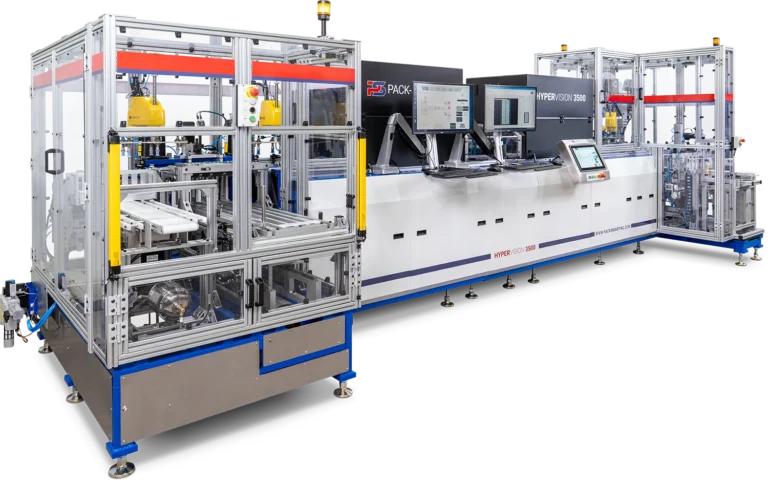
The HyperVision 3500 is a secure document inspection system for passports, IDs, financial cards, and currency substrates. It combines 8K optical inspection, 10-micron defect detection, NFC/RFID validation, lamination integrity checks, and Delta-X traceability at up to 3,500 units per hour.
The TF-3500 Tray Forming and Fulfillment System automates rigid tray forming, product placement, inspection, lid placement, and closing for premium packaging workflows. It supports 4-corner folding, real-time vision inspection, recipe-based changeovers, and speeds up to 3,500 products per hour.
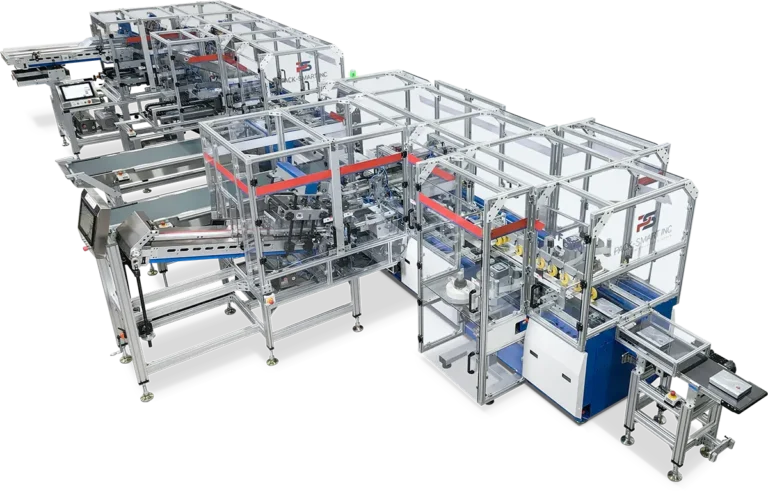
The BA-250 Automated Pack-Out System automates inline batching, wrapping, scanning, weighing, verification, and aggregate labeling for high-speed packaging fulfillment. It produces up to 2,000 finished bundles per hour with camera-based aggregation, weight verification, automated bundle labeling, and Delta-X Trust.
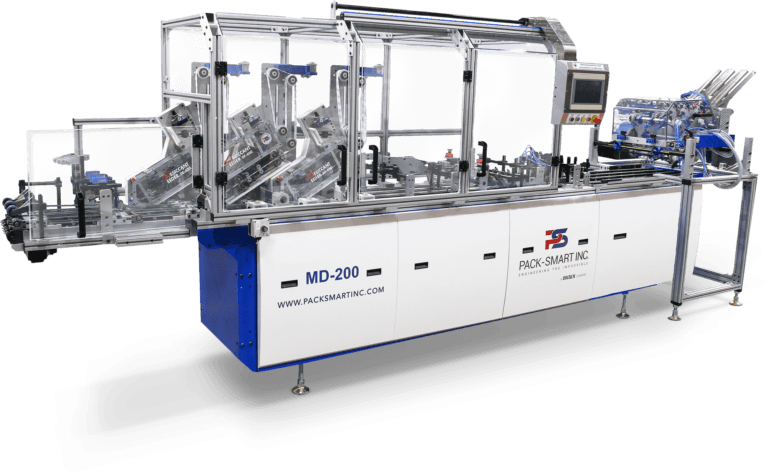
The MD-200 Multi-Stream Finishing and Packaging System automates final assembly for medical-grade kits, including rapid antigen test kits. It adds kit components, folds carriers, applies DOD serialization, and guides finished kits into wrapping at speeds up to 200 PPM.
Production Challenges
Flexible formats can change shape and position during transport, so stable presentation must be created before value is added downstream.
Flexible formats may curl, overlap, shift, or change shape during feeding and transport.
Variable print, labels, or codes require repeatable position relative to the moving package.
Readability, print, label presence, or package attributes may need verification without destabilizing flow.
Individual packs must be counted, grouped, collated, or delivered according to the downstream process requirement.
Control Points
The production sequence should stabilize the pack first, then maintain position, verification status, and count through every downstream operation.
Establish controlled spacing and presentation from the infeed before print, labelling, or inspection.
Apply variable information or labels at the required position against a stable product reference.
Confirm configured attributes and contain exceptions before they move deeper into the workflow.
Group or route conforming product into the required next stage without losing count or process state.
Frequently Asked Questions
These are the handling and process questions that should be answered before a flexible package is moved through higher-value operations.
Flexible formats can curl, shift, overlap, or change shape during feeding and transport. Stable presentation is therefore important before printing, labelling, inspection, batching, or collation.
Where the application supports it, printing and labelling can be integrated around controlled product position and timing. Material, surface, code, label, and verification requirements should be reviewed first.
Inspection can use configured sensors, readers, or machine vision to verify attributes such as print, code readability, label presence, or other application-specific conditions without separating inspection from the production flow.
Yes, where the product format and system architecture support controlled counting, grouping, collation, or delivery. The infeed presentation and downstream pack-out requirement determine the appropriate method.
Dimensions, stiffness, curl, surface friction, seams, gussets, fill condition, weight distribution, and how packs arrive at the infeed can all influence the handling method.
Provide representative packs, format range, infeed presentation, target throughput, print or labelling requirements, inspection criteria, batching or collation logic, and downstream delivery requirements.
System Assessment
Share representative flexible packs, how they arrive at the line, what must be printed or verified, how they must be grouped, and the controlled output required by the next production stage.