

Blog
Stop Buying Lines.
Start Building Packaging Automation Platforms You Can Evolve.
For years, packaging performance was judged by one number: products per hour. That number still matters. It always will. But it no longer tells the full story.
Today, leading manufacturers are focused less on raw line speed and far more on something with longer strategic value: line versatility. More specifically, they are rethinking packaging line platform architecture because the lines delivering the most long-term value are not always the fastest. They are the ones built to absorb change without forcing a rebuild every time the business moves.
Historically, manufacturers treated packaging equipment as a capital purchase for a specific job. Define the product. Engineer the line to run efficiently. Expect the configuration to stay relatively stable over a long lifecycle. That model worked when product cycles were predictable and external requirements changed slowly.
Most manufacturers no longer operate in that environment.
The shift from line speed to line versatility
The most successful manufacturers are no longer asking only how fast a line can run. They are asking how well that line can evolve.
That is a deeper and more commercially intelligent question. Speed matters at the output level. Versatility matters at the business level. A fast line that cannot adapt becomes a constraint. A versatile line that can absorb new formats, new workflows, and new governance requirements becomes an asset that keeps paying back long after commissioning.
The new KPI set is clear: longevity, versatility, and uptime are the measures defining long-term packaging performance. Success is no longer just hitting a throughput target on day one. Success is having the capability and architecture to secure the next job, support the next change, and future-proof the line’s revenue contribution.
This is where platform thinking starts to matter.
A packaging platform is not a single frozen line built around one narrow use case. It is a packaging line platform architecture designed to simplify future upgrades so that adding new requirements through repeatable logic does not become an expensive or disruptive process.
That distinction sounds subtle on paper. On the floor, everything changes.
The problem begins with system architecture
When manufacturers talk about inflexible lines, they often start with symptoms. Changeovers drag. New modules are difficult to integrate. Software behaves differently from station to station. Utility rerouting gets expensive. Data connections become brittle. Engineering teams get dragged back into work that should have been designed out from the beginning.
Those are all real problems. But they are usually symptoms, not the root cause.
The real problem starts in the architecture
Rigid system architecture is often the first true limitation when a manufacturing line needs to expand, because the utilities, parts, sub-systems, and control logic were custom-integrated for one specific project, not for the next requirement. Data connections were built as one-off integrations, and the system quickly becomes brittle.
Brittleness creates cascading costs
Production teams lose time. Engineering teams lose focus. Operators inherit inconsistency. IT inherits risk. Expansion slows down more than it should. Even worse, the organization starts treating change as a threat rather than a normal condition of growth.
Globally, product variation and line diversity have increased dramatically. Connected equipment is expected to do more, validate more, and integrate more cleanly than it did in the past. Materials are evolving. Security and data integrity requirements are intensifying. A line that cannot adjust under that pressure becomes expensive to keep relevant.
That is why the better question before a new build is not simply, “What does this line need to run today?”
It is this: How will this line need to change?
That question forces better decisions earlier, when foundations are still under development and when flexibility is still relatively inexpensive to design in.
What packaging line platform architecture actually means
Platform thinking is not overbuilding. It is not engineering for fantasy. It is not loading a line with optional complexity for no reason.
It is a deliberate set of engineering decisions made early, before the first module ships, so the line can evolve later without breaking the system around it.
A strong packaging line platform architecture usually rests on five foundations.
Standard interfaces in packaging equipment
Mechanical, electrical, and data connections should remain consistent across builds and stations wherever possible. A technician who understands one station should be able to work on another without relearning the system.
Standardized interfaces also accelerate commissioning. When every connection follows the same logic and convention, go-live is faster, service is easier, and future expansion becomes less disruptive.
Standardized utilities for packaging lines
Air, vacuum, power, and network drops should be sized and placed for what the line may become, not just what it is on day one. If an inspection station, print-and-apply unit, or top-load feeder may be added in year two, those drops should be planned during initial construction.
This is not overbuilding. It is planning for a predictable future rather than reacting under pressure
Repeatable modules in a modular packaging line
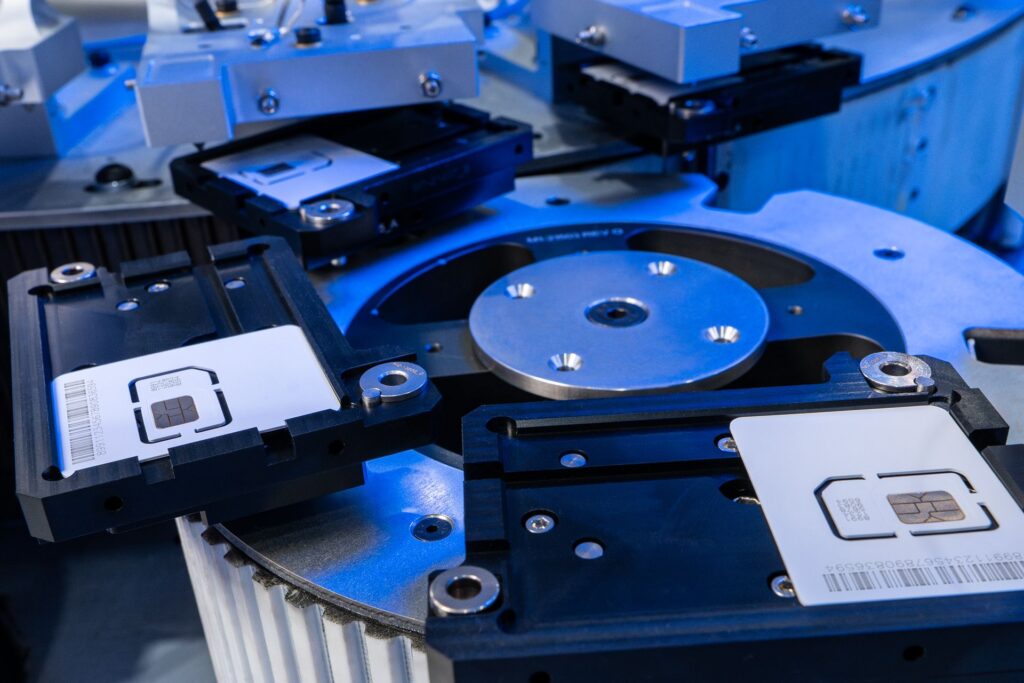
Inspection, insert feeding, tipping, print-and-apply, vision verification, and reject handling should not need to be custom-engineered for every line. When built as repeatable modules with standardized interfaces, they can be added or removed without re-engineering the surrounding system.
That flexibility matters when a new product requires a different insert format, when a customer audit demands a vision system that was not in the original scope, or when a validation point has to be added quickly. Platform lines absorb those changes. One-off lines do not. When modules are repeatable and well-governed, you get upgradeable packaging systems rather than rebuilding cycles.
The software spine for packaging lines
Software consistency is one of the most overlooked yet important elements of platform design.
Recipes, operator permissions, traceability, and machine-state logic should work the same way across every station. When they do not, training fragments, troubleshooting slows, and audit integrity becomes harder to maintain.
A shared software architecture does not mean every station runs identical code. It means each station follows the same logic framework, so new stations feel like extensions of the system rather than foreign add-ons. In Pack-Smart programs, Delta-X Trust is often used as the data layer to support validation, reconciliation, role-based access, and audit-ready records without adding operator burden. Delta-X’s broader positioning reinforces this logic through real-time validation, reconciliation, reporting, RBAC, and modular architecture designed to help manufacturers manage traceability and governance without sacrificing operational efficiency.
Build a packaging line integration roadmap
This is the step most teams skip, and it is often the one that matters most. Before the first module ships, the team should already have a credible view of what the next two or three expansions may look like. Not because those expansions will all be built now, but because that foresight should shape the decisions made today.
If serialization is likely in year three, the data spine should support it from the start. If a second shift is coming, the HMI should already be designed for multi-user permissions. If more validation or vision is likely, the line should not need to be physically reimagined to absorb it. Designing for a known future is far less costly than retrofitting a past decision later.
Why this matters right now
This article becomes strongest when it stops sounding philosophical and starts naming the forces making the platform approach urgent.
Three forces are making the shift more urgent than ever and turning packaging line platform architecture into a strategic requirement rather than a design preference.
SKU churn is accelerating
Consumer brands are launching new formats faster than ever before, and packaging lines that cannot adapt quickly become bottlenecks rather than assets. A platform line supports recipe-driven changeover through module swaps and validated settings. That is how you build a quick-changeover packaging line without constant engineering support.
Sustainability mandates are reshaping material specs
Films, substrates, and package formats are evolving as brands respond to regulatory pressure and consumer expectations. Lines built for materials today must also run tomorrow without a full retool. This demands modular sealing systems, flexible film paths, and utility infrastructure that does not depend on a fixed material type.
Cybersecurity requirements are becoming operational realities
Connected lines are now under IT security scrutiny, and many plants are discovering that their controls were never designed for network segmentation, role-based access controls, or audit logging. Retrofitting security into a custom control architecture is difficult and costly. Building it into a standardized software backbone from the start is far more efficient.
Each of these forces arrives on its own timeline. But they all point in the same direction: lines that cannot adapt will cost more to run than lines designed for change.
A real incoming challenge manufacturers are preparing for
A strong example of this shift is GS1 Sunrise 2027 and the move toward richer 2D code environments with broader readiness expectations forming around them.
That is exactly the kind of example this article needs.
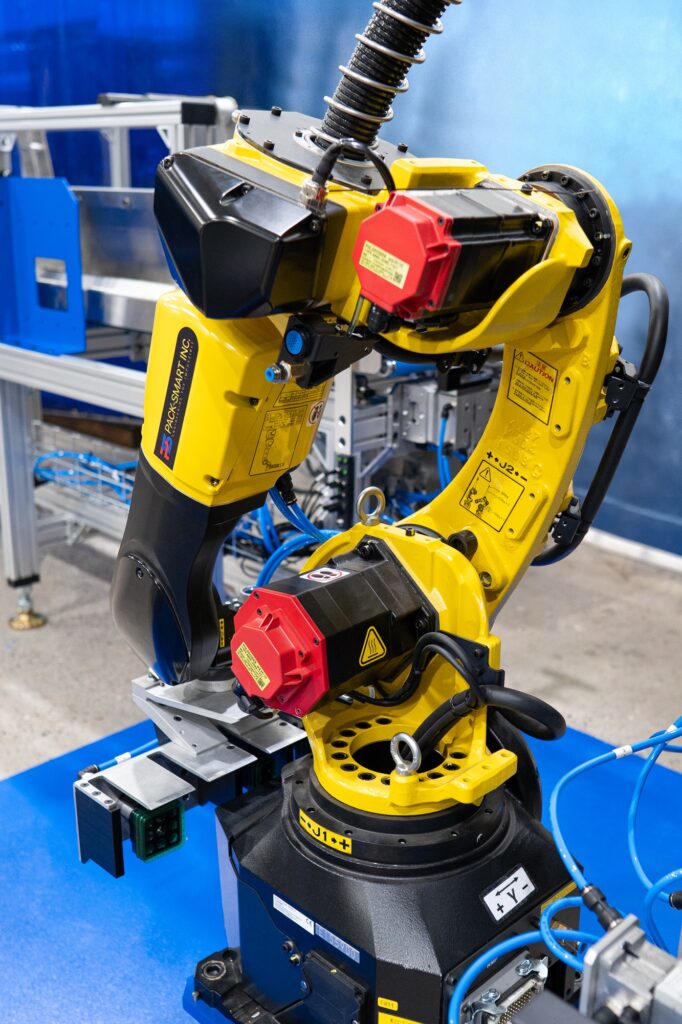
It turns platform thinking from a general philosophy into a readiness issue. If the line is built on rigid coding assumptions, narrow validation logic, or a brittle data architecture, changes like this do not remain abstract for long. They show up as retrofit cost, integration pain, delayed readiness, and growing production friction.
The point is not just that change is coming. The point is that future-ready manufacturers are already making architectural decisions now, so those future demands do not become future crises.
The Pack-Smart view
At Pack-Smart Inc, we do not treat modularity as a collection of optional add-ons. We treat it as a systems architecture decision that should be made early and deliberately.
That means standardizing the foundation before complexity accumulates. It means defining the upgrade path before expansion becomes urgent. It means making sure validation, verification, and data governance scale with the line rather than being patched in afterward.
A packaging line should not become harder to evolve every year it runs. It should become more valuable because it was built to change.
The question to carry into your next build
Before your next project, ask one question early and answer it honestly: What’s our upgrade path when the spec changes?
Ask that question during design, and it will surface the right decisions sooner. Where will the utility drops go? How will the control architecture scale? How will traceability be handled? What happens to the mechanical envelope if a module is added in two years?
These are not hypothetical questions. They are engineering decisions that either preserve flexibility or constrain it. The cost of making them early is low. The cost of undoing them in year three is not.
The manufacturers that win over the next decade will not be the ones with the most rigidly optimized line for yesterday’s brief. They will be the ones investing in packaging line platform architecture built for the next requirement, the next material, the next validation layer, and the next commercial opportunity.
That is the real shift.
And it is already underway.
See how Pack-Smart applies this approach in our case studies.