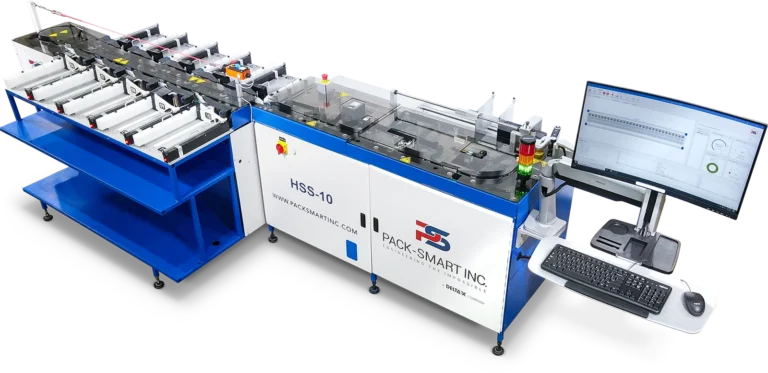
High-Speed Automated Mail Sorting System
The HSS-10 feeds, stabilizes, reads and sorts barcode-identified envelopes across ten shingled delivery outputs while Delta-X provides live production status, exception visibility and event-level control.
Flexible Packaging Application
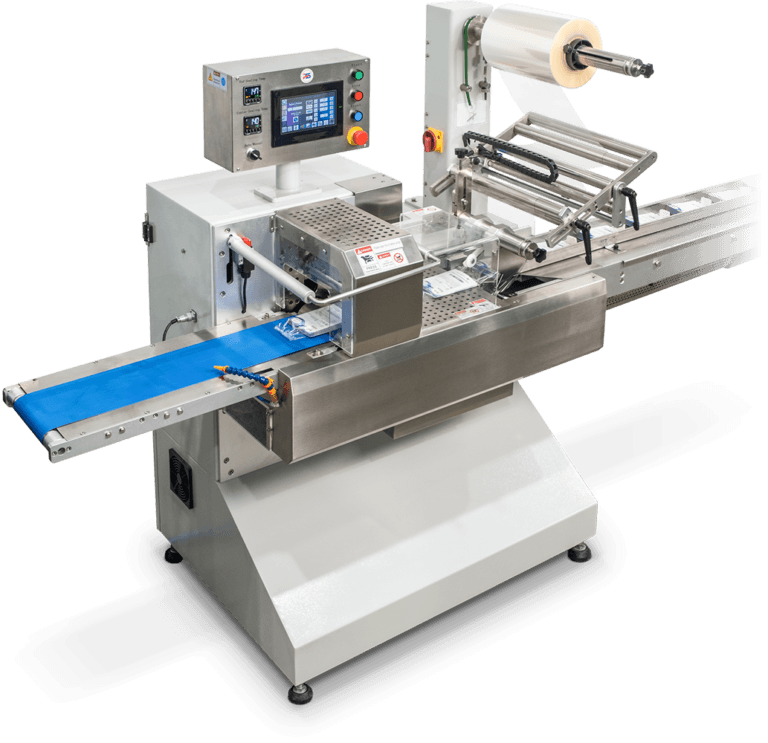
Flexible packaging serialization and labelling applies variable identity, labels, codes, or production data while the pack remains under controlled handling. Pack-Smart Inc. integrates application, verification, reject handling, and production records.
Flexible Packaging Applications
A serialized code or variable label creates production value only when the correct data remains associated with the correct physical pouch, packet, web section, bundle, or finished package.
Pack-Smart configures modular flexible packaging serialization and labelling systems that can combine web or discrete-product transport, registration, variable-data printing, print-and-apply labelling, barcode and 2D-code reading, machine vision, reject handling, aggregation, and production reporting. The final architecture depends on the substrate, package format, data source, print or label method, code requirements, line speed, and downstream process.
Flexible materials can stretch, wrinkle, move, reflect light, or present uneven surfaces. The system must stabilize the target area, control print or label placement, verify content and readability, and preserve the relationship between accepted packages and any downstream batch, bundle, case, or shipping record.

Relevant Systems
Explore Pack-Smart systems for applying variable data, labels, and serialized identifiers to flexible packaging under controlled registration. Final configuration depends on package presentation, surface condition, print or label position, data requirements, verification, line speed, and downstream handling.
The HSS-10 feeds, stabilizes, reads and sorts barcode-identified envelopes across ten shingled delivery outputs while Delta-X provides live production status, exception visibility and event-level control.
The BA-250 Automated Pack-Out System automates inline batching, wrapping, scanning, weighing, verification, and aggregate labeling for high-speed packaging fulfillment. It produces up to 2,000 finished bundles per hour with camera-based aggregation, weight verification, automated bundle labeling, and Delta-X Trust.
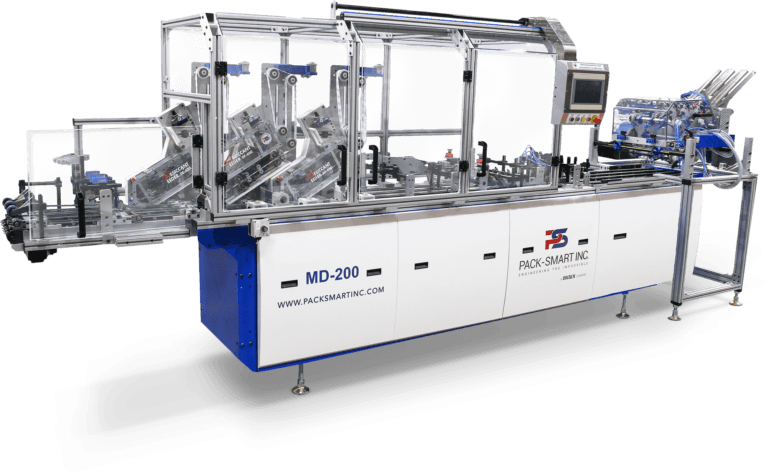
The MD-200 Multi-Stream Finishing and Packaging System automates final assembly for medical-grade kits, including rapid antigen test kits. It adds kit components, folds carriers, applies DOD serialization, and guides finished kits into wrapping at speeds up to 200 PPM.
The FG-800 Reinforced Carton Specialty Finishing System combines folding, gluing, affixing, personalization, and sorting for high-value cartons and auto-erect cartons. It supports speeds up to 10,000 PPH, carton widths up to 30 inches, and ±0.4 mm affixing accuracy.
Production Challenges
The primary risk is losing synchronization between production data, the physical flexible package, the verified marking result, and the downstream aggregate.
A missed feed, web-position change, rejected product, or line interruption can shift variable data away from the intended physical package.
Film tension, wrinkles, package fill, curved surfaces, and inconsistent presentation can affect print position, label placement, and image capture.
Coatings, contamination, surface energy, colour, and material texture can influence code contrast, durability, and label attachment.
Rejected, duplicated, or missing products can create an incorrect relationship between individual identifiers and the final bundle, case, or shipment.
Application Fit
The system configuration is selected around the flexible material, package format, variable-data requirement, marking method, verification criteria, and aggregation process.
Assign, print or apply, read, and verify a unique identifier on individual flexible packages before downstream pack-out.
Apply production-specific data and verify that the expected text or code is present, readable, and associated with the correct product.
Print and apply labels containing destination, order, product, handling, or other variable information to flexible packs and bundles.
Associate verified package identifiers with a bundle, case, shipment, or other defined aggregate record before delivery.
Frequently Asked Questions
These are the questions manufacturers and production teams commonly ask when evaluating this application.
Potentially. Direct printing depends on the substrate, coating, surface condition, print area, product presentation, data content, required resolution, durability, and code-verification criteria.
A label may be appropriate when the package surface cannot support the required print result, when a defined label construction is required, or when the application needs a separate identification or functional element.
The system can be configured around common linear barcodes, 2D codes, human-readable text, and other defined identifiers when the symbology, data structure, grading requirement, and verification rules are provided.
The production record can be assigned at a controlled registration or identification point and tracked through printing or labelling, inspection, rejection, aggregation, and final delivery.
Yes. Verified identifiers can be associated with a batch, bundle, case, shipment, or other aggregate record when the hierarchy, data exchange, and reconciliation rules have been defined.
Provide representative materials and packages, label samples, data structures, code requirements, print or placement areas, target throughput, verification criteria, reject strategy, aggregation rules, and system-interface requirements.
Application Assessment
Share the flexible material or package, variable data, marking or labelling requirements, code criteria, and aggregation rules. Pack-Smart can identify the printing, application, verification, rejection, and reporting modules required for the workflow.