Web Application

Vision Inspection

Web Applications

Web Vision Inspection Systems for Continuous Print and Surface Verification

Continuous web inspection must capture repeatable images across the required width while the material is moving, then identify and locate defects without losing their position in the roll.

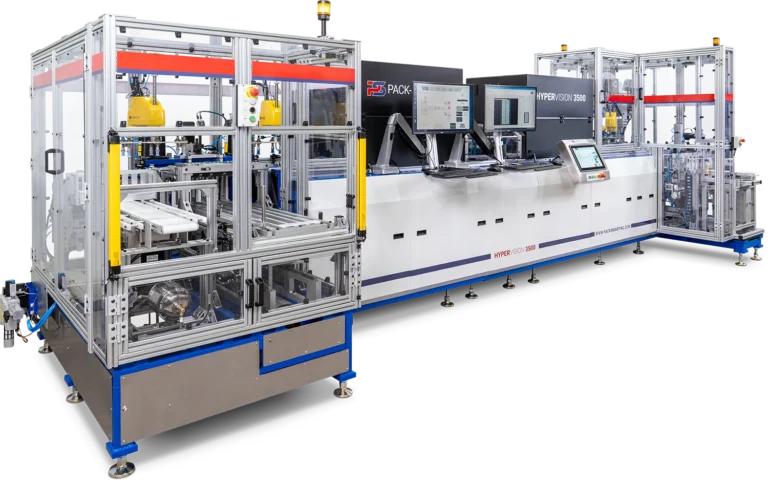
Pack-Smart configures web vision inspection around the substrate, web width, defect definition, minimum defect size, repeat structure, production speed, and downstream response. A system can combine tensioned and guided transport, controlled illumination, line-scan or purpose-selected imaging, print-to-reference comparison, code and data reading, surface inspection, defect classification, position tracking, and production reporting.

Inspection reliability depends on a stable image and a defined acceptance standard. Web movement, vibration, stretch, wrinkles, transparent or reflective surfaces, legitimate artwork variation, and changing roll conditions can affect what the camera sees. Lighting, optics, resolution, encoder synchronization, reference management, tolerances, and defect containment must therefore be engineered together.


Relevant Systems

Web Vision Inspection Systems

Explore Pack-Smart systems for continuous web inspection of configured print, code, registration, substrate, and finishing conditions. Inspection architecture depends on web speed, material behavior, imaging conditions, defect criteria, production tracking, and the required containment or downstream response.

Production Challenges

Where continuous web inspection loses reliability

A high-resolution camera cannot compensate for unstable web presentation, uncontrolled lighting, undefined tolerances, or defect records that are disconnected from the physical roll.

Motion, stretch, and vibration

Speed changes, flutter, wrinkles, tension variation, and mechanical vibration can distort the captured image or move features away from their expected position.

Reflective, transparent, and textured surfaces

Films, foils, laminates, coatings, metallic features, embossing, and transparent areas can create glare, low contrast, shadows, or changing backgrounds.

Legitimate print and artwork variation

Variable data, multiple designs, colour movement, and acceptable process variation require controlled references and tolerances so intended differences are not treated as defects.

Detection without physical containment

A detected defect must remain connected to its lane, repeat, roll position, or marked web section so it can be removed, reviewed, or controlled downstream.

Application Fit

Common web vision inspection applications

The inspection architecture is selected around the web material, required coverage, defect types, minimum detectable feature, line speed, repeat structure, and downstream containment method.

Label web inspection

Inspect print quality, registration, codes, variable data, missing features, contamination, and other defined defects across one or more label lanes.

Flexible film and foil inspection

Detect defined print, surface, coating, material, and registration defects on transparent, reflective, laminated, or paper-based flexible packaging webs.

Serialized and security print verification

Read machine-readable and human-readable data, compare it with the expected record, and retain the result by lane and repeat position.

Converting-feature inspection

Verify defined relationships between print and features such as registration marks, perforations, cuts, applied elements, or other visible converting results.

Frequently Asked Questions

Planning a web vision inspection system

These are the questions manufacturers and production teams commonly ask when evaluating this application.

What defects can be inspected on a continuous web?

Depending on presentation and image quality, the system can target missing or incorrect print, registration errors, streaks, spots, contamination, surface damage, unreadable codes, incorrect variable data, missing features, and other defined visual defects.

Why is line-scan imaging commonly used for web inspection?

A line-scan camera builds a continuous image as the web moves, which can support wide coverage and detailed inspection at production speed. Camera resolution, line rate, optics, lighting, and encoder synchronization must match the application.

How are reflective or transparent materials inspected?

Lighting angle, wavelength, polarization, background, camera geometry, and exposure are selected to reveal the required feature while controlling glare or transmitted light. Representative material testing is necessary.

How does the system handle different artwork or product repeats?

Job recipes can store approved references, repeat dimensions, lane maps, regions of interest, tolerances, and defect rules. Variable areas can be excluded or inspected with data-aware tools when the application requires it.

How is a defect found later in the roll?

The inspection system can record the defect by lane, repeat, encoder position, image, time, or another defined locator. That information can support marking, review, removal, roll disposition, or coordination with downstream equipment.

What information is needed for an application assessment?

Provide representative good and defective web samples, artwork, roll specifications, web width, lane and repeat layout, target speed, minimum defect sizes, allowed variation, surface characteristics, code standards, reporting needs, and the required downstream response.

Application Assessment

Define the defect, web presentation, and containment method

Share representative web material, approved and defective samples, lane and repeat layout, defect definitions, tolerances, target speed, reporting requirements, and downstream response. Pack-Smart can identify the imaging, lighting, web-control, tracking, and integration approach required for the application.