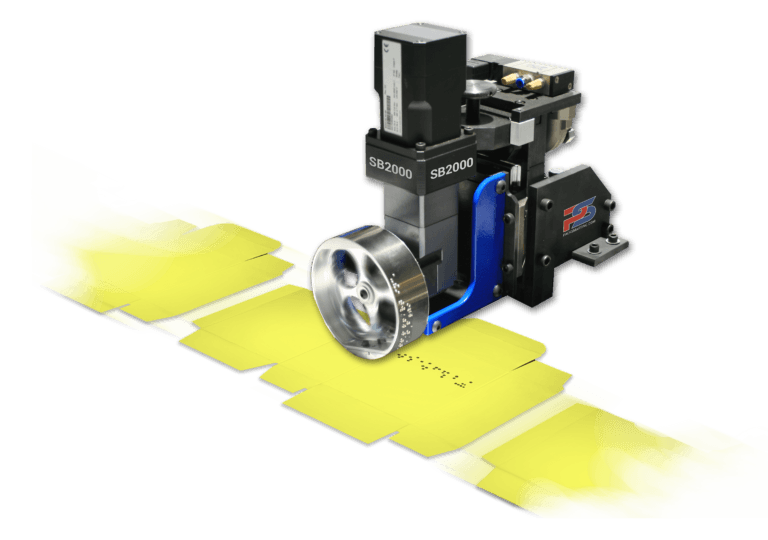
SB-2000
Pharma Braille Rotary Embosser
Revolutionize pharmaceutical packaging with the SB-2000 Pharma Braille Rotary Embosser, delivering high-speed, precise Braille embossing.
Technology Category
Die cutting and embossing technologies control registration, tooling engagement, material support, and forming force so cut, score, perforation, Braille, or embossed features land where the product design requires them.
Die Cutting & Embossing Technologies
Cutting and embossing depend on repeatable registration, controlled tooling engagement, material support, and force so the finished feature lands where the product design expects it.
Pack-Smart integrates die cutting, embossing, scoring, and related converting operations into modular finishing and packaging workflows. These processes can be coordinated with feeding or web handling, registration, printing, inspection, waste handling, folding, and downstream delivery.
The required architecture depends on substrate, thickness, grain or material direction, feature geometry, tooling, repeat, registration tolerance, line speed, waste condition, and downstream use. The converting station must maintain the relationship between printed or structural features and the physical tooling action throughout production.
Technology Category
Explore the Pack-Smart technologies assigned to this category. A category can include multiple technologies with different functions, configurations, and application requirements.
Revolutionize pharmaceutical packaging with the SB-2000 Pharma Braille Rotary Embosser, delivering high-speed, precise Braille embossing.
Relevant Systems
The technologies in this category are used in the following Pack-Smart automated systems.
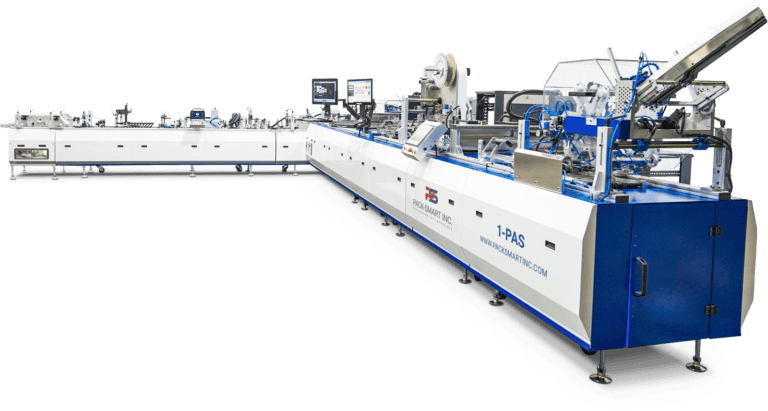
The 1-PAS Inline Secure Card Packaging System personalizes, affixes, seals, batches, bundles, and packs out secure open and closed loop cards in one workflow. It supports 20,000 PPH, duplex personalization, 600 DPI UV DOD printing, ±0.5 mm affixing accuracy, and Delta-X reporting.
Production Challenges
Converting quality depends on material stability, tooling condition, register control, force, and repeatability across the production run.
Product skew, web stretch, feed variation, or changing print position can move a cut, score, or embossed feature away from its intended location.
Paperboard, films, laminates, and specialty materials respond differently to pressure, cutting, creasing, and embossed forming.
Tooling condition, buildup, mechanical play, pressure changes, and temperature can alter feature quality over time.
Cut pieces, matrix, dust, lifted edges, or deep features can interfere with downstream conveying, inspection, folding, or stacking.
Application Fit
The tooling and registration strategy is selected around the required physical feature, material, artwork, repeat, and downstream conversion sequence.
Create windows, shapes, openings, perforated features, or other cuts aligned to printed or structural references.
Form raised or recessed features for packaging, identification, tactile information, or specialty finishing when the material and tooling are appropriate.
Create defined score or crease features that support a downstream folding sequence.
Coordinate printing, curing, registration, die cutting, embossing, inspection, waste handling, and delivery within a controlled process.
Frequently Asked Questions
These are the questions manufacturers and production teams commonly ask when evaluating this application.
Suitability depends on substrate, thickness, construction, feature depth, cut geometry, tooling method, and downstream process. Representative materials and final artwork or structural drawings are required for evaluation.
Potentially. Integration depends on available space, product path, line controls, speed synchronization, guarding, utilities, and the upstream and downstream equipment. Pack-Smart evaluates the complete process before defining the interface.
Sensors or machine vision can be configured to inspect measurable attributes such as feature presence, position, register, cut completeness, printed reference alignment, or another defined criterion.
The response is application-specific. The control system can identify the affected product or process state and trigger a controlled reject, alternate route, alarm, hold condition, or line stop when that response is required.
Changeover requirements depend on product range and module configuration. Mechanical adjustments, recipes, guides, sensors, tooling, and control parameters can be designed around repeatable setup and clear line-clearance requirements.
Provide representative materials, artwork and structural drawings, cut or emboss geometry, tolerances, tooling information if available, target output, registration reference, waste requirements, inspection criteria, and downstream operations.
Technology Assessment
Share the material, artwork, structural drawing, cut or emboss geometry, tolerance, target speed, and downstream process. Pack-Smart can identify the feeding or web-control, registration, tooling, inspection, and waste-handling approach required for the application.