High-Speed Automated Mail Sorting System
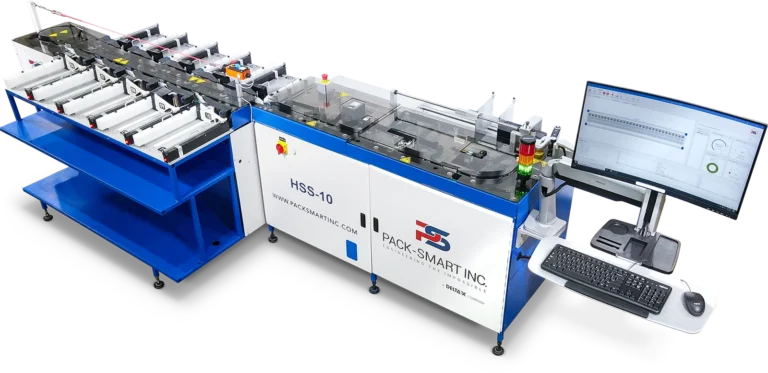
The HSS-10 feeds, stabilizes, reads and sorts barcode-identified envelopes across ten shingled delivery outputs while Delta-X provides live production status, exception visibility and event-level control.
Flexible Packaging Application
Flexible Packaging Applications
Flexible packaging inspection depends on controlling a product that can move, wrinkle, stretch, reflect light, and change shape while the system attempts to verify print, data, seals, components, and finished-package condition.
Pack-Smart configures modular flexible packaging vision inspection systems that can evaluate product presence, orientation, graphics, print registration, variable data, barcode and 2D-code readability, visible seal-area conditions, package formation, component placement, and defined surface defects. The imaging architecture depends on the substrate, package shape, inspection area, defect criteria, line speed, and product presentation.
Inspection becomes production control when each decision remains connected to the physical product and an effective response. Product tracking, defect classification, rejection, line-stop logic, and production records help ensure that identified defects are contained before wrapping, cartoning, bundling, or final pack-out.

Relevant Systems
Explore Pack-Smart systems for inspecting flexible packs for configured attributes such as print, codes, labels, orientation, and package presentation. Inspection architecture depends on material behavior, imaging conditions, inspection criteria, reject logic, line speed, and the required production record.
The HSS-10 feeds, stabilizes, reads and sorts barcode-identified envelopes across ten shingled delivery outputs while Delta-X provides live production status, exception visibility and event-level control.
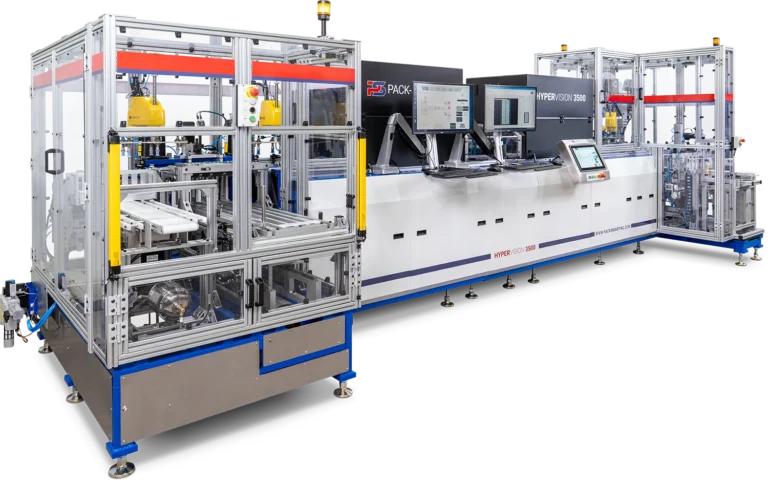
The HyperVision 3500 is a secure document inspection system for passports, IDs, financial cards, and currency substrates. It combines 8K optical inspection, 10-micron defect detection, NFC/RFID validation, lamination integrity checks, and Delta-X traceability at up to 3,500 units per hour.
Production Challenges
Reliable inspection requires stable presentation, appropriate lighting and optics, defined acceptance criteria, and a verified method for containing every failed product.
Glossy films, metallic layers, transparent areas, and changing reflections can reduce contrast or conceal defects without application-specific lighting.
Flexible materials can distort artwork, codes, seal areas, and reference geometry as the product moves through the inspection zone.
Inspection must separate approved changes in graphics, text, identifiers, and codes from actual print or data defects.
A correct inspection decision has limited value if the failed product cannot be tracked, rejected, recorded, and reconciled before release.
Application Fit
The inspection method is selected around the flexible substrate, package format, expected variation, required defect detection, and response to a failed result.
Evaluate graphics, colour, registration, missing print, contamination, marks, and other defined visible conditions on webs or finished packages.
Confirm variable text, identifiers, barcodes, and 2D codes against the expected production record and readability criteria.
Inspect visible seal areas, edges, folds, perforations, cut position, package dimensions, and other defined formation conditions.
Verify the presence, position, orientation, or identity of products, inserts, labels, and other visible components before final delivery.
Frequently Asked Questions
These are the questions manufacturers and production teams commonly ask when evaluating this application.
Potential criteria include print presence, registration, colour, marks, contamination, variable data, code readability, component placement, cut position, package formation, and visible seal-area conditions.
Potentially. The inspection method depends on the material, transparency, reflectivity, background, defect criteria, lighting geometry, optics, and ability to stabilize the product in the imaging area.
Yes. Code-reading tools can check whether the code is present, readable, correctly associated with the production record, and compliant with the defined verification criteria.
Inspection recipes, reference images, variable-data rules, regions of interest, and defined tolerances can be configured for approved products and expected production variation.
The system can classify the result, track the affected product, trigger rejection or a line response, record the event, and support the required reconciliation process.
Provide representative conforming and defective samples, material specifications, artwork, variable-data rules, defect definitions, acceptable tolerances, target throughput, product presentation, reject requirements, and surrounding-line details.
Application Assessment
Share representative flexible packages, known defect conditions, artwork, variable-data requirements, acceptable tolerances, line speed, and reject strategy. Pack-Smart can identify the imaging, verification, and containment architecture required for the application.