Corrugated Application

Erecting and Packaging

Corrugated Applications

Corrugated Erecting and Packaging Systems for Controlled Case Formation and Product Loading

A corrugated package must be formed correctly before it can receive, protect, and transport the intended product. Blank handling, erecting, loading, and closure must operate as one controlled process.

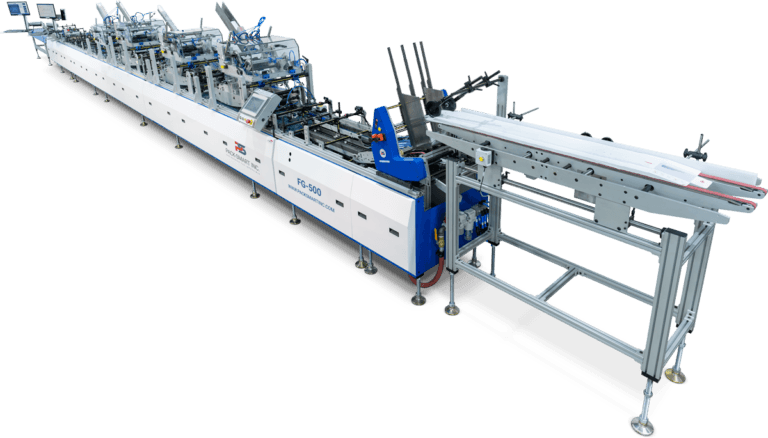
Pack-Smart configures modular corrugated erecting and packaging systems that can combine blank feeding, registration, pre-folding, case or tray forming, gluing, locking, product loading, kitting, closing, sealing, inspection, and delivery. The final architecture depends on the board construction, blank geometry, package format, product, load pattern, closure method, and required output.

Corrugated materials can vary in thickness, stiffness, flatness, and dimensional consistency. The system must manage that variation while maintaining the erected geometry, product count, placement sequence, and finished-package condition required by the downstream process.


Relevant Systems

Corrugated Erecting & Packaging Systems

Explore Pack-Smart systems for erecting, forming, loading, and packaging corrugated formats under controlled material handling. Final configuration depends on blank geometry, board construction, forming sequence, product loading, adhesive or closure requirements, inspection, and downstream delivery.

Production Challenges

Where corrugated erecting and packaging lose control

The process becomes unstable when material variation, package geometry, product presentation, and closure requirements are treated as separate problems.

Warped or inconsistent blanks

Variations in flatness, thickness, flute, score quality, or moisture can affect blank separation, registration, folding, and final package geometry.

Unstable erected packages

Cases, trays, and display structures must remain square and properly supported while products or components are loaded.

Incorrect product count or placement

Missing, duplicated, misoriented, or poorly positioned products can create incomplete packages and interfere with closing or sealing.

Defects concealed by closure

A loading error, failed lock, or incomplete glue pattern may become difficult to detect after the package has been folded, closed, or sealed.

Application Fit

Common corrugated erecting and packaging applications

The system configuration is selected around the corrugated format, product-loading requirement, finished-package structure, and surrounding production process.

Auto-erect cases and cartons

Feed, form, square, secure, and present corrugated packages for manual or automated product loading and final closure.

Corrugated trays and presentation packs

Erect trays or presentation structures and load products in a controlled orientation, count, and arrangement.

Retail and point-of-purchase displays

Form display-ready corrugated structures, add products or components, and prepare the completed format for distribution.

Multi-component and promotional packs

Coordinate several products, inserts, samples, or supporting components before the corrugated package is closed and released.

Frequently Asked Questions

Planning a corrugated erecting and packaging system

These are the questions manufacturers and production teams commonly ask when evaluating this application.

What corrugated formats can be erected automatically?

Potential formats include cases, trays, auto-bottom structures, presentation packs, retail displays, and other pre-scored corrugated designs. Representative blanks must be evaluated before the forming method is confirmed.

How does board construction affect the system design?

Flute, thickness, stiffness, coating, score design, blank flatness, and dimensional variation influence feeding, folding, forming, adhesive application, and package support.

Can multiple products or components be loaded into one package?

Yes. Multiple feeding, pick-and-place, or manual loading stations can be coordinated around a defined count, orientation, placement pattern, and assembly sequence.

Can the system use different closure methods?

Potential closure methods include mechanical locks, cold glue, hot melt, folding, and sealing processes. The correct method depends on the package design, board, load, and finished-product requirements.

Can erecting and packaging integrate with an existing line?

Yes. A system can be configured as a stand-alone cell or integrated with upstream printing and finishing equipment and downstream inspection, labelling, bundling, palletizing, or delivery processes after the interfaces are defined.

What information is needed for an application assessment?

Provide representative blanks and products, structural drawings, board specifications, acceptable variation, load pattern, target throughput, closure requirements, inspection criteria, reject strategy, and details about the surrounding production line.

Application Assessment

Define the package structure and loading sequence before defining the equipment

Share the corrugated blank, products, required load pattern, closure method, target output, and integration constraints. Pack-Smart can identify the forming, loading, verification, and delivery modules required for the application.